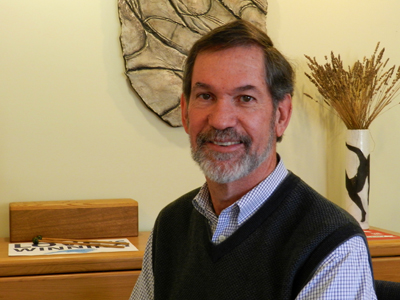
One of the more important parts of my job involves risk management. That’s why so often I end up looking like a blocker instead of a promoter. It’s not me, honest! It’s the job. “Will that be a trip hazard? Are all volunteers who work with kids background-checked? You want to build a campfire where? Is cash being handled properly? Does our insurance coverage adequately address sexual abuse? Are the fire extinguishers checked regularly? Copyright permission? Do people know not to use cell phones while driving (in general, but certainly while driving for a church errand)? Are our hiring policies up-to-date? Did I just accidentally download a computer virus? What can we lose if we get attacked by ransomware?” And on it goes.One of the ways we manage risk is to create policies (which are all on our website, off of the Board of Trustees page). Although some of our policies are designed to help people figure out how things are done around here (examples include “Inclement Weather,” “Gift Acceptance,” “New Social Groups”), many of them are created to help manage risk. Some of these include “Cell Phone Use,” “Childcare at UUCA,” and “Financial Policy and Procedures.”Probably the most important “risk management” policy is the one entitled, “Healthy Congregation.” This policy lays out the whys and wherefores of being in healthy relationship with one another. To help with risk management, it also lists the steps that can be taken when an individual acts in a way that is offensive or disruptive. It is especially attentive to adult-child relationships.As a best practice for churches,this documentdescribes behaviors that are considered unhealthy or inappropriate, along with alternative appropriate behaviors. It addresses physical and verbal interactions and describes various forms of bullying that will not be tolerated. It is extremely detailed in addressing sexual abuse.This policy requires training in recognizing and preventing sexual abuse for all of our religious education teachers, with formal training programs required of all staff members. The training that staff members have participated in this year comes from agroup called Darkness2Light and is called “Stewards of Children.” There is an online version of this course that anyone can take for $10. It is also occasionally available as a live course in Asheville through the Buncombe Partnership for Children.The policy also is very specific about the actions we take to safeguard our children and youth in other ways, too. All in all, this is probably the most important policy we have. I hope you take time to read it.Linda Topp, Director of Administration
“All forms of spiritual practice share one fundamental quality; they bring upon the practitioner a sense of peace. This peace does not come from mastery of the practices; a focus on Mastery (while it can be very interesting) is counterproductive (to spirituality). I think of it (fly fishing) as putting ourselves into the way of the world; in the Tao of Life. Not the busy mechanical, technological (electronic) world but the Natural world of which we are a part, the earth that was here before we came and hopefully, will be here after we are gone.” Rev. Jennifer Brooks, Unitarian Universalist Minister, 4/19/09
Early on you have to make a simple choice: Are you a fly fisherman or a fish catcher. What is important to you, catching fish or fly fishing.
If you choose to become a fish catcher, you become a head hunter, someone looking to catch the most fish, or the biggest fish of the day if that is your preference. Your focus narrows to your fly and the immediate area surrounding it so that you are ready for the “take” and the landing. Your reason for being there is to catch fish and nothing less will do. All that is important is landing the fish. If you don’t plan to eat the fish you throw it back without care to the condition of the fish; you need to catch the next one. You can have a “bad day.” You have missed everything.
If you choose to be a fly fisherman you, above all else, slow down and become naturally more in-tune with the environment, and especially the river. The river is everything, the flow of the currents, the clarity and temperature, the fish you see and don’t see, the shadows that can hold fish, the trees and shrubs lining the bank, the downfalls in the river, the ducks and birds, the position of the sunlight on the water. You watch the fly drift into the feeding lane of the trout and wait to see if you have convinced the fish that the hook with the string, feathers and “dubbing” will look enough like a tasty morsel and that the trout is hungry enough to take it. You may cast many times before it is all just right. And then “the take.”
When the take happens, you now have a direct line to the fish and the natural living world; you are holding the thin, fine line and the electric shocks come right up from the water and into your fingers and hands. There are so many things that can go wrong and lead you to lose the fish that you must now put all of your focus and concentration on that line and point where it joins the water; the movement of fish and the river.
When you have brought all of it together in that moment in time, the absolute spirituality of that moment is clear.
In the beginning, it’s all about the fish, how many, how big and where. But there is so much more to this fly fishing stuff.
One early fall afternoon I was walking back up the river after a day with zero fish, bummed because all I caught all day were twigs and leaves moving just under the surface. The sky was bright and the sun had warmed me to the point of sweating as I walked up the stones and over the stumps and deadfalls on my way to my car.
My legs felt filled with failure, failures filled my waders and dragged me down as surely as if it were water. Although I was not a stranger to being “skunked,” I still took it personally. I had about 3/4 of a mile to walk back up the free stone river to my car and the long drive home in a car filled with the stench of failure. I found myself going deeply into myself and not really paying attention to the river, the sky, the valley, the birds or anything else. I was in a funk!
I knew this piece of river pretty well and knew that I was about halfway back to the Steel Bridge and the two German shepherds that wait to greet you, hoping for a small treat. I sat on the rock beside the river, overdressed, sweaty and hot in the midday sun on a day that was supposed to be cool-to-cold.
I had known this large rock was a nice place to sit and I just eased myself onto its bright sun-warmed surface. Took a deep breath and waited to cool down a bit before I finished the walk, falling deeper and into those old messages I tell myself about my failures.
At first, I didn’t notice them, turned as inwardly as I was. Then there was just the realization of movement nearby, but turning right I just looked down the river and didn’t focus on anything. Then I noticed movement on the left and then the right again and then right in front of me. Finally, the moving object in front of me came into focus. It was a black-winged butterfly with deep purple highlights on the wing. “Oh, how pretty,” I thought. And just then I realized that these were the movements on each side, above and even behind me that I had felt but did not see.
Then there were twenty or so butterflies and then thirty or so and then I couldn’t count them as they flitted around me. Black and purple floating bits of color. And then they started to land on my hands and arms. They would land then take back off almost immediately.
Then as I quieted myself and sat still, they started to land one-by-one and stay, first for a second or two, then as they folded their wings, for longer and longer. Then opening and closing their wings and tickling my arms, hands, and face they walked, exploring and tasting my sweat only then to lift off in the breeze. I sat with these butterflies for some time although I really have no idea how long it was, and then they left as quickly and quietly as they came.
Today my prize was butterflies!
Tomorrow is another day and there will be some prize for me on the river, and it may or may not be a fish. It will, however, be the time alone in the wild country, listening intently for the sip of the trout taking the fly, for the clacking call of the kingfisher patrolling the river for a meal, watching intently as fish silent slip along through the water. And in that world is the essence of spirituality and the Seventh Principle.
Sunday, October 6, 9:15 & 11:15am Rev. Claudia Jimenez, Minister of Faith Development
Forgiveness isn’t easy. It takes courage and vulnerability to forgive those who have hurt us. And yet the ability to do so can be transformative. Can we choose to cultivate love instead of hate in our hearts? Can we always forgive? Should we always forgive? Join us for an exploration of the complexities and possibilities of forgiveness.
READING
To Forgive by Desmond Tutu
To forgive is not just to be altruistic. It is the best form of self-interest. It is also a process that does not exclude hatred and anger. These emotions are all part of being human. You should never hate yourself for hating others who do terrible things: the depth of your love is shown by the extent of your anger.
However, when I talk of forgiveness I mean the belief that you can come out the other side a better person. A better person than the one being consumed by anger and hatred. Remaining in that state locks you in a state of victimhood, making you almost dependent on the perpetrator.
If you can find it in yourself to forgive then you are no longer chained to the perpetrator.
You can move on, and you can even help the perpetrator to become a better person too.
But the process of forgiveness also requires acknowledgement on the part of the perpetrator that they have committed an offence. I don’t like to talk about my own personal experience of forgiveness, although some of the things people have tried to do to my family are close to what I’d consider unforgivable. I don’t talk about these things because I have witnessed so many incredible people who, despite experiencing atrocity and tragedy, have come to a point in their lives where they are able to forgive
Sermon
Last Wednesday I watched a video of 18 year-old Brandt Jean offering his forgiveness to the woman who killed his brother a year ago. Amber Guyger, a white Dallas police officer was sentenced to 10 years in prison for killing Brandt’s 26 year old brother, Botham Jean, after Guyger apparently mistook his apartment for her own. Botham was in his apartment watching TV and eating ice cream when he was shot. Brandt’s statement included his saying, “If you truly are sorry, I know I can speak for myself, I forgive you. I know if you go to God and ask him, he will forgive you.”[1]
Is there a possibility of restorative or transformative justice beyond the punitive for Amber Guyger? We know that she will serve prison time and will have the rest of her forever-changed life to contemplate her actions that resulted in the taking of an indisputably innocent life. After his statement, Brandt asked the judge for permission to give Amber Guyger a hug. It was granted and he did.
Brandt’s words and the image of his embrace of his brother’s murderer – this unconditional act of forgiveness that elicited both praise and outrage from the bipolar twitterverse.
There was praise for a young man responding to personal tragedy with compassion based on his Christian values. There was outrage, anger and frustration with what some perceived as a continuation of a history of black people forgiving white people when the same grace is not extended to them. And, there was dismay with a 10 year prison sentence for the taking an innocent life. I found myself feeling outrage because of our well documented propensity – historical and current – of disproportionately incarcerating black men and youth and disproportionately suspending or expelling black youth from our public schools. But my outrage at the seemingly light sentence was tempered by the impossibility of knowing the motivation and in-the-moment emotional and cognitive state of the woman pulling the trigger. How can that be judged? And how can it be adjudicated?
This morning I invite us to reflect on the complexity of forgiveness. What was your response to this story? As I listened to Brandt’s statement I recognized he made a choice: he chose to forgive. His forgiveness did not condone his brother’s murder. His statements implied that he was not seeking revenge. He responded to this tragedy, a year later, with compassion, grounded in his Christian faith and going as far as saying to Guyger that there was a possibility of redemption; that if she were truly repentant God would forgive her.
We have seen this theologically grounded response before. In 2016 during the trial of a white supremacist who massacred 9 people in their church during a bible study gathering, some of the survivors and family members who spoke forgave him. Because this was explicitly a racially motivated killing, there was concern that forgiveness interfered with accountability for the horrific consequences of white supremacy culture.
In these two tragic incidents, religious doctrines provide the foundation that allows family members to forgive; they can begin the process of healing that cannot occur if resentment or the desire for revenge is allowed to consume them as they seek to regain their lives and adapt their daily existence to the new reality of loss.
I may not share the theological concept of divine judgement that motivated the families of the slain, but I must admit to a most sincere admiration for their gestures and the courage to act on their beliefs.
In our Unitarian Universalist tradition, we do not have specific religious language around redemption and grace. We take inspiration from various sources and personal spiritual practices as we grapple with the reality of evil and its manifestations. We reject the notion of original sin while recognizing that we all have a capacity for good and evil. And when evil and misfortune strike, we step up, offering each other comfort and support. For UUs, our covenant to affirm our principles includes respect for all beings. That covenant binds us and holds us accountable to each other. So do the many covenants we create as participants in congregational life. When we miss the mark, we recommit to our covenant and begin again in love. Even when we or others fail, we don’t give up. We work to repair relationship. We work to re-enter that sacred space of covenant, of fellowship, of commitment to love and to doing the larger work that can only be accomplished in community.
And yet, when others transgress feelings of anger, bitterness, and hatred are inevitable. They are part of being human. Holding on to them can be self-destructive, weighing down our spirits and closing us off to the possibility of moving into a future with a transformed narrative: a victim becoming a survivor.
We can’t change the past, erase transgression, but we can choose our response. Do we hold on to resentment, anger and grudges? As Desmond Tutu reminded us remaining in a state of anger and resentment locks a person in a state of victimhood making [the person] almost dependent on the perpetrator. He said “if you can find it in you to forgive then you are no longer chained to the perpetrator.” This changes how you tell your story. I think it allows for a transformation from victim to survivor.
And it’s not an easy path. There are many questions to consider: What if the person won’t apologize or express remorse? Does forgiveness require reconciliation with the offender? What if the transgression is deemed unforgivable? Each person will answer these questions for their particular situation maybe with support from a therapist, a spiritual leader, a close friend. Brandt was able to forgive his brother’s killer. We do not know what his process was for reaching that decision a year later. I wonder over time how it will impact his family, his community and Guyger? UU minister Forrest Church explained it this way many years ago:
“This is how forgiveness works well. When we forgive her we don’t change her, but ourselves. We liberate ourselves from all obligation to continue bitterness. This doesn’t reverse the past. It doesn’t remove from the record whatever crime was perpetrated against us. But it changes the present and the future.”[2]
Forgiveness can change the present by allowing us to be liberated from carrying the story of the perpetrator. It might even allow us to be curious and shift from asking “why me”? to asking “why them”? Why would someone do that? I think that is the empathy Charlie was talking about in his opening words. Reaching that level of empathy takes time. Each person decides their readiness and capacity for forgiveness. I close with a prayer written by Mpho Tutu, Desmond Tutu’s daughter who is also a Christian minister:
Prayer Before Prayer
I want to be willing to forgive
But I dare not ask for the will to forgive
in case you give it to me and I am not yet ready.
I am not yet ready for my heart to soften.
I am not yet ready to be vulnerable again.
Not yet ready to see that there is humanity in my tormentor’s eyes.
Or that the one who hurt me also cried.
I am not yet ready for the journey.
I am not yet interested in the path.
I am at the prayer before the prayer of forgiveness.
Grant me the will to want to forgive.
Grant it to me not yet, but soon.
Acknowledging the complexity of forgiveness, and recognizing the importance of forgiving ourselves as well as each other, I invite you to partake in the “Litany of Atonement” inserted in the Order of Service. We will sing the first verse of hymn 218. Then, you are invited to repeat the litany “I forgive myself. I forgive you. We begin again in love. When we finish, we will sing the second verse of Hymn 218.
Some of the hardest work in the quest for racial justice is truth-telling: telling the truth about the sea of racial oppression that we live in, where it came from, how it is perpetuated, and how each of us can find ourselves complicit in it, often in ways we are unaware of. So, part of our justice work in this congregation is about making ourselves aware of all this and acting where we can to dismantle it.
There’s an exciting project underway in Asheville that we at UUCA are looking to connect with that is seeking to correct the record and bring a measure of justice to people who suffered as a result of this oppression. It’s linked to a nation-wide effort led by the Equal Justice Institute based in Montgomery, Alabama.
This is the organization started by Bryan Stevenson that has sought to document the thousands of lynchings of African-Americans that occurred in America from 1877 to 1950. A year and a half ago the institute opened the National Memorial for Peace and Justice, where some 800 lynchings are documented on hanging steel monuments. Buncombe County’s plate is inscribed with the names of three men who were lynched here in the 1890s.
Here in Asheville last May, a coalition of community groups joined to form the Buncombe County Community Remembrance Project. Its goal is to raise awareness of racial violence in our area and plan for the creation of a historical monument here that will tell that story.
UUCA member Mary Alm has been attending the group’s meetings on our behalf, and I have offered to have our congregation join a group of what are called “community stakeholders” who support the effort. The group already includes 10 other congregations and community groups.
You will be hearing more about this as the project gets underway. For now, as a way to get into this work of truth-telling, Mary and I would like to invite you to consider joining us on a UUCA group trip to visit the memorial in Montgomery next spring.
Our idea is that this would be a three-day trip – leaving one day to drive to Montgomery, spending a day at the Memorial, and then driving home the next day. Mary is researching hotels where we could reserve a block of rooms together. For transportation, we’re thinking of making it simple – a caravan of cars, car-pooling where we can. As for timing, we’re thinking of spring break week – April 6 – 10 – so families could make time to come. Scholarships will be available for people who need them.
Look for more details to come and please contact Mary Alm if you’re willing to help organize or are interested in coming. I would welcome your company as we dig into the work of taking ownership for our own journeys of awakening and truth-telling.

 One of the more important parts of my job involves risk management. That’s why so often I end up looking like a blocker instead of a promoter. It’s not me, honest! It’s the job. “Will that be a trip hazard? Are all volunteers who work with kids background-checked? You want to build a campfire where? Is cash being handled properly? Does our insurance coverage adequately address sexual abuse? Are the fire extinguishers checked regularly? Copyright permission? Do people know not to use cell phones while driving (in general, but certainly while driving for a church errand)? Are our hiring policies up-to-date? Did I just accidentally download a computer virus? What can we lose if we get attacked by ransomware?” And on it goes. One of the ways we manage risk is to create policies (which are all on our website, off of the Board of Trustees page). Although some of our policies are designed to help people figure out how things are done around here (examples include “Inclement Weather,” “Gift Acceptance,” “New Social Groups”), many of them are created to help manage risk. Some of these include “Cell Phone Use,” “Childcare at UUCA,” and “Financial Policy and Procedures.” Probably the most important “risk management” policy is the one entitled, “Healthy Congregation.” This policy lays out the whys and wherefores of being in healthy relationship with one another. To help with risk management, it also lists the steps that can be taken when an individual acts in a way that is offensive or disruptive. It is especially attentive to adult-child relationships. As a best practice for churches, this document describes behaviors that are considered unhealthy or inappropriate, along with alternative appropriate behaviors. It addresses physical and verbal interactions and describes various forms of bullying that will not be tolerated. It is extremely detailed in addressing sexual abuse. This policy requires training in recognizing and preventing sexual abuse for all of our religious education teachers, with formal training programs required of all staff members. The training that staff members have participated in this year comes from a group called Darkness2Light and is called “Stewards of Children.” There is an online version of this course that anyone can take for $10. It is also occasionally available as a live course in Asheville through the Buncombe Partnership for Children. The policy also is very specific about the actions we take to safeguard our children and youth in other ways, too. All in all, this is probably the most important policy we have. I hope you take time to read it. Linda Topp, Director of Administration