By the time you read this, the Interim Search Committee will be in negotiations with our new interim minister. The work of an interim minister is different from the work of a called minister and therefore will be different than what we have been used to as Rev. Mark Ward has served us.
Yes, the interim minister will act as the Executive in our governance structure, and be responsible for (but not necessarily lead) all Sunday worship service, and act as lead for pastoral care, just as Rev. Mark has. But the activities below are actually the heart of their work at UUCA and are literally part of the agreement that our interim minister will enter into with our Board of Trustees. The interim minister will address:
Heritage: Review how UUCA has been shaped and formed by encouraging and hearing all the stories about the Congregation’s past as the foundation upon which the present rests, and embracing the rich variety that makes up the Congregation.
Leadership: Review the membership needs and its ways of organizing and developing new and effective leadership by providing opportunities to examine the types of leadership needed for new leaders to emerge, and for seasoned leaders to recommit or to refocus their gifts.
Mission: Guide us in redefining UUCA’s sense of purpose and direction by revisiting the faith community’s identity and core values; working to develop, update, and revitalize mission and vision statements; and reviewing strategic and tactical plans including stewardship and the financial health of the congregation.
Connections: Revitalize or develop the association, interfaith, and community relationships a congregation builds outside of itself.
Future: Develop congregational and pastoral profiles that position the congregation for its next ministry, including a healthy and honest assessment of focus points so that the congregation can turn its energy toward proactive decision-making for the future.
Anti-Racism, Anti-Oppression and Multicultural Awareness: The Congregation and the Interim Minister are committed to understanding the ways systems of oppression within and beyond our Congregation are perpetuated and agree to collaborate on the development of a joint process of reflection and growth to ensure progress. This includes, but is not limited to, the ways in which the characteristics of dominant cultures live in our practices, systems, procedures, and our very lives.
This is an incredibly exciting and a little bit scary time filled with possibility and change. As far as I’m concerned, “possibility” is super-energizing while “change” has that shadow side of loss. Whenever a person or institution changes (and it is almost always intended to be a “good change”), something is lost. Here’s hoping we have the resilience and grace to leave room for the grieving as we invite everyone to head for new territories.
Wow! For a while, under the cloud of Covid, it seemed like everything moved so slowly that I often wasn’t even sure what day it was. January alone I think lasted 500 years.
Now, however, though the cloud isn’t gone just yet, the fog has somewhat cleared and suddenly the last month has shifted into high gear and feels as if it is moving 500 miles per hour instead! So what does that mean? It means that the blog that I intended to write in advance is instead being pumped out on Thursday morning with only moments to spare. It means a few more hairs in my beard turned to grey. It means that Tish in the office once again deserves a gold medal for dealing with me. It also means that for this blog entry, you can expect fewer flowery words and more straight to the point words instead! (I am sure that there are at least a few of you out there breathing a sigh of relief upon reading that one, right?) Yep, this month, though I have a lot to share, I only have a short time to share it and heck, on top of that, I figure getting straight to the point might be the best way for people to actually remember it. Know that as you go along, keep track of any questions or comments and bundle them all together and let’s talk.
Here we go….
Interim Search
A week ago this past Monday, the UUA released a list of 7 interim ministry candidates. These candidates had been pre-screened in order to look for aligned skill sets and values. They represented locations ranging from Florida all the way to Michigan.
We spent the first few days reviewing their extensive packets and viewing their ministerial websites before narrowing down our decision to 5.
Between last Friday and this past Tuesday, we completed reference checks and held 90 minute interviews with each of the 5 candidates.
Since finishing the last interview, we have continued to meet as a committee to discuss what we saw as the strengths and weaknesses of the candidates and look for further alignment between each candidate and our congregation. We have currently narrowed the selection to 3 candidates.
In the coming days, we will be working independently and collectively as we dig in a little deeper into each candidate’s history and worship style before making a final determination for ranking these 3 candidates.
By this coming Monday, we will have submitted to the UUA Transitions Office the names of the top 3 candidates ranked in preferential order. Once the submission date has closed, the UUA office will then work to connect the ranking preferences of candidates and congregations. (Remember, it is not just UUCA making a decision about interim ministers but also a decision that interim ministers are making about congregations! Ex. one of our candidates was deciding between 9 different congregations!)
No matter which of the 3 candidates ends up becoming our interim, we are confident that they will do an excellent job. As a committee, we have discussed repeatedly about the high caliber of candidates we have spoken with, all being incredibly thoughtful, intelligent, and skilled. I also would like to note that the three candidates in this final round have all deeply impressed us with their experience and their passion and their vision for how anti-oppression work can and should be a part of the interim process before us!
Stay tuned for more!
Annual Meeting
As many of you will recall from last year, restrictions and limitations due to Covid resulted in a shift in how we conduct our Annual Meeting. Unfortunately, though things have improved greatly, it has been decided that the current reality does not yet support a physical gathering for the Annual Meeting. More information will be shared in the coming week but for now, the general basics are as follows:
In lieu of our Annual Meeting, this year’s vote will instead take place via online or mail-in ballots.
Issues and actions on the agenda will include approving the meetings and notes from last year’s process and vote, voting on the proposed budget for the coming year, voting on new members for the Board of Trustees and the Leadership Development Committee, and voting on a temporary change to the by-laws.
Information on each of these issues will be shared via an Annual Meeting webpage, via Facebook updates and links, UUCA email, and via paper copies formats for those not using internet formats as frequently.
Of course, any questions and comments people have are gladly received at the board email, board@uuasheville.org or via phone call or text at 919-619-7298. However, we are working to finalize an alternative and additional communication outlet so that you may reach out and record your thoughts directly through the Annual Meeting webpage. It will be our hope that this format will allow not only for individuals to share their own thoughts but for fellow congregants to see and consider them as well. This information will be part of the information shared in the coming week.
Once the voting period is open in early June, it will remain open for approximately 2 weeks to allow for a greater opportunity to participate.
Stay tuned for more!
General Assembly
Much like our own Annual Meeting, the UUA’s General Assembly (GA) will again take place virtually just as it did last year. For those who are unclear about GA, it is the annual meeting for the entire Unitarian Universalist Association during which participants worship, witness, learn, connect, and make policy for the Association via the democratic process.
Congregants are welcome to participate as individual participants or as delegates. Delegates have the opportunity to vote on behalf of UUCA which is an exciting and important way for having your voice heard in shaping the process and priorities of our denomination!
The dates are scheduled for June 23rd-27th.
Registration for the event is $200. There are funds available for supporting those who would like to attend and participate in GA.
A tremendous amount of information can be found at www.uua.org/ga including schedules, routines, issues, workshops, and speakers. (Stacy Abrams is the Ware lecturer! Woop Woop!)
So I know that attending a virtual General Assembly might sound a little boring. I thought the same thing myself last year prior to attending myself. Luckily, I was totally surprised and excited by how inspiring, informative, and powerful it felt to be a part of this virtual experience! And the music…..Wow! If you have any questions about the experience, the roles of attendees versus delegates, or would like to inquire about the financial support available, please reach out to me via phone or email!
Stay tuned for more!
So despite having stripped down my typical writing style from a meandering Kerouac-like ramble to a more direct, to the point bullet approach, this has still gone on too long! I say it over and over but if while reading through all of this, you have anything you want to say or share or inquire about, I am here! 919-619-7298 or at board@uuasheville.org.
Hope you are all well and I look forward to the day when I see you all again!
These days I feel like one of those sidewalk prophets carrying the sign, “The End is Near.” Ain’t it the truth! In a little more than a month, my 17-year ministry with this congregation will be over.
It feels a little unreal to imagine not being a part of this community. Debbie and I will still be living in Asheville, but after June you won’t see me here anymore. I’ll step aside to make room for an interim minister who will guide you through the next two years while you prepare for your next settled minister. Yes, we’ll bump into each other in the supermarket or elsewhere in town, and I will always be happy to greet you. But we won’t talk about what’s happening at this place.
People have told me that this practice seems strange – shutting myself off from people and an institution I have come to love. And, in a sense, it is. But I freely agree to it because I want to do my best to assure a smooth transition to my successor. And my presence would only disrupt that.
Many of you have asked about my plans, and my short answer is that at least for a little while I plan to press the pause button in my life. I’ll find things to do, but I plan to keep my commitments to a minimum. Ministry is an all-consuming calling and, like you, I need to give myself some space before I jump into the next thing.
There’s something serendipitous about you entering search at a time when there is so much change in the world. With so much in play, it gives you time and space to reflect deeply on the gift this congregation has to give to the world, what kind of leadership you need to bring it about, and what parts you are willing to play to make it happen.
As I make my way out the door, I want you to know that you have a good foundation to build on: a proud and momentous history, strong lay leadership, and many creative and engaged people involved in making ministry happen here, supported by an accomplished, devoted and compassionate staff.
Whatever sadness I feel leaving my work here, it is exceeded by a deep sense of gratitude. Ministry is life-changing work, and you have changed me in all the best ways. It has been my great joy to serve you. Know that you have my blessing to realize the best that you are, to serve each other well, and let the light of the beloved community, the beacon that guides our faith, shine within, among and beyond you, making love, peace and justice your work in the world.
Although plans are not fully finalized for this year’s UUCA Annual Meeting, we know for sure it will be happening in one form or another. No matter how the vote occurs, all UUCA Members (in good standing having made their 2020-21 commitments and paid some or all of it) will be asked to vote on next year’s budget.
To give folks time to fully review the budget, I’ve produced a slide presentation that you can view from the comfort of your own home. The slide deck covers the details that are included in next year’s budget and presents important information about our Capital Budget.
Speaking of which, a special shout out goes to John Bates who led a team to create UUCA’s first Capital Budget. The entire report, UUCA Capital Facilities Assessment, can be viewed here.
Here’s a brief summary of the proposed operating budget for July 1, 2021 to June 30, 2022:
We expect Commitment Income of $670,000, same as last year.
Total income is projected to be $813,800.
Total expenses will be 1.1% higher than total income, at $823,250. The difference will be covered by our splendidly full Contingency Fund.
One of the things that attracted me to UUCA when I interviewed three years ago was your willingness to experiment. During that time I had gone before the Religious Education Credentialing Committee (RECC). I offered a presentation on “Reframing Religious Education.” The work UUCA has been doing appealed to me and embodied ideas I shared with the RECC to move toward multigenerational worship, family ministry, increased theological reflection, deepened spiritual practice, building a welcoming community, and disrupting the upstairs adults/downstairs children and family silo. I looked forward to learning more about The Wednesday Thing, spiritual deepening groups, and UUCA’s awesome religious education program.
During the last three years, I witnessed successful and failed attempts to move towards these practices, demonstrating that UUCA is willing to try new things and learn from both hits and misses. For example, The Wednesday Thing started with a multigenerational focus and community-building over a shared meal. Over time, the planning team observed that neither the meal nor the multigenerational focus was feasible. There weren’t volunteers to coordinate the meals and we weren’t attracting families to the multigenerational programs. So, we shifted. Meals were eliminated and adult programming was emphasized. That was moving forward until COVID-19. “Now what?!”, we wondered. We figured out how to offer Vespers via Zoom and one program following Vespers. Volunteers stepped up to lead Vespers and programs even though the on-line format can be awkward. I was grateful for your gracious forbearance when trying to share my screen or video that didn’t work as intended. Participants have been patient and gracious as we figured things out empirically.
This openness to new ways of doing things will be an asset to UUCA as we work towards a post-pandemic reset. Our staff is organizing a Re-Opening Task Force to discuss scenarios, criteria, and protocols. We are leaning toward offering just one worship service on Sundays as we anticipate lower in-person attendance after re-opening.
Faith Development staff and planning teams are exploring what children, youth, and adult programming might be. One thought is to have an hour of Faith Development for children, youth, and adults before or after that one worship service. What would that look like?
We are also discussing mixed-platform faith development for children, youth, and adults with some in-person classes and others on-line. What would that be like? What are the pros and cons?
I don’t know where we will be a year from now, but I do know that thanks to your willingness to experiment, we will discover ways to recapture the loving and supportive congregation I was so grateful to meet three years ago, that gathers in search of community, spiritual exploration and mutual encouragement as we face diverse personal and societal challenges. How exciting!
Rev. Claudia Jiménez, Minister of Faith Development
Now that the COVID situation is changing with the vaccine rollout, it’s possible to imagine what re-opening UUCA might be like. But imagining needs to be a congregation-wide activity. In the not-too-distant future we will be asking you questions that will help a Re-opening Task Force do their work.
At the moment, the UUCA staff is looking at September as a “seems like it’s possible” re-opening date. Of course, anything can change regarding this crazy virus, but we have to start planning some time, and now looks like a good time.
There are two different areas of investigation that a congregation ought to be pursuing. One is more philosophical and one is much more practical. For the philosophical side, the UUA has suggested answering four key questions before reopening:
What did we learn this past year?
What is at the center of your congregation? What challenges did you overcome? What do you understand about yourselves now that you may not have understood before?
What needs to change?
Did you discover something important that wasn’t being given enough time, attention, or other resources? Did you find a new path to connection that you want to keep? How will your congregation be transformed by your learnings?
What needs to return to the way it was?
Did you find that there are spaces, methods, and ways of being that are essential to who you are as a congregation? What did you truly miss the most? What does your heart hunger for?
What are your needs during this transition back to reopening?
The more practical questions center on safety considerations. This would include questions like ones that the UU congregation in Brookfield, WI is asking of their congregants:
“Our worship and activities have been offered as inclusively as possible – offered to members, friends, youth, and children, but also to anyone who wishes to attend or visit. Given this history of inclusion, please indicate below your thoughts about returning to “in-person church.”
I will return to in-person, indoor worship only when ALL of us (adults, youth, children, and visitors) are able to return.
I hope our congregation will offer in-person, indoor worship as soon as possible for those who are willing to take the risk.
I don’t want to return until we can sing together and/or have live music by the choir or band.
I don’t want to return until children can return to worship and religious education.
When guidelines allow for resuming LARGE-group, in-person, indoor activities, which of the following would need to be present for you to feel comfortable attending?
Temperature taken at door Mandatory masks Enforced social distancing Optimal ventilation/air exchange Disinfecting wipes/supplies available in restrooms Hand-sanitizing stations Proof of vaccination by attendees Mandatory sign-in sheet for contact tracing None of the above; I will attend outdoor events only for now None of the above; I will attend virtual/online events only for now None of the above – I’m confident our congregants are “safe” to be around”
It turns out that, just like everything else about this pandemic, re-opening is going to be complicated—the decisions on when to do it and how to do it are difficult and possibly volunteer-intensive—not to mention expensive—and can still be overthrown as infection rates go up and down.
We have five months to figure this out and we need all of us working together. On your mark…..
In last month’s blog, I tried to share an informative overview of the interim search process we are currently involved in and provide updates and a timeline so that congregants would know what we had done so far and what we needed to do next in order to locate and secure an interim minister to work with us for the 2 year interim between Rev. Mark’s retirement and the hiring of our next official called minister. I will continue to try and keep people updated with this process but for this blog, I felt that rather than focus on the “how do we get an interim?” aspect of the process that I would instead shift to talk a little about “what do we do once we have one?”
The Bridge
The UU Reverend Margaret Keip who has served as both a long-time called minister as well as a 6-time interim minister has described the interim period as a “bridge connecting what was to what will be.” So whose job will it be to build our bridge? Who will design it? Who will determine which spot we start from on this side of the divide and where we will aim to land on the other side? Who helps ensure that the bridge being designed is safe to cross? With so much attention being directed towards the bridge building, who is going to keep an eye out for the equally important non-bridge-related work? I swear, couldn’t we just call in The Judds?!
The Role of the Interim
So the first thing we want to be clear on is knowing the actual role of the interim. Though there may be a lot of things we “want” them to do or to focus on, their work is actually quite specific. In fact, you can find the job description laid out pretty clearly in the pages of the Janus Workbook, UUA’s guidebook to the Interim Ministry. In simple bullet form, it lays out the 5 major areas in which the interim will focus their energy. These are:
Helping the congregations claim and honor its past while also helping heal its griefs and conflicts.
Illuminating the congregation’s unique identity, its strengths, its needs, and its challenges.
Clarifying the multiple dimensions of leadership, both ordained and lay, and navigating the shifts in leadership that accompany times of transition.
Renewing connections with available resources within and beyond the UUA.
Enabling the congregation to renew its vision, strengthen its stewardship, prepare for new professional leadership, and engage its future with anticipation and zest.
This doesn’t exactly mean that the interim can’t do anything else ever but I do think it is important that we step into this interim period with the understanding that their primary work is contained within those 5 bullets and does not automatically include them taking on the work we may have come to appreciate from Mark or expecting them to assume or initiate the outward work we might want to see in our future called minister. For example, Mark has served in the role of a community leader regarding issues from Marriage Equality to Sanctuary. Furthermore, we can all pretty much say that leadership in social justice and social action will be a quality that we will be looking for in our future called minister. Though these are great things to value in our past, present, and our hopeful future ministry, it is not the work of the interim minister. In fact, the interim minister’s role specifically requires that they focus inward on the congregation rather than looking outward to the community at large. On the flip side, we may place a high value on our ministerial leadership’s investment in pastoral care and we will want to see that focus in the future. But again, though the interim will likely be connected to the continuation of pastoral care, it is not part of the job’s primary responsibilities. Being clear and explicit about what is and isn’t the work of the interim will help prevent the potential hurt feelings, disappointment, and conflicts that can come from false expectations. Judith Walker-Riggs describes the work of the interim and the shifting of congregational responsibilities this way:
“The interim minister’s attention will be fully engaged in having the congregation address interim tasks such as coming to terms with its history and being able to articulate its present identity. In addition, the interim minister will help the congregation prepare for change, decide what direction to take for the future, work together in a common purpose, and heal and develop trust if necessary. The interim time also provides an invitation to the congregation to decide how the members themselves will do the work of the church in the world.” In a way, this leaves me thinking of the interim minister as the bridge-building consultant; the one who knows a lot about different types of bridges, the one who knows how to help us figure out which 2 points we want to connect, the one that can help us locate and identify the bridge builders within so that the work of UUCA can continue while the bridge gets built.
The Role of Us
So if the interim is the consultant possessing a lot of bridge-building facts and formulas, then it kind of looks like the actual people who will be building the bridge will be…..us! That sure leaves us with a lot of work to do in order for a safe and strong bridge to get built, right? How will we do it? Well, don’t worry. Most of us here at UUCA has been building bridges in some way or another for quite some time now. And one of the easiest ways to begin preparing for the construction process ahead of us is by simply and informally asking ourselves some questions. Questions like:
What kind of church are we?
What do we want to change and what do we want to stay the same?
What do we want to look like in the foreseeable future?
What kind of activities have we engaged in, and what do we wish to do in the future?
What has our structure been, and do we want to change it?
What do we want to prioritize during the interim in regards to programs, care, and connection?
How might we, individually as well as in groups, step up our involvement so that the things that matter to us continue to move forward both during the interim as well as beyond?
Fortunately, as a congregation, there are also a number of actions and initiatives that we have recently undertaken that will align well with the bridge-building work of the interim. For example, the Racial Justice Advisory Council is working to help us evaluate our present practice with the goal of helping us establish future plans and actions for moving us towards becoming a more anti-racist congregation. Elsewhere, an amazing team of congregants has recently completed an assessment of current and future maintenance needs for our various campus properties. This assessment ultimately provides us with important information that will be crucial to our interim conversation about our future, not just in regards to what we “do” and “how we do it” but even “where we do it.” And recently Reverend Claudia has begun pushing us to look more deeply at what we value in regards to the work of Community and how we might participate in it. Heck, even the recent sharing of Teresa Honey Youngblood’s blessing on Becoming seems to practically have been written for the interim moment before us.
“What is becoming of us, beloved? We ask this again and again, with care and curiosity: what is becoming of us?
As we change–inevitably, sometimes uncomfortably–may we choose dynamism over stubbornness, transformation over safe sameness, possibility over status-quo.
May we flow instead of calcify, remembering there are paths away from mistakes, and we can always make more room for those joining the current.
May we reach toward one another and toward interdependence. May we seek and make contact and community as if our lives depend on it, which of course, they do.”
The Bridge We Build
I recently saw a picture of a bridge built over a canal in Venice. I smiled at its beauty and then of course, quickly forgot all about it. However, as I reflected on the bridge building work of the interim period before us and about Youngblood’s instruction that we reach toward one another, the image of the bridge returned to my mind. The hands reaching out and connecting two sides. Our past and our present reaching out to connect to our future. The bridge we will build will be a strong one. Just like The Judds said it would.
After enduring a year of hunkering down to avoid COVID 19, we are finally nearing a moment when we can begin planning for how we will be back together again. But there is one big if that will guide how soon we get there: if we all make every effort to get ourselves vaccinated.
Governor Roy Cooper announced last week that North Carolina has accelerated the timeline guiding who can be vaccinated when to the point that as of April 7, next Wednesday, all state residents who are at least 16 years old will qualify for a COVID-19 vaccine.
That is such good news. But it means that now the onus for ending the pandemic shifts from the state to its residents. So, I urge every one of you, if you have not yet been vaccinated, please make that appointment now.
If you’ve been hesitating, here are some important things to know:
The three most widely used vaccines, made by Pfizer, Moderna, and Johnson & Johnson, are 90% or more effective not only in preventing you from being infected with the virus, but also, scientists have recently learned, at preventing you from carrying the virus undetected. That means that your vaccination prevents you from being infected with the virus and from transmitting it to anyone else. Vaccines stop it short.
Vanishingly small numbers of people experience side effects from receiving the vaccine.
Vaccines can reduce long-term side-effects among those who tested positive for the virus. So, even if you were infected, you should get the vaccine.
Even if you are young or in some other demographic group considered to be at low risk, don’t presume that you are protected. In various spots around the country, there are signs of a fourth wave of COVID infections taking shape, and the greatest number of people affected are those in their 30s and 40s. We can halt another wave of illness, hospitalizations, and death if all of us are diligent about getting vaccinated.
Perhaps the greatest risk we face is the emergence of new variants of the virus. COVID-19 is one of a group of viruses whose genetic make-up is extremely unstable and can change quickly. We are already seeing this happening.
Luckily, so far the vaccines in circulation still work well against the variants, but it’s possible that a variant could appear that is unaffected by the vaccine. As long as strains of the virus are in the general population, even they aren’t actively causing disease, they can continue to evolve variants. Only vaccines can shut down this process and provide the protections we need.
So, friends, it’s time: time to act so that we protect ourselves and each other. It’s the way forward to defeating this menace. For all of our sakes, I urge you: do it now!
Earlier this month you received an action alert inviting you to consider the role of UUCA in funding Room in the Inn and supporting BeLoved Villages. I appreciate the emails with your feedback and those who offered to volunteer.
A few people inquired about the expectations for coordinating Room in the Inn volunteers. Although the program is radically changing and will no longer need volunteer support, in the past, we had two coordinators who recruited over fifty volunteers three times a year to support Room in the Inn (a program of Homeward Bound https://homewardboundwnc.org). Volunteers provided meals, shelter, and other support for women living in homelessness. Our partner church, Grace Baptist Presbyterian, hosted the program and we both provided volunteers. We also provided a donation to Homeward Bound to support the program.
As noted, the nature of that program will change as we emerge from the restrictions of COVID-19 in the months ahead. Volunteers to host women in local churches will no longer be needed. Therefore, we will not allocate funds for this program in our budget. However, Homeward Bound can be a Community Plate recipient. Through our Community Plate Program and your generosity, UUCA shares financial resources with local groups engaged in justice work.
Regarding BeLoved Villageshttps://belovedasheville.com, Rev. Amy Cantrell emailed the following: “How many UU’s does it take to help build home and community in the BeLoved Village? At least 5 multiplied by many more as you all start to share the good word!!!”
Five of our members and I met with Rev. Amy on March 23. Rev. Amy shared general information about BeLoved’s work in the community with an emphasis on the BeLoved Village Project. Their goal is to build twelve tiny houses on a lot donated by Land of the Sky United Church of Christ providing deeply affordable housing to serve those who don’t qualify for affordable housing.
The most exciting part of this opportunity is that it is not a transactional approach to justice (e.g., write a check, drop things off, etc.) but a transformative community approach. Volunteers will work side-by-side with other community/church volunteers as well as with those being served by the project. And, within the congregation there will also be opportunities for strengthening relationships as folks work together toward a common goal. Nancy Ackerman from All Souls Cathedral shared how this project has engaged and transformed her congregation throughout the pandemic.
To our question: Where do UUCAs gifts fit in? I heard Rev. Amy say that by linking to current projects and brainstorming together this team can imagine and create ways to invite UUCA participation. So, if you hear from Margaret McAllister, Anita Feldman, Mariah Wright, Nancy Gamble or James Gamble, I hope you consider how you might be able to support this important community project.
Rev. Claudia Jiménez, Minister of Faith Development
I don’t suppose it’s surprising, but people who work in churches think a lot about “church.” Here are some things our staff members have been thinking about, in no order, and none of them have been decided but they are ALL related to returning to “normal” after this l-o-n-g time away.
Worship
We know for sure that we will livestream (to a closed link due to copyright issues) and record our worship service. We are in the process of finding a vendor to provide the equipment we need to do that. While doing that we also learned that ALL of our microphones need to be replaced because they work on a frequency that Verizon now owns and that makes them illegal for us. Oops.
Every single thing that is published in church-oriented literature from all denominations surmises that in-person attendance on Sunday mornings will drop quite far below the old norm. So, does that mean that we re-start with just a single service?
And if we do that, can we/should we shake things up by re-formatting Sunday morning entirely? Many Protestant churches hold faith development classes for children and adults before worship, and then they have their worship services. The littlest kids get dismissed to activities like we were doing BC, but older children and youth are welcome at church. And the worship services are not adjusted to account for this wider age range. Should we try that? How great would it be if we could incorporate many more children and youth into our worship? We can’t do that now because they are “in class.” Imagine adult faith development groups of various sorts meeting before worship. Is that exciting or terrifying?
Sunday RE
This is one big area of unknowns. It turns out to be much easier to make a decision about resuming Sunday worship since anyone who might feel nervous about being in the Sanctuary with others (with whatever restrictions might still be in place) still has an option of attending or watching virtually. That’s not really possible with RE. Right now, virtual RE classes meet every other week. Should we keep doing that even when things are in person to reduce the class sizes? Kids are in school. Do we want our RE classes to resume as we had them before? Our classrooms are pretty small, and we have adults of all ages leading them. Will people feel safe enough to do that? And WHEN will we start recruiting the adult leaders?
Interim Minister
This is just another big unknown. It’s pretty complicated to think about opening, let’s call it in September just for this conversation’s sake, when a new minister doesn’t arrive until August 1. That’s not much time to plan a massive change. (Although what am I saying? We changed from in-person to virtual within 4 days. I still can’t believe it myself.)
Membership
What’s a “member” anyway? Now that we have some virtual participants who do not live in the area, can they be members? Legally, the institution needs official members, a board of trustees, and an annual meeting where official members vote. But lots of folks can be connected to UUCA in a number of ways without being an official member. Does that matter? How do we count our membership?
There are other issues, of course. When we add video to the work of our Sunday A/V techs, will we have to add a second tech person each Sunday? How do we pay for that? We’ll need childcare workers again and we have none at the moment. When do we start the hiring process? And lots more.
Just thought I’d share a little since these are big issues that your staff is working on now and that you will be hearing more about in the coming months. Please answer our calls or complete any surveys you get. It’s hard to get feedback these days when we don’t have much casual, in-person time with each other.
Typically when it is my time to write the blog, I like to start by thinking of a topic, question, or conversation that has come up in my work with the Board. I then spend a little time thinking about what it is I want to say and how I might wax poetic when saying it. After all, isn’t that kind of what blogs are for? Waxing poetic with a point? Take the topic of “Transition”. If these were typical blog writing days, I might spend a little time reflecting on what the word “transition” means, how it feels, what it looks like, and then maybe try to toss in a couple of juicy metaphors. I would imagine people reading it while silently nodding along before looking up and away with an unfocused yet thoughtful gaze. “He sure does make a strong yet eloquent point.” the readers would think to themselves. Or even better, they would smile and softly say words like “Whoa. ‘Spring is Transition.’ Dude, that’s really deep…”
The key word however is typically and these are not typical days. It seems like lately everything in my life is “in transition.” Ministerial transition. Political leadership transition. (Sudden) Educational Setting transition. The Return to Little League transition. There is kind of so much transition happening in my life right now that I have pretty much decided that the last thing I need right is a waxing poetic blog or the pondering gazes that go with it. What I kind of need right now is someone to simply look at me and say:
“Here is what’s happening. Here is your list of things to do. Get Ready. Do them.”
And so with that in mind, I have decided to take a slightly different approach to the Board blog for the next couple of months and focus my words more directly on providing basic, straightforward information about the ministerial transition into which we are entering. So aside from this overly worded prologue, it will be my intention over the course of my next few blogs to simply answer the following questions:
Question Set 1: What work is happening to find us an interim minister? Who is the Search Committee and what are they doing? Why aren’t we all doing the work together?
Question Set 2: What can we expect once we have an interim minister? How will the interim minister experience differ from the called minister? How will we all do the work together?
In other words, it will be with my best intention and completely against my actual nature to answer these (and other) questions for you directly. No poetics. No metaphors. No deep thoughts.
In other words, just the facts ma’am. Bullet style.
So here we go with Question Set 1.
What work is happening to find us an interim minister?
The work of preparing for the interim search began (resumed) back in December. Since then, Members of the Board have:
spent time monthly in guided reflections centered on identifying our congregation’s mission, strengths, values, challenges, and future goals.
We have met with transition coordinators from the UUA Transition Office to talk about the nuts and bolts of the transition process.
We started conversations about what kind of structural preparations might be needed for leadership shifts.
We confirmed an Interim Search Committee to lead the search process
We created a Farewell Committee to begin the work of saying our goodbyes to our beloved current lead minister, Rev. Mark Ward.
Who is the Search Committee and what are they doing?
The Interim Search Committee consists of Tory Schmitz, Iris Hardin, Charlie Marks, and myself (Ryan Williams). Aside from the Williams fellow, the rest of this crew are incredibly smart, thoughtful, and highly organized! This committee meets every other week and so far, their work has included:
Preparing the Interim Search Packet. This packet includes information ranging from membership numbers to financial information to congregational history to programs and purposes. It asks about staff relationships and congregational governance. It asks for examples of how we live our values and what momentum we would like to keep moving forward. The answers to these questions have been gathered through basic records investigations as well as conversations with Rev. Mark, Rev. Claudia, Linda Topp, and Les Downs. (Venny I will talk with you yet!) The packet will be submitted by March 23rd to the UUA Transition Office who will then review it and return with any possible corrective suggestions and we will then officially submit it by the Search Timeline date of April 23rd.
Generating and collecting questions from staff and congregants to be used once we receive the list of potential candidates from the UUA Transition Office on May 4th. We are also working to create a set of questions to be used for Reference Checks as well as evaluative criteria for helping us rate candidates using a shared vocabulary and reference point. In addition to the general question topics, we have also been specifically thinking and talking with others about interview questions about how Covid/Post-Covid life might color our congregational life during the interim. If you find yourself with a question you would like us to consider for our final interview set, please feel free to email it to me atboard@uuasheville.org. Interviews of candidates and reference checks will take place between May 4th and May 18th with official offers extended on May 20th.
Why aren’t we all doing the work together?
This perhaps is one of the biggest questions and concerns that have been expressed to those of us on the Board as well as on the Search Committee. The most basic response would be “because this is how the UUA Transition Office says we should do it and we are following their recommendation” however I know that for many at UUCA, “Because they told us to” is not the most satisfying answer. I realize that there is validity in thinking that entering into transition and bringing in new leadership would be something that would benefit from the work of ALL of us. However, the role of Interim and the search for finding one are different processes.
I will go into the work of the Interim next month but for now, perhaps you can think of it as a facilitator, a guide, a “systems observer.” Though we are obviously going to be looking for someone who we “like”, who can “preach”, and whose central values “align” with our own, the reality is that no matter how much we connect with our future interim minister, they will still only be, well, interim. For this reason, the UUA has streamlined the search process and procedures for finding an interim minister so that there is space when the time comes for the WHOLE congregation to do the work (under the guidance of the interim) of choosing a Called Minister. It will be during the Called Minister Search that EVERYONE will be asked to participate and for all voices to be heard. Don’t worry. I promise, YOU will get your chance to hold the mic repeatedly once that work begins. 🙂
I hope that in this time of both change AND distance, the information in this March blog helps give people some kind of comforting framework for “What is happening prior to the interim?” Rest assured, next month I will sideline the long, poetically-waxed intro so that I can more quickly get to addressing and sharing information related to the Set 2 Questions regarding “What happens once we are in the interim?” Until then, continue to do your best to stay connected in these disconnected times, to appreciate the past and present that we have shared with Mark Ward, and to imagine the next chapter of our UUCA future.
You’ve probably heard it said – maybe said it yourself – when some spell of anger comes across you or someone you love: “Oh, it’s just the lizard part of my (or her) brain acting up.” Most of us have been taught at one time or another that our brain is comprised of different parts reflecting different stages of how humans evolved over millennia.
The oldest, we are told, is something we inherited from our reptile ancestors driving all kinds of instinctive behavior. The middle, or limbic system holds all the shades of emotions we inherited from our mammal ancestors. And there on top, ta-da! Our crowning glory, the neocortex, seat of human intelligence.
Turns out, though, that that picture is a myth. Neurologists now tell us that our brains didn’t evolve and don’t operate in layers. Early brain scans seemed to suggest that certain activities are restricted to certain parts of the brain since those were the ones that lit up on scanners. It seems, though, that these low-power scans failed to pick up activity in much of the rest of the brain. More sophisticated scanners now show that most of what your brain does, from registering sensations like sight and sound to complex thought and emotion, involve your whole brain.
OK, so why should we care? Well, when we feel comfortable blaming our inner lizard for our behavior, it becomes a way of absolving ourselves of deeds that we’re not especially proud of, a variation on “the devil made me do it.” If we accept that every part of our brain is at play in all we do, even that bright and shiny neocortex, it might just prompt a little more humility and remorse for our behavior, truly a more highly evolved response that holds hope for our endurance as a people, as a species.
Like everything else, the Annual Budget Drive looks a little different this year. No parties, no receptions, no Zoom events; you’ll just receive a few reminders (how many is a “few” anyway?) that we need your annual commitment for next year to make everything UUCA does possible – oh, and you might see a fun video clip or two.
While the budget drive is a little more low-key than usual, your commitment is as important as ever. The commitments of our members sustain UUCA and the work we do in our community. While COVID has closed our campus, our work continues. Here are just a few of the ways UUCA has continued to connect and engage members and carry love into our community.
Our kids are still attending RE sessions, with the RE staff doing their best to offer interesting, fun Zoom lessons, opportunities for safe in-person gatherings, and sending out RE “care” packages called Church in a Box
Our adults are engaged in covenant groups, adult faith development classes, and even the ongoing work of the church as “normal” meetings continue as Zoom affairs
Somehow, we never missed a Sunday of worship services as we flipped overnight from in-person to pre-recorded and live Zoom services
Injustice in the world doesn’t stop and our justice ministry actions haven’t either as we had plenty of congregants involved in get-out-the-vote activities and have seriously begun a congregation-wide effort (that will last a lifetime) to confront our own complicity in white supremacy culture
UUCA has provided direct financial contributions to CoThinkk, Homeward Bound, and UU Forward Together (the NC UU justice consortium) outside of our Community Plate donations
In a year when our key words are BE FLEXIBLE, we have been graced with a whole new set of UUCA members who have stepped in to lead when others could not (because we’re stronger together). Our congregants continue to be generous with their time and their financial commitment. So thank you…let’s continue the work.
We’re keeping the Annual Budget Drive simple this year. Here are four easy ways you can make your commitment. They all work, but you only need to choose one:
Send in the commitment form you will receive in the mail in a week or so.
Write an email to Tish Murphy with the dollar amount you’re committing to this year.
Make your commitment in Realm.
Or if you want an excuse to talk with someone who doesn’t live in your house, skip all of the above and just call Tish Murphy at church on Mondays or Tuesdays (828.254.6001), or Linda Topp (919.593.0340) any old time.
One more thing, we really need your commitment by April 1st (seriously, no fooling) so we can get our budget put together for next year.
Show your love and appreciation for UUCA by giving generously this year. We can turn our dreams into reality because we are stronger together—even when we’re not …well…together.
With the coming 1 year anniversary of covid into our world, I have found myself thinking about memories of the things I was doing just before the world suddenly shifted. There have been several moments where I find myself recalling the events and activities from last Spring as Just Before or Suddenly After. For example:
As a teacher just before the covid shut-down, I was helping organize our big Spring field trip to a VIrginia science camp. Suddenly after, the trip was cancelled.
As a parent just before, my family was starting to talk about Spring Break travel plans. Suddenly after, we rarely traveled out of our yard.
And as the President of the UUCA Board just before, I was working on the Interim Search Committee to begin preparing for the transition of Reverend Mark’s retirement. Suddenly after, Mark made the incredibly gracious offer to postpone his retirement for a year and the Interim search was halted. For that generous offer, we will always be grateful.
And here we are, almost a year later, and Spring field trips are online and my family will be enjoying a lovely vacation…at home. But one thing that is not still on hold or being called off is Mark’s greatly deserved retirement this coming Summer. And though I personally will be sad to see him go, I think I speak for all when I say that we are excited and happy for him and the adventure (or lack thereof) ahead of him.
Over the last few weeks, groups and individuals across our congregation have started to resume the work they had put on pause last year and have begun creating opportunities for us to share our gratitude and say our goodbyes to Mark as our Reverend. Meanwhile, the Board of Trustees and the Interim Search Committee have begun their work to begin searching and preparing for the 2-year Interim who will lead us through the ministerial transition. The Interim Search Committee is a 4 person team that is made up by myself and returning members Tory Schmitz and Charlie Marks. And though we are incredibly grateful to the time and energy put in last year by former Search Committee member Liz Rumbaugh, we are also very excited to welcome Iris Hardin to the team to serve in Liz’s place. Thankfully, the timeline for this search process is very specific and laid out for us by the greater UUA Transitions Office and as a result of the preparation work that was done last Spring by the Search Committee, we are on or even ahead of schedule when it comes to the Interim Search timeline. That is a very good thing!
As for the path forward over the next few months, here are the primary steps we will be taking:
February-April: In preparation for the interim search, UUA requires that the search committee complete an informational packet by providing overviews on everything from our congregational governance rules to our fiscal health to programs offered and even general area information. Much of this information was entered into the database last year and currently the committee members are working to complete any unfinished overviews and update them with any relevant “suddenly after” information. Though it is not due until April, it is our goal to have it completed and submitted early to the Transition Office by March so that they have time to review it and provide us with any potential corrective feedback. The official due date for the Interim Search Packet is April 23rd. During this time, Board members, Search Committee members, and UCAA staff will be in conversation with the UUA Transition Office to develop the interview questions and evaluative criteria to be used when candidates are identified.
May 4th UUA will provide the Interim Search Committee with a list of up to 8 Interim candidates.
May 5th – May 17th Interim Search Committee will review applicant packets and interview selected candidates. Whew! That is going to be a busy time! 😉
May 18th: The Interim Search Committee will submit a list of yes/no/maybes to the Transition Office. The selected minister(s) will then be contacted in order to determine if they are still interested and willing however this will not be when we make an offer.
May 20th (noon!): Interim Search Committee extends offer to selected Interim Minister. The offer may only be made at noon eastern time on May 20th.
In the coming months, members of the Board as well as the Interim Search Committee will be checking in across various formats to update everyone with the status of our search. We will also be providing ongoing information regarding Interim Ministry itself and what we might expect and experience during the 2-year interim process. In addition to the e-news, we will be communicating via remote Sunday and vespers services, via Facebook posts, and on the UUCA website. We know that there are unique challenges to getting the information to everyone during this physically separated time and so we welcome suggestions as to how we can spread the word and answer questions.
There will be lots of love and sadness and celebration as we prepare for Reverend Mark’s departure but there is also an incredibly exciting time ahead as well as we begin this new adventure. Please do not hesitate to reach out to me or to any of us on the Board or Search Committee with questions or concerns. My email address with the Board is board@uuasheville.org or you can call me at 919-619-7298.
I miss seeing you all and I hope you are all hanging in there.
Much love and distant hugs to you all. Ryan Williams, Board of Trustees
Last month I told you about a project I have set for us over the next several months to explore different dimensions of liberal or progressive theology. What at the most basic level distinguishes us as a religious movement?
We began in January with an exploration of how we might describe our “eschatology”–our understanding of the beginning and end of all things. In early March we’ll move on to consider our “ecclesiology,” or our theory of the nature of the church, the institution that gathers us. More will follow.
But before we get there, I want to take a detour to consider another aspect of the religious search, one that doesn’t always get much attention but that strongly influences our religious lives: our racial identity.
Theology is presented as a kind of abstract discipline regarding universal principles that soar high above the particulars of our daily life. But that’s inauthentic. Our lived experience has a lot to do with how we organize our thoughts around our religious lives.
Review the roster of great theological thinkers and you find mostly a list of white, European men whose perspective has dominated religious thought. That means that in any theological conversation their thinking, their perspectives lie at the center. That puts the thinking of others – non-white writers and thinkers, not to mention non-Europeans, and for that matter non-male writers and thinkers – on the periphery.
Bypassing those voices tends not only to impoverish our understanding but also to invalidate those voices, to make them appear inconsequential. But as Unitarian Universalists we affirm that all people have inherent worth and dignity and a voice worth attending to.
To open the way for the larger multiplicity of voices, our challenge is to find ways to de-center the predominant white, male perspective. That’s not to say that their perspective isn’t worth knowing – it is – but it’s only part of the picture.
One way to correct for past practices of shutting people out is to make a new practice of inviting them in. My goal is to take a step in that direction in a series of two services in February. Given all the work we are doing around racial justice, I have chosen as a focus the work of the Rev. Dr. Howard Thurman, one of the most important Black religious writers and thinkers of the 20th century.
I’m framing these services as opportunities to “encounter” Thurman as a unique, progressive voice. What I present will, of course, come through the lens of my own perspective, but my goal will be to “center” his perspective for a moment as we work through our religious understanding. I make no claim to a unique way of thinking about his work, but while we are doing this theological digging, I think you will find him a voice worth attending to.
In March, my colleague, Minister of Faith Development Rev. Claudia Jiménez, will take a similar tack, leading a service focusing on another figure, Sor Juana Inez de la Cruz. Sor Juana was a writer living in 17th century Mexico who used poetry and drama to develop a kind of public theology, but who was marginalized at the time as a woman born outside of Europe.
These two figures are but a sampling of the wealth of voices who might inform our religious understanding if we would de-center our thinking and widen the lens of our view.
Does UUCA still have children and families? YES! Are they being served in our virtual church world? YES! UUCA’s core values of Connection, Inspiration, Compassion, and Justice still drive our programming and yes, although not our preferred in-person weekly church gatherings, we are enjoying our time learning and growing together in Religious Education this year! Take a little tour with us as we share some highlights of this year’s RE program in this strange COVID landscape.
Sunday RE
In Spirit Play (preK-3rd grade) we shared the story, All the Colors We Are / Todos Los Colores de Mi de nuestra piel: The Story of How We Get Our Skin Color by Katie Kissinger, talked about our identities, and created self-portraits.
Spirit Play serves PreKindergarten-3rd grade families this year. It is a joy to gather to feed our spirits as we share our rituals, joys and sorrows, and move, create art, and hear stories that ground us in our liberal religion – all via Zoom! We have explored grief, gratitude, mindfulness, emotions, and identity through our monthly congregational themes and have incorporated a racial justice lens more intentionally this year. We have imagined a better world together – using Legos! In Spirit Play, we are growing compassionate, thoughtful, equity minded UUs — and they inspire us! Bonus this year: because many parents are “in the room where it (RE) happens,” the whole family is growing their UU faith together!
4th-6th Grade Group began the year by deciding how to be together, discussing and creating a covenant just as we would any year. That’s where the similarities to a “normal” RE year ended. Instead of using a traditional curriculum, we forged a new path by using the Soul Matters themes and materials to apply a UU lens to a variety of topics. We have done a lot of learning together, using videos, readings, poems and discussion to explore topics like the true story of thanksgiving celebrations in America and lesser known activists of the Civil Rights Movement. We also enjoy the time together being silly and laughing and playing games like “Would you rather?” We also had a successful in person, safe gathering in the fall where we enjoyed boxed lunches and played Pandemic Pictionary together outside on the grounds of UUCA.
Some of our junior youth group families on a masked hike.
Jr Youth Group is where our 7th-9th grade youth gather 1-2 times a month on Zoom to create sacred space together. Much like the younger 4th-6th grade group, we examine social justice issues and the monthly theme, we also make sure that we have time for checking in, venting about pandemic life, and learning new mindfulness strategies like deep listening and meditation. We also take time to discuss big issues, like the election in the fall and our relationships with friends and family. We recently spent a session imagining what life will be like when the pandemic is over and had a good time taking a little break from reality. Several members of the group met up for a socially distanced hike in the fall, and we plan more of that when the weather is better in the spring.
Some UUCA youth joined forces with Asheville Greenworks for a community litter clean-up on Halloween 2020.
YRUU – our Young Religious Unitarian Universalists 10th-12th graders have been connecting both through “Masked Meet-ups” (when deemed safe enough to gather outdoors, socially distant, with masks) and virtual hangouts via Zoom. Living out UUCA’s core values, our teens joined Asheville Greenworks for a litter clean-up this Fall; made care packages for our UUCA college students; had discussions and activities about identity, the elections, stress; and they have baked, hiked, played, competed in a friendly “UU Olympics,” and more! Always a chalice. Always a check-in. Currently some of our teens are planning a worship service. We hope you tune in to the YRUU-led worship February 28!
Some comments from a few of youth:
“…The connections and friendships we have made in YRUU are perhaps more valuable than ever before….We’ve had zooms meetings where we’ve learned more about each other and have further kindled friendships through discussion, reflection, and of course, games. But we’ve also had the opportunity to be together in person through safe and socially distanced meet ups such as movies, hikes, Olympic Games, and community clean ups.” – Nick
“This year…YRUU has been a great way to connect with my UUCA peers. The corona virus has seriously impacted the way we go about our days and church has given me a sense of normalcy. I’m so grateful to have gotten to this opportunity to see people and make memories in person, not just online. We’ve been able to do things such as going a hike, have a bonfire, and watch a movie. It’s been a super fun experience!” – May
Family Ministry
Faith development at home: our Religious Education program includes some home deliveries this year to nurture the spirits of our children and youth! This family set up their own sacred space from materials they received in their “UU in a box” gift from UUCA!
UU in a Box: faith development at home! Our religious education program includes some home deliveries this year to nurture the spirits of our children and youth. We provide enriching activities and materials to support families to live their UU values throughout the week (not just on Sunday)!
Whole Church Halloween celebration: masked and distant costume parade and our friends Maria and Esteban’s taco truck!
Family Ministry blog on our website is updated at least monthly with ideas for exploring our monthly themes at home as a family. These are also shared on Facebook.
Weekly emails to parents include online events and learning opportunities, as well as links to some of the resources that we are using in RE and beyond.
Time for All Ages every Sunday as well as regular multigenerational online Sunday services designed for the whole family to enjoy together.
Parent groups
The anti-racism parenting group began as a summer book study on race-conscious parenting, has continued with monthly conversations, and soon will be forming covenant group(s) to continue the collective work of raising and growing alongside the next generation of brave, compassionate, and racially just UUs.
OWL parent group: a covenant style group that uses the Parents and Caregivers as Sexuality Educators program from the UUA to lean into the commitment to provide children and youth with comprehensive sexual education. Parents get the chance to learn new skills and information around talking about sex with their families with the benefit of talking it out with other parents.
We are grateful for the volunteers who directly support our RE families this year. Thanks especially to our leaders: Laurel Cadwallader Stolte, Jennifer Oversmith, Iris Hardin, Brett Johnson, Langdon Martin, Kimberly Mason, Anna Martin, Kay Aler Maida, Wendy Fletcher, Gina Phairas, and Jon Miles. And to the RE Council: April DeLac, Margaret McAllister, Jennifer Gorman, Kay Aler Maida and Amy Moore.
Kim Collins, RE Coordinator Jen Johnson, RE Coordinator
Sooner or later we will be meeting in person again. This has been the topic of many, many articles in the church world. What will it look like? Who will come? What does the near-future hold? Let’s use this month’s worship theme, imagination, to look ahead.
In this article, which is the basis for a conversation the Leadership Development Committee is leading on Monday night at 7pm (contact James Cassara for the Zoom link), there are 5 predictions that many people are making about that future:
In person doesn’t necessarily mean in our building(s).
In-person attendance in the building will be a [lower] percentage of your real church.
You’ll use the building to reach people online, not use online to get people in the building.
In-person attendance will probably become more infrequent church attendance.
Digital church will be more of a front door and a side door than a back door.
Many people may not come back to Sunday morning services. In fact, plan on attendance dropping by at least half of what it was before COVID in many places. That’s ok, but it will require a new imagination about what sustainable ministry looks like going forward. Online church is here to stay. Sunday morning is not the end-all and be-all. Now you can be a seven-day-a-week church, a community unleashed in the world to reweave the generative relationships that hold us together as neighbors and friends.
Belonging is being redefined beyond membership. Given that we can now participate in seemingly countless ways, membership is a less useful concept to describe how one belongs to a community. It’s helpful only in describing governance and voting. It’s less meaningful as a descriptor of the scale of people aligned around your church’s mission. Words like “participants,” “partners,” and “investors” may prove more productive.
We will need new organizational and staffing structures. Most churches were staffed for a time that is not coming back. We will need to reimagine our staffing needs, capacities, and goals. For many, this will not lead to massive layoffs but rather a redefinition of roles that more authentically aligns with the work to be done.
So what does this mean for UUCA? We already know for sure that we will possibly livestream but for sure video-record our worship services. What equipment and staffing do we need for that? Will we still hold 2 services on Sunday mornings? Will RE look the same on Sunday mornings? Will people be willing to attend if they still have to wear masks and social distance (though with vaccines around, things should be safer—but safe enough to resume life as it was?) Will people be willing to attend coffee hour outside? (We tried this right when the Welcome Project finished (when we got the new front patio) and no one went out there.) If we do decide that we will be doing way more meeting outside, what infrastructure do we need to support that (i.e., shade coverings, seating)? How might we choose to use our buildings differently? Can we/should we offer programming for people who will NEVER become “members?”
And all this happens WHILE we have a new minister AND we apply ourselves to the work of anti-racism. Sheesh! Exciting. Scary. Intimidating. Energizing.
I’m sure there are more questions (questions are easy, answers are harder). But for right now, I want UUCA to THINK BIG!!!! Imagine! Dream! Go beyond what’s “possible.” Who do we want to be next?
Though I make my living in part through writing, I find elusive the words to convey the insanity we are living through now. Just a week ago, we witnessed a violent attempt, incited by a sitting president, to topple U.S. democracy. Meanwhile, we are in month 11 of pandemic which continues to kill multiple thousands of Americans each day, my beloved brother among them.
Grief, great grief, is everywhere. Each of us carries some of it around as a result of these and other losses, large and small. A friend recently loaned me a book, The Wild Edge of Sorrow: Rituals of Renewal and the Sacred Work of Grief, by Francis Weller. It has been helpful to put a framework around some of these mystifying, challenging, ever-shifting feelings. Weller writes that
Sorrow is a sustained note in the song of being alive. To be human is to know loss in its many forms. This should not be seen as a depressing truth. Acknowledging this reality enables us to find our way into the grace that lies hidden in sorrow. We are most alive at the threshold between loss and revelation; every loss ultimately opens the way for a new encounter.
In my case, one of those new encounters was an invitation to join UUCA’s Good Grief monthly support group. Through vulnerable sharing and deep listening, the group witnesses and holds a container for each other’s sorrow. It was an experience of connecting and healing in community that I didn’t know how much I needed until I received it.
“We are remade in times of grief, broken apart and reassembled,” Weller writes, a statement that resonated deeply with me. What will my life be like as I get used to my brother’s absence? What will our country look like in another six months, a year, a decade? How will we come back together when the pandemic is over? Lots of questions, few answers. But we can be assured that reassembling is already taking place. The task seems to be to reassemble ourselves in a way that honors what really matters –we can look to our UU principles for inspiration here if we like – thereby contributing to the healing of ourselves, others, and the world.
I had a chuckle recently when, just out of curiosity, I took a look at the eNews column I wrote at this time last year. In that column, I took note of the fact of how rare it was to be looking ahead to a double year–2020–remarking that it had been a century since the last one–1919. I did take note of the war that consumed the world in 1919, which thankfully we have managed to avoid a century later. But little did I anticipate that the two years would share a different notorious commonality – massive pandemics that sickened and, in our case continues to kill, millions world-wide.
I did wonder if 2020 might be “an epoch-making” year and guessed that if we did it might have something to do with the upcoming election. Well, I got that one right, but I could never have guessed how.
I said I expected the year would also be important to UUCA, with my planned retirement, which, of course, was delayed – see paragraph 1. And I said that to prepare us for the transition I would devote some time in worship to “the basics of our religion,” choosing as a way to do that a series of services about our 7 principles. I did that and found it a helpful discipline for us, even if it turned out I was sticking around. This year as, once again, I look forward to my retirement I want to attempt a similar project, and we’ll see where this takes us.
Our religious lives are challenged in so many ways by all that we’re living through that I thought it would be worthwhile to look at our grounding. To do that, I’m going to use as a prompt a book called A House for Hope: The Promise of Progressive Religion in the 21st Century. Its authors are two respected leaders in our movement; Rev. Rebecca Ann Parker and Rev. John Buehrens.
The book uses the metaphor of a house to describe the basic theological premises of our tradition. In a series of services, we’ll work our way up from the ground we build on to the foundation, the walls, the roof, the welcoming rooms and the threshold. And we’ll touch on such subjects as what we understand to be the beginning and end of all things, what religious community looks like, how we cope with evil, how we understand God or ultimacy, what it is to be human, and what the mission of liberal or progressive community is.
It’s a lot, and needless to say what I have to offer will give you only a tasting of a very rich feast. But I hope it will be enough to get you reflecting more deeply on who we are, what we have to do, and where you situate yourself in this hopeful tradition. We begin this Sunday in The Garden. See you there.
This year our winter holiday observances are unlike those of previous years. Most of us will be at home with immediate family or alone. Many yearly holiday trips have been reluctantly cancelled as, weary of the pandemic, we wait for vaccines to reach our communities. Some of us have been healthy, others have become sick and recuperated. Still others are struggling with recovery. We all mourn the loss of over 300,000 Americans and millions worldwide to COVID-19 even though we may not know how to mourn such an event. That is what is on most of our minds as we prepare to observe the winter holidays. It has been a difficult year. A year of grieving lives lost, grieving cancelled gatherings with family and friends, grieving the loss of the illusion that we live in an ideal democracy, and so much more.
We grieve our losses as we also acknowledge this was also a time of celebration. There were graduations, weddings, births, and other milestones among the members in our communities. UUCA members and friends worked on getting out the vote. We anticipate the inauguration of a president who promises to work to bring our nation together and the first woman of the Global Majority to serve as US vice president. UUCA’s online programs, worship, and projects including “Church in a Box” and masked meet-ups for youth and adults have helped keep our community present to each other. Our board is challenging us to become an anti-racist congregation and a committee is working to explore what that entails.
What can you add to the list? What joys have you experienced alongside the grief, sadness, and frustration that you have experienced this year? I invite you to take a moment to reflect on the many causes for gratitude in your life. And, in the spirit of the generosity that is part of the season, I invite you to consider what you can offer others. Monika Grasley, who facilitates Assets Based Community Development, invites us to think of sharing the gifts of our talents and skills this holiday season. I wonder which speak to you.
Gifts of the HEAD– things people know about (What special knowledge, expertise, and/or life experience do you have that can be shared with others?)
Gifts of the HEART– things people care about (What things are really important to you, that you deeply care about and would like to share with others?)
Gifts of the HANDS – skills and talents people have (What practical skill do you bring with you, that you are good at, proud of and you wish to share with others?)
Gifts of the HEEL– things people do to stay grounded (What spiritual practices do you do and are willing to share with others?)
Gifts of HUMAN Connection – things people do to stay connected (What ways do you build community for yourself and others?)
May we observe the winter holidays in a way that resonates with our values
and may we act in the spirit of giving and generosity that permeates the season.
Rev. Claudia Jiménez, Minister of Faith Development
It’s the season of giving, right? So maybe it’s a good time to spend some time considering what generosity means. I’ve recently read two pieces that have made me think about that—again. The first is from essays in the book, Turning Point: Essays on a New Unitarian Universalism, a book that will be used as a source of discussion in an upcoming offering from the Leadership Development Committee.
In the essays by past UUA President Peter Morales and Fredric Muir (the book’s editor), I am reminded that generosity is not just about money. Just like the word stewardship, generosity covers a much larger territory. Rev. Muir says that, “Unitarian Universalism generosity is the core value in our civic and faith life. In our foundational documents, themes of generosity radiate. We are a people of a generous spirit.” Rev. Morales notes, “A true generosity of spirit is eager to share—and that means Unitarian Universalists sharing ourselves and our communities as well as our treasure.”
This leads us to ask ourselves, “How can UUCA prove its generous spirit to the greater world?” (That’s your homework assignment.)
The second piece is part of an email from the UU Church of the Larger Fellowship. Aisha Hauser, part of the CLF Lead Ministry Team, writes about UU congregations, noting that the core value of generosity is not always evident.
…This scarcity mentality extends to money and resources. While there is the desire to share money and resources, it is not a given. Each year, every UU entity asks for money.
What if we started from a place of abundance? …What if we made it a practice to tithe generously to our UU faith communities rather than have them ask each year during a pledge drive or a service auction? If all the effort put in the ask and putting on these events went to community organizing and other forms of community care? [From Linda: I ask myself this all the time. At least the auction provides fellowship opportunities.]
Is that a way we can prove UUCA’s generous spirit to the greater world? (A little homework hint.)
Peace and blessings for a way better year—all around, Linda Topp, Director of Administration
Martin Luther King, Jr. wrote these words: We are caught in an inescapable network of mutuality, tied to a single garment of destiny. Injustice anywhere is a threat to justice everywhere. There are some things in our social system to which all of us ought to be maladjusted. Hatred and bitterness can never cure the disease of fear, only love can do that. We must evolve for all human conflict a method which rejects revenge, aggression, and retaliation. The foundation of such a method is love. Before it is too late, we must narrow the gaping chasm between our proclamations of peace and our lowly deeds which precipitate and perpetuate war. One day we must come to see that peace is not merely a distant goal that we seek but a means by which we arrive at that goal. We must pursue peaceful ends through peaceful means. We shall hew out of a mountain of despair, a stone of hope.
In reflecting on MLK’s wise insights, I can visualize the “mountain of despair” that so many people in this country have been experiencing since early in the year. Despair is defined by Merriam-Webster as “the utter loss of hope.” The year 2020 seems to feel that way to many of us.
While circumstances vary for each individual, collectively we have experienced anxiety about a pandemic that is on a ravaging path throughout our country and the world. We have witnessed the injustice of racial inequities and violence in our communities and the devastation of wildfires, hurricanes, and flooding leaving people without homes and possessions. We feel the interpersonal strain and alienation fueled by the bitter political divide of the times. The mountain of despair has grown enormous and the needs are great. But peace and love and hope are still present–ever abiding, though sometimes we must look hard to find them through the haze.
Even in our virtual, distanced state, this Unitarian Universalist community offers each of us a network of mutuality from which we can draw support, love and caring, encouragement and hope, even peace. We are fortunate to have weekly opportunities to share worship, learn and grow as Unitarian Universalists, pursue justice, and practice generosity. Your UUCA leaders are working diligently to provide these opportunities now, with an eye for a bright and fulfilling future for this congregation and the wider community.
Thank you for being a part of this vital network of mutuality, through which we find hope and bring about the change we visualize. May it be so.
In this tumultuous time, when our rising anxiety over the intensifying COVID pandemic is only matched by our exhaustion with political turmoil, I have been on the look-out for sources of calm and consolation. And I am happy to report I have found one.
It came in comments I read the other day from Robin Wall Kimmerer. You may be familiar with her as an accomplished botanist and member of the Citizen Potawatomi Nation who is author of the bestselling “Braiding Sweetgrass.” If you haven’t had a chance to read the book, I strongly commend it to you for how it beautifully winds together wisdom from native traditions and from the scientific world.
In a recent interview, Kimmerer said that, “when we’re looking at things we cherish falling apart, when inequities and injustices are so apparent, people are looking for another way that we can be living. We need interdependence rather than independence.”
She added that the other day she was at her home raking leaves into a compost pile when it got her thinking: “This is our work as humans in this time,” she said. “To build good soil in our gardens, to build good soil culturally and socially, and to create potential for the for the future. What will endure through almost any kind of change? The regenerative capacity of the earth. We can help create conditions for renewal.”
Precisely! We walked away from the last election both gladdened and troubled: we got some of the change we wanted, but not all. It’s up to us, then, to keep on working the change, brick by brick, step by step, and not get discouraged when the going gets hard. If we can’t create renewal directly, then we can bring about the conditions for renewal. That means living by our values, reaching out, cultivating both kindness and resilience.
We may need to put our garden to bed for the winter, but if we make good soil, we can create the conditions for the change to come.
Tomorrow, many of us will observe a multi-dimensional holiday in a complicated year wrapped in an epic election and tied up with a pandemic bow. What a year this will have been! For many, the Thanksgiving mythology was replaced by recognition of the genocide and displacement in the foundation of this country even as we embrace a secular celebration of gratitude for family, friends, and the joys they bring. This year the pandemic complicates our gatherings. For virtual connections with loved ones – those tantalizing, frustrating screen sessions that leave us partially sated but nevertheless must sustain us through this strange time – are the only option. I ache to hug my daughters even as I’m glad they are behaving rationally and staying in their homes. This is a difficult, lonely time heightened by our inability to embrace each other. So please know that your UUCA family is here. Rev. Mark, pastoral visitors, and I are available for a phone call or a porch visit.
Even in this weird, seemingly apocalyptic time, there are many opportunities for gratitude, for the simple gifts we receive each day: birds at the feeder, a beautiful sunrise, squirrels on a fence post, kindness from a neighbor or friend. What else can you add to the list?
I am deeply grateful for our UUCA staff who create virtual spaces to connect with those of you who have the bandwidth to join a Zoom program, watch a service recording, make phone calls or write notes to fellow congregants, participate in spiritual deepening groups, engage in committee meetings or attend an in-person, masked, physically distant gathering. I am grateful to serve a community that holds each other in spirit and care. UUCA is not the building, it is each of you, engaged as you are able in this difficult moment. Your efforts and stalwart support are so reassuring that we will survive this time with energy and a renewed purpose.
Thank you for being part of this loving, evolving, community. I invite you to listen to three musical pieces that speak to me at this time. I hope you enjoy them. I also invite you to share on our Facebook pages or via email your reactions and music that fills your spirit this time of year.
Grateful: A Love Song to the World Musicians Nimo Patel and Daniel Nahmond produced this uplifting song of gratitude with participation from people from all over the world. I wonder what your gratitude words/phrases would be if you could put them on the “gratitude tree.” https://www.youtube.com/watch?v=sO2o98Zpzg8&feature=emb_logo
Reflection on Healing This video was produced by the Asheville Symphony in partnership with the Asheville Museum of Art. Art and music create a space for reflection on the healing that our country desperately needs. Grateful for the creativity and talent in our Asheville community. https://www.youtube.com/watch?v=1i3dkr5vGts&feature=youtu.be
Rev. Claudia Jiménez, Minister of Faith Development
Don’t look now but we’re rounding the corner to “the holiday season.” Of course, it’s a COVID holiday season so there’s no telling how things will go but we can assume there will be a high premium for creative celebration ideas.
UUCA Wish List
Usually I write a blog around now that provides information about “things” that UUCA needs that can be funded through our “wish list.” UUCA’s operating budget (general fund) handles our usual expenses, but often we need things, like an upgrade to our “backyards” or video equipment, for which we ask for money. This year I could mention that we’re planning to complete a seating area outside of Sandburg Hall, so if you’re inclined to designate “Wish List” for a donation, that’s where we’ll spend it.
Donation Sunday Is December 6
UUCA is in good financial condition considering the circumstances. Consequently, we’d be happy if you chose to make holiday donations to charitable organizations that you respect. For this season, UUCA is encouraging donations to several organizations.
Unitarian Universalist Service Committeethrough the Guest at Your Table program. You can pick up boxes and information at UUCA on December 6, 1-4pm. NOTE: RE families will receive their boxes in the Dec. “Church in a Box.”
Beloved Asheville– donations of money are always needed(!), but UUCA is also collecting a variety of winter gear for those experiencing homelessness. Drop of your donations December 6.
Tree of Happiness & Hope – Through a UUCA member who works as an assistant principal at Sand Hill-Venable Elementary School, we have offered bring some holiday joy to their students and families, many of whom are struggling financially this year. Pick up a tag for a specific recipient on Donation Sunday or click here to find out more and donate online.
Year-end Giving from IRAs
Normally, individuals who turn age 70-1/2 in the previous year are required to take a minimum amount out of their IRA each year. Because of this, many folks make a direct donation from their IRAs to UUCA to avoid paying taxes on that amount. However, in 2020, the Coronavirus Aid, Relief, and Economic Security Act, or CARES Act, waives required minimum distributions during 2020 for IRAs and retirement plans, including beneficiaries with inherited accounts. This waiver includes RMDs for individuals who turned age 70 ½ in 2019 and took their first RMD in 2020. We are still happy to take donations for your own tax reasons, though.
2020 in the United States is undoubtedly a year “which will live in infamy.” This “annus horribilis,” to quote her majesty Queen Elizabeth II, certainly echoes events in the life of the British queen, as her children’s marriages began to fall apart and Windsor Castle merrily burned. The parallels would be entertaining if not so tragic.
As I began thinking about this blog, the election was a couple of days in the future. Yesterday, I spent my day as an election official in Crabtree Township in Yancey County. Things went very smoothly – no rudeness, no electioneering of any kind except for signage appropriately placed outside, no flag waving pickup trucks roaring up and down the hill, as they have been doing for weeks now in this county – just a steady flow of friends and neighbors coming to their appointed place to cast their votes. My fellow election officials, who undoubtedly voted in different ways, all worked together in harmony to get the job done. Someday (and I hope to live to see it), when our federal government begins to once again function in a like manner, we will have turned a corner in the incessant political hostilities and intractable divisions that have become a hallmark of partisan politics in this country. One can hope.
As I sit here contemplating and watching the rather astonishing returns come in, however, my heart has to sink a bit. Even after the last four truly unbelievable years, marked by unnecessary illness and death and an apparent failure of responsibility from the very top echelons of our government, an astonishing number of our fellow Americans obviously want four more years of division, rancor and whistling in the wind rather than facing harsh realities and the inevitability of change, very like objecting to plate tectonics, all the while being spun off into different land masses, with widening oceans.
So….no matter who sits in the White House in 2021, we all know that we have our work cut out for us as Unitarian Universalists. Not in partisan politics, but in kindness, polite discourse, patience, and hard work, doing the very hard work of listening and friendly persuasion, two things I have yet to even begin to master.
Maya Angelou said, “If you’re not angry, you’re either a stone, or you’re too sick to be angry. You SHOULD be angry. You must NOT be bitter. Bitterness is like cancer. It eats upon the host. It doesn’t do anything to the object of its displeasure. So, use that anger, yes. You write it. You paint it. You dance it. You march it. You do everything about it. You talk it. Never stop talking it.”
Yesterday was long and exhausting for me, but I am proud to have participated. I hope someday to be able to say that about my government.
The Community Plate program has been an integral way for our congregation to reach out into the community to support organizations that share our principles. During the several months Community Plate has been on hiatus, UUCA has suggested organizations for you to support in the Worship Service link emails.
The time seems right to reconvene the official Community Plate. Our Team has come up with a plan for UUCA to again support specific organizations. During COVID-time, each designated organization will be assigned a two-month period for donations. We will begin with the Mel Hetland Scholarship Fund for January and February. You will be able to donate to the Community Plate recipients through the UUCA website, through text-to-give or by sending a check with “Community Plate” in the memo line. Then, as we have always done, UUCA will send a check for the total amount of our donations to the organization.
Each organization will be asked to submit two videos, one about the organization and one featuring someone who has benefited from its services. They will be shown during our worship service on the first Sunday of the month. You will also be able to click into the videos from our Weekly eNews on Thursdays.
The Community Plate team looks forward to resuming this outreach program with our congregation.
Fear not. Here’s a rundown on what you need to know. If you’re still unclear, contact Ann McLellan, Tory Schmitz, or Margaret McAlister. (And thank them for the enormous time they’ve devoted to this project along with Deb Holden and Marta Reese.)
How will I get a catalog? Hmmm, “get” is a funny word here. You can VIEW the catalog at rsabid.com using the code 28801. Look in the upper right corner for “Check Out the Catalog!” There are various sortings of the items and search is available. If you are desperate for a print version, here is a link to a version of the catalog as it was on October 28. For any updates, check rsabid.com (code 28801).
Hey, I want to bid on something. Now what? Go back to the upper right corner of rsabid.com. Select Sign In. On the page you land on, go to Request Account. Fill out the form to request an account. Keep following directions as they come….. When you place your first bid you will be required to enter a credit card number. If you want your credit card on file early, or you don’t bid on anything in the silent auction but want to bid at the LIVE auction, call Ann McLellan at (828) 350-9005 and give her your card number over the phone. We don’t keep cards on file year to year. Silent Auction bidding opens on November 11 at 7am.
Is there anything else I need to know about bidding during the silent auction? There are several features you can access to automate your bidding if you’d like. Also, when you signed up you indicated whether you want emails or texts when someone outbids you on an item. If you don’t like the settings you chose, just go back and change them (My Account/My Settings).
What happens if I win something? You’ll know immediately at the Live Auction. Once the Silent Auction closes on November 18 at 8pm you will be able to look at your account (My Account/Checkout) on rsabid.com to see exactly what you won. At that point you will be able to complete the purchase by charging to the credit card on file or by sending a check written to UUCA to Ann McLellan. Once we receive your payment, we’ll send you a certificate via email that either IS the won item (such as a gift certificate) or tells you how to claim it. If you’ve won a “thing,” you and the item donor will negotiate the exchange.
How will I get invited to the LIVE Zoom AUCTION? If you get our emails, you’ll get an email invitation. In order to get the Zoom link you will have to register through the invitation. That link is not shareable so don’t forward it.
How are we going to have a dinner and drinks at the Auction? Glad you asked. Mariposa’s (Maria’s) Food Truck will be at UUCA in the late afternoon of LIVE Zoom Auction Day (November 14) so that you can pick up items you have pre-ordered through the Auction Catalog. You will be assigned a pickup time to guarantee a safe and timely pick up. Once you get your food, you can eat it when you get home or save it to re-heat and eat “at” the auction.
And did we say “drinks?” Any time from now until LIVE Zoom Auction Day (November 14), you can visit Metro Wines on Charlotte Street to purchase your special UU Auction cocktail aperitif or special “UUCA Auction Wines” selected and discounted just for us! Lillet Blanc aperitif will come with a choice of Beatles-themed cocktail recipes. The wine will be ready to drink 😊. Sip while you trip with the Beatles at the LIVE Zoom Auction! If you do buy something from Metro Wines, call (828) 575-9525 from your car for pickup (it’s better to order ahead but you can order from the parking lot if you need to).
Will the LIVE Zoom Auction be family-friendly? We’re sure trying for that. Some of the entertainments sprinkled throughout will definitely be kid-friendly, but as we’ve all learned, full kid-attention on Zoom is not a thing. It’s barely a thing with adults. That’s why we’re trying to keep the whole thing to about an hour or a little more.
Some of you may have heard about our new mascot, UUny the Unicorn (them, theirs). UUny is delivered to a member or friend’s home to recognize a celebration, milestone or challenge in the life of our community. During this time of physical distancing, delivering a UUny is one way we are staying connected as a UUCA family. A minister or pastoral visitor will arrange a visit to check-in and deliver UUny as a gift reminding the recipient they are held in care and love by the UUCA community. UUny may remain in that home or be delivered to another member or friend who may appreciate a reminder that despite our physical separation, we are still here for each other. I have had numerous opportunities to deliver UUnies since our mascot was introduced at the Ingathering Service in September. It is a treat to be able to say hello and see some of you in person.
A disclaimer: this was not my idea. I attended a webinar a few months ago where a participant shared that their youth had a traveling mascot that made the rounds to different homes and kept the youth connected. I wondered if we could have a mascot that would serve a similar purpose at UUCA. I brainstormed with Linda and Mark and we decided on a unicorn. I later heard the story of a group of UUCA parents who years ago formed a friendship and support group calling themselves “The Unicorns.” Some of them are still members of the congregation. That spirit of support and companionship is perpetuated in our new mascot, UUny. We have a stash of UUnies, so if you know of someone who would welcome one, reach out to Mark or me, and we will make sure it is delivered.
Looking for other ways to stay connected?
“Mid-Week Meet-up with the Minister or Minions” occurs Thursdays at noon. It is an opportunity to share conversation with one of the ministers or a board or a staff member. Mask use and physical distancing will be observed. We will gather on the patio as weather allows.
The Religious Education Council is organizing “Halloween Fest” on Saturday, October 31 from 4-6pm with a costume parade at 4:30. Maria and Esteban’s food truck will be there (cash only). Mask use and physical distancing observed.
Families and youth will have opportunities for small masked gatherings as weather permits. The RE staff will keep you informed.
Live Zoom Vespers continue every Wednesday providing a mid-week break for reflection, music, and virtual connection.
Please continue to reach out to each other through phone calls, snail mail, social media, and porch visits. This is a challenging time for all of us. We need each other more than ever. We are tired of the pandemic but still must be careful, for the benefit of ourselves, family, and community.
Early voting has begun. This is a pivotal election for our nation. I know many of you are working to get out the vote and support fair elections. We anxiously and cautiously hope that leadership striving to be on the side of love prevails. So, friends, stay connected… and make sure you and your friends have a voting plan. Vote!
During this past Sunday’s worship service, Rev. Mark Ward reminded us that he’s on his way out this coming June—for sure! Oh yeah. I almost forgot that. Well, here’s a somewhat different reminder, “We’re at a turning point.”
The phrase has stuck in my mind as I am reading a book called Turning Point right now. The book is not about changing lead ministers, though that is an obvious turning point all by itself. But rather it is a book foretelling the turning point of Unitarian Universalism itself.
Rev. Fredric Muir, a UU minister, has compiled a book of essays that lays out the Trinity of Errors, the Trinity of Promises, and examples of Living the Promises of Unitarian Universalism. Here’s a tantalizing peek; the Trinity of Errors is individualism, exceptionalism, and resistance to authority. The Leadership Development Committee will be hosting a book discussion of Turning Point: Essays on a New Unitarian Universalism soon. Watch for details.
OK, that’s two turning points, one for the ministry of UUCA and one for the actual future of Unitarian Universalism. But we’re not done. UUCA is also finally getting engaged in anti-racism work. The Board of Trustees, in conjunction with the Justice Council and its Anti-Racism and Immigration Justice Action Group, will be asking all of us to participate in discussions and actions that will change us as a congregation. Not sure how, exactly, but I’m definitely sure things will change.
That’s three turning points! At the same time! (And note that I’m ignoring the whole COVID thing.)
I bring this up now because it is all relevant to our search for a new lead minister. There are two decisions that will vastly influence UUCA’s future. Decision #1 is the choice of an interim minister. This is not quite as risky, but it sure would be nice if the MEMBERS OF THE CONGREGATION (yes, you) would provide some sense to the search committee of what direction this congregation wants to go in. First choice: Do we want to stay exactly the way we are? OR, Do we want to become an anti-racist congregation and change who we are in the process? (Technically, the Board has already embarked on that goal.) What other directions do we want to go in? How far “out” beyond our walls do we want to work?
Once an interim minister is in place, much more hard work happens as we, the congregation, work for clarity of purpose. In the very best case, by the time we get to the search process for our new lead minister we will be able to clearly articulate the vision of our future and will call a minister who is willing to help us head for that vision.
That’s your homework assignment right now. Take time (in those moments when you let your brain free wheel) to think about the congregation you wished you had joined. What promises did we keep, what promises should we still work to meet? Because when we get to a turning point, we need to choose.

 By the time you read this, the Interim Search Committee will be in negotiations with our new interim minister. The work of an interim minister is different from the work of a called minister and therefore will be different than what we have been used to as Rev. Mark Ward has served us.
 Wow! For a while, under the cloud of Covid, it seemed like everything moved so slowly that I often wasn’t even sure what day it was. January alone I think lasted 500 years.
 These days I feel like one of those sidewalk prophets carrying the sign,
 One of the things that attracted me to UUCA when I interviewed three years ago was your willingness to experiment. During that time I had gone before the Religious Education Credentialing Committee (RECC). I offered a presentation on “Reframing Religious Education.” The work UUCA has been doing appealed to me and embodied ideas I shared with the RECC to move toward multigenerational worship, family ministry, increased theological reflection, deepened spiritual practice, building a welcoming community, and disrupting the upstairs adults/downstairs children and family silo. I looked forward to learning more about The Wednesday Thing, spiritual deepening groups, and UUCA’s awesome religious education program.
 In last month’s blog, I tried to share an informative overview of the interim search process we are currently involved in and provide updates and a timeline so that congregants would know what we had done so far and what we needed to do next in order to locate and secure an interim minister to work with us for the 2 year interim between Rev. Mark’s retirement and the hiring of our next official called minister. I will continue to try and keep people updated with this process but for this blog, I felt that rather than focus on the “how do we get an interim?” aspect of the process that I would instead shift to talk a little about “what do we do once we have one?”
  I don’t suppose it’s surprising, but people who work in churches think a lot about “church.” Here are some things our staff members have been thinking about, in no order, and none of them have been decided but they are ALL related to returning to “normal” after this l-o-n-g time away.
 Typically when it is my time to write the blog, I like to start by thinking of a topic, question, or conversation that has come up in my work with the Board. I then spend a little time thinking about what it is I want to say and how I might wax poetic when saying it. After all, isn’t that kind of what blogs are for? Waxing poetic with a point? Take the topic of “Transition”. If these were typical blog writing days, I might spend a little time reflecting on what the word “transition” means, how it feels, what it looks like, and then maybe try to toss in a couple of juicy metaphors. I would imagine people reading it while silently nodding along before looking up and away with an unfocused yet thoughtful gaze. “He sure does make a strong yet eloquent point.” the readers would think to themselves. Or even better, they would smile and softly say words like “Whoa. ‘Spring is Transition.’ Dude, that’s really deep…”
 Like everything else, the Annual Budget Drive looks a little different this year. No parties, no receptions, no Zoom events; you’ll just receive a few reminders (how many is a “few” anyway?) that we need your annual commitment for next year to make everything UUCA does possible – oh, and you might see a fun video clip or two.

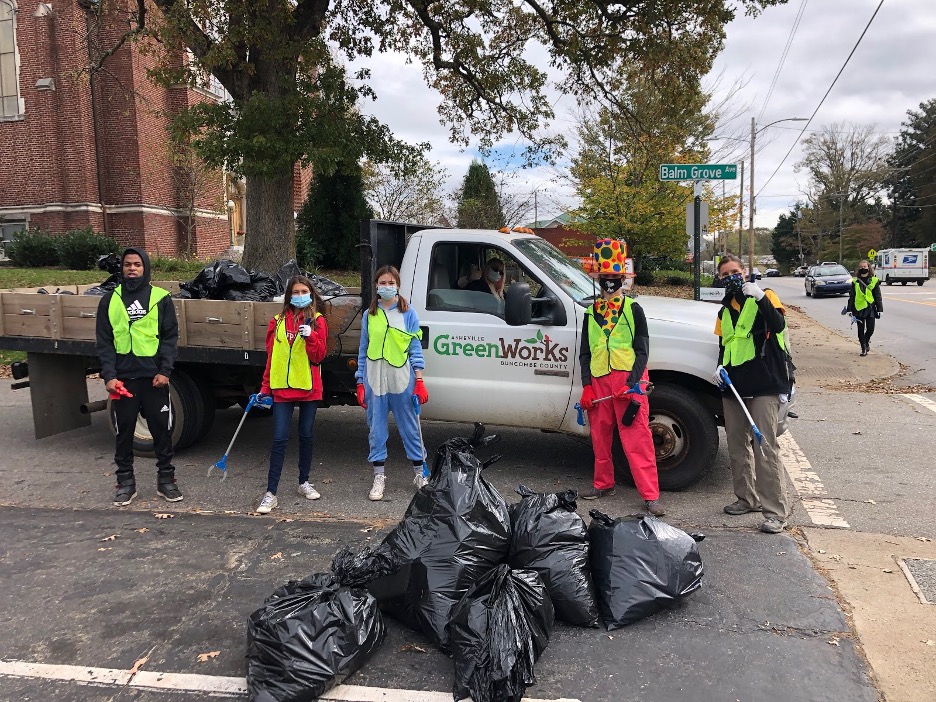
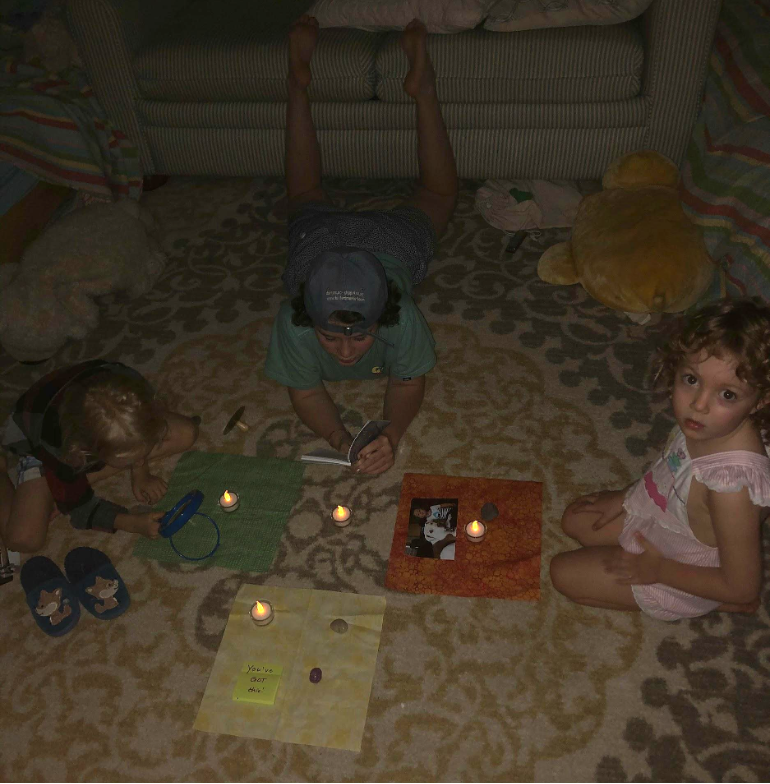
 Though I make my living in part through writing, I find elusive the words to convey the insanity we are living through now. Just a week ago, we witnessed a violent attempt, incited by a sitting president, to topple U.S. democracy. Meanwhile, we are in month 11 of pandemic which continues to kill multiple thousands of Americans each day, my beloved brother among them.
 This year our winter holiday observances are unlike those of previous years. Most of us will be at home with immediate family or alone. Many yearly holiday trips have been reluctantly cancelled as, weary of the pandemic, we wait for vaccines to reach our communities. Some of us have been healthy, others have become sick and recuperated. Still others are struggling with recovery. We all mourn the loss of over 300,000 Americans and millions worldwide to COVID-19 even though we may not know how to mourn such an event. That is what is on most of our minds as we prepare to observe the winter holidays. It has been a difficult year. A year of grieving lives lost, grieving cancelled gatherings with family and friends, grieving the loss of the illusion that we live in an ideal democracy, and so much more.
 It’s the season of giving, right? So maybe it’s a good time to spend some time considering what generosity means. I’ve recently read two pieces that have made me think about that—again. The first is from essays in the book, Turning Point: Essays on a New Unitarian Universalism, a book that will be used as a source of discussion in an upcoming offering from the Leadership Development Committee.
 Don’t look now but we’re rounding the corner to “the holiday season.” Of course, it’s a COVID holiday season so there’s no telling how things will go but we can assume there will be a high premium for creative celebration ideas.
 2020 in the United States is undoubtedly a year “which will live in infamy.” This “annus horribilis,” to quote her majesty Queen Elizabeth II, certainly echoes events in the life of the British queen, as her children’s marriages began to fall apart and Windsor Castle merrily burned. The parallels would be entertaining if not so tragic.
 Fear not. Here’s a rundown on what you need to know. If you’re still unclear, contact Ann McLellan, Tory Schmitz, or Margaret McAlister. (And thank them for the enormous time they’ve devoted to this project along with Deb Holden and Marta Reese.)
 Some of you may have heard about our new mascot, UUny the Unicorn (them, theirs). UUny is delivered to a member or friend’s home to recognize a celebration, milestone or challenge in the life of our community. During this time of physical distancing, delivering a UUny is one way we are staying connected as a UUCA family. A minister or pastoral visitor will arrange a visit to check-in and deliver UUny as a gift reminding the recipient they are held in care and love by the UUCA community. UUny may remain in that home or be delivered to another member or friend who may appreciate a reminder that despite our physical separation, we are still here for each other. I have had numerous opportunities to deliver UUnies since our mascot was introduced at the Ingathering Service in September. It is a treat to be able to say hello and see some of you in person.