News 4 Leaders
These posts are “news memos” for the lay leaders of the Unitarian Universalist Congregation of Asheville, NC.
They provide a forum for staff and lay leaders to consider a variety of issues affecting the life of the congregation. Most memos are written by the congregation’s Director of Administration with input from various staff members.
Comments are moderated by the Director of Administration. All members are invited to comment – to comment click on post title, comment area will be at the bottom of the post.
Posts are irregularly timed.
News 4 Leaders Blog
Visioning for the Future: Lifespan Religious Education at UUCA
Staffing for Growth
There is an excellent presentation on YouTube by Rev. Scott Tayler, UUA Director of Congregational Life, and Mark Bernstein, Growth Consultant, CERG (Central East Regional Group of the UUA covering most of OH and WV, all of NY and parts of PA and NJ) addressing four organizing models for multi-site ministries. The video is embedded at the bottom of this posting.
Aside from the clarity Scott and Mark bring to the idea of multi-site churches (four variations of how some functions can be centralized to provide support to geographically separate congregations), they describe the reasons why multi-site ministries are starting to spring up.
They first make a case for “staffing for growth.” Here is their premise (these are well-known figures):
- Staffing for decline = one program staff person per 200 congregants
- Staffing for maintenance = one program staff person per 150 congregants
- Staffing for growth = one program staff person per 100 congregants
I would contend that in our case, “congregants” are our members, friends, children and youth—all people who benefit from programs at UUCA. So, the numbers for UUCA:
- Number of members and friends and children and youth: 800
- Number of program staff (full-time equivalent): 4.75 [Mark (1), Lisa (1), Milt (0.5), Joy (1), Nick (1), Jen (0.25)]
UUCA has one program staff person for every 168 members, meaning that we are staffed for something between maintenance and decline.
They then go on to explain the budget pressures that congregations are experiencing that make it impossible to staff for growth:
- Rising health care costs
- Building maintenance requirements
- Financial responsibility resulting from our covenantal relationship with the UUA (the Southern Region’s GIFT (Generously Investing for Tomorrow) program)
- Moral responsibility to fairly compensate staff
- Rising energy costs (currently not a factor)
So, if it is impossible to staff for growth, how do we currently handle the growth we experience every year, the 30-40 newcomers who become members and friends of UUCA each year? Right now, we simply lose the equivalent number each year, maintaining our membership number but literally not growing. We are staffed for maintaining, and maintaining is what we do.
Whether we choose to use a multi-site ministry to help address this remains to be seen. I just thought it was fascinating. Here are some “wonder questions” we might ask.
- How might staffing for decline look at UUCA? What might you see happening as a result of not having enough staff to oversee programs? (This is different from administrative staff needed to keep the organization going.)
- How might staffing for maintenance look? What might you see happening as a result of having just enough program staff hours to keep up with the existing programs?
- How might staffing for growth look? What might you see happening as a result of having staff members with plenty of time to create and oversee programs?
- What could we accomplish if we were able to grow beyond 700 members/friends to, let’s say 800?
- What are some reasons we might want to stay just the size we are?
Here’s that YouTube video about multi-site congregations:
[youtube https://www.youtube.com/watch?v=ygJ99CZByqY&w=420&h=315]
Communications, Again—Specifically the Monthly Newsletter
An early post laid out the communications issues that we deal with on staff. This post continues the conversation.
We have now converted our monthly newsletter to an electronic format and created a one-page UUCA Communique that we mail to our non-electronic members and friends (about 20). Unfortunately, I think this was one of those things that “seemed like a good idea at the time.”
The electronic version of the monthly newsletter does in fact accomplish what we set out to do. It’s much more reader-friendly on a computer or smaller device, it takes much less time to lay out than the print version did, and it does not require strict word limits for articles. However, it has one fatal flaw: it reads exactly like a weekly enews edition WITH a month’s-worth of sermon titles and 4 columns. And that causes its own set of problems.
First of all (because it’s all about me, right?), it is a completely aggravating experience to proofread both the monthly newsletter and the weekly enews because 1) they are extremely redundant and yet 2) are created by two different staff members so that edits I have made in one do not carry to the other. Let’s just say it’s not fun to make the exact same changes to the same announcement twice. (I edit them because I am here and because I have a good overview of what’s going on and can therefore add to or shorten an article intelligently.) Second, we have hopelessly confused all the folks who submit articles to us. Now no one knows who creates the monthly newsletter (Jules), who creates the enews (Tish) and what differences they should make to their announcements for each outlet (none of us seems to be clear on that).
But, most important of all, there is no reason to have two of the same set of announcements available electronically if they both are accessible on the website (and then printed for the order of service besides). So, here’s a proposal for your comment:
- Maintain the weekly enews and the insert to the order of service. (Remember that this also gets posted to the website so the current and past editions are always available for reference.)
- Discontinue the monthly newsletter.
- Add a “calendar” page to the lifespan religious education website area that reproduces what has been available in the monthly newsletter.
- Create a new “post” page on the website that will feature a new column each week by one of our four column writers (Mark, Lisa, Joy and Board Chair Jane Bramham). Each enews will link to the newest column. And as a bonus, these columns will allow for reader comments.
- Recruit a volunteer* to create the monthly UUCA Communique printed piece for mailing and foyer rack placement (no luck finding this person yet).
What do YOU think about this latest proposal?
* Remember that Jules has reduced her work hours to 30 per week, so replacing her with this one volunteer job and having Tish create the enews should help her fit her other work into the allotted hours. Jules’ reduction in work hours also has the happy side effect of reducing our personnel costs a bit.
Ten Weddings and a Funeral
Yesterday was an awesome, awesome day at UUCA! (And technically it was a memorial service, not a funeral, but “Ten Weddings and a Memorial Service” doesn’t sound nearly as good, right?) Here are just some of the amazing things that I witnessed (more or less in chronological order):
WEDDINGS!
- A boatload of volunteers at UUCA by 9:15am (many were much earlier) scurrying around hither and yon to get the place ready for weddings. We had members posted outside to greet and lead visitors into the building while watching for possible protesters (we had none). We had a welcome table set up and staffed to sign up couples for weddings with 6 ministers available to conduct services (Revs. Mark Ward, Lisa Bovee-Kemper, Sarah York, Sally Beth Shore, Diana Ritola and Pete Tolleson). We had a large and skilled hospitality team to set up tables, flowers, punch, sparkly grape juice, coffee and an amazing number of donated sugar-infested treats (“What’s a wedding without cake?” is clearly a UU motto). We had an event photographer (look for photos online as soon as Jules gets back to the office later this week). We had escorts for our couples so they could meet with their officiant and make it to the wedding on time.
- Large and extended applause all around when Carol Taylor and Betty Mack walked in for their wedding. More than 50 people in attendance at the first wedding of the day. Congrats Betty and Carol! Mark’s emphatic delivery of the line, “By virtue of the authority vested in my by the STATE OF NORTH CAROLINA!” accompanied by the verbal notation that he had waited a long time to say that.


- And then, the weddings of strangers. Well, not strangers anymore because we were allowed the privilege of witnessing incredibly touching moments in each and every ceremony. Our crew of ministers did a truly lovely job of personalizing the “standard” service they each had for their use. Although they often had no more than 20 minutes to speak with the couple, they were able to weave in personal references so that the ceremonies were not only more meaningful to the couples but those witnessing the event might know something about these brides and grooms as well.
- Clouds of witnesses. Now this phrase may not have been used in this context in its original appearance, but it does a great job of describing how I felt as part of a group that would move from one wedding to the next, so that each wedding not only had an officiant and the required 2 witnesses, but a group of people who could be touched, applaud and celebrate each ceremony.
A MEMORIAL SERVICE Then, right in the middle of these festivities, we sent the wedding celebrations to the RE Commons and made space to celebrate the life of Marylee Davis. This was a small service, but I think we did a nice job of making space for this more somber occasion and for the family members and friends who attended. Mark officiated at this service.
MORE WEDDINGS
- While the Sanctuary was unavailable for weddings, we offered outdoor weddings to couples. The somewhat gloomy morning had become a lovely, breezy sunny afternoon! Turns out we have two or three spaces on campus that are wedding-ceremony-friendly.
- Over the day, the number of volunteers at hand waxed and waned as people had other commitments, but as the afternoon progressed, more and more people were arriving as some folks were able to leave work early, some folks picked up their kids from school and brought them along, and the energy on the campus ramped up again. I can only say you shoulda been there!
- The last wedding of the day was sort of a mirror image of the first one. Although it was completely unplanned, our first and last weddings of the day were UUCA members.
- Large and extended applause accompanied the arrival of Pete Tolleson and Ronnie Marable when they walked in for their 5:00pm wedding. Ronnie’s (or Pete’s–mixed information on that) granddaughters were there to act as flower girl and ringbearer, and this too was a lovely service, very different from Carol and Betty’s, but no less touching. This wedding was also conducted by Mark.
- A cake cutting. As previously mentioned, our supply of cake items overfloweth. So, near the end of the day we realized we had one more cake that hadn’t been put out yet. Well, what better use of that than to have Pete & Ronnie cut the cake? It was one more natural-yet-surprising moment in a day that was full of them.
AND THE FINISH
- As clean-up started, UUCA members and their families were relaxing at tables, David Ray was playing guitar, little kids were doing what little kids do, and everyone seemed just a little reluctant to leave. It was a great day, for our couples, for North Carolina for heaven’s sake, and for UUCA.
- Oh, and what about that over abundance of cakes and cupcakes? We know that one cupcake supply was taken to Room in the Inn and we made a significantly larger donation to the VA hospital. Doesn’t everyone need cake?
What Training Do You Need?
It’s the start of a new worship year. That means we have some committees with new leaders and some committees with new members. Many of you know exactly what to do because you’ve been doing it for years–others of you, not so much. The administrative staff has much useful information posted on our website, at For Members/Leaders Need to Know. There you can find out how and when to submit newsletter and enews articles, how to handle money, both outgoing and incoming, and how to schedule meeting space. Our objective is to make sure you have everything you need to do your job. Do you? What other information or training would you like to have?
How Do You Know That Stuff?
As in any organization, there are concentric rings of committed members. At UUCA (and at most religious institutions), we have 60-80 highly committed members in the center of our circle. These folks donate large amounts of time and money to Unitarian Universalism. They are our frequent volunteers. They are the folks who go to cluster, district and national UU events, and UU summer camps. They are many of our highest donors and they often also give to Chalice Lighter calls, separately to the UUA and often to the Unitarian Universalist Service Committee (UUSC) and maybe even the Church of the Larger Fellowship (CLF), too.
That’s a lot of UU involvement and it explains why these folks seem to know an awful lot about Unitarian Universalism, about the workings of the UUA, and have UU friends around the country if not around the world; generally they seem to know “what’s going on.” Well, what about the rest of us? How do I learn stuff without committing that much time?
Best answer: READ
Second best answer: PARTICIPATE
Actually participating is better than reading, but if you don’t read stuff, you’re not going to know what opportunities are available for your participation; hence the number one ranking for READ.
So, “What’s the minimum I need to read?” I hear you ask.
- The UUCA Weekly Enews – ALL OF IT!! Every week! (You can cheat by just reading the Sunday order of service insert which is an extract (but not all) of the enews or you can cheat even more by reading the entire set of slides that run every Sunday in Sandburg Hall after the services.)
- At least the Lead Minister’s column in the monthly newsletter
- At least the “News” section of the quarterly magazine, UU World
- Uh, well, you could read “News4Leaders” but if you made it this far I guess you already do. You get points for that!
Extra credit reading:
- The other 3 columns in the monthly newsletter: Associate Minister, Lifespan Religious Education Director, Board President
- Other articles in UU World, paying special attention to the authors’ names since they are often “players” in the UUA.
- Subscribe and read the lead article of the Southern Region (UUA) e-newsletter. Scan the rest.
- Join a UUA e-mailing list. These are posts written by UU members with special interests. Go here to see the list of choices.
OK, so what kind of participation are we talking about?
- How about coming to worship most of the time? It’s amazing how much that helps keep you connected to what’s going on in the congregation.
- Attend a non-UUCA UU event. (One very easy one would be the Cluster Gathering on October 18 here at UUCA. You might also check out the nearby Mountain Retreat Center for camps, retreats and even clean-up weekends.)
Extra credit participation:
- Attend a UUA General Assembly, the big kahuna of UU events.
The rest of you UUCA leaders know stuff, too. What recommendations might you make to help turn new UU leaders into “old hands?”
Next Year’s Cool New Concept in Children’s RE
Have been having trouble making this blog work through Chrome. Finally decided to try Firefox and here I am. Expect a few more postings rather more quickly than my norm as I have a backlog of ideas!
A month or two ago, the RE Committee responded to survey results they had received from parents and made the rather courageous decision to change the way they conduct the RE classes for K-5 children. This past year (and many years prior), children were grouped by class level, with classrooms for K-1, 2-3, and 4-5. All three of these classes were following a similar curriculum called “Spirit Play.”
Here’s a description of Spirit Play:
We see the purpose of religious education as helping children in living into their own answers to the existential questions: Where did we come from? What are we doing here? How do we choose to live our lives? What happens when we die?
The classes follow a Montessori approach, the key elements being the prepared classroom environment and the teachers. These elements free the children to work at their own pace on their own issues after an initial lesson or story within a safe and sacred structure shepherded by two adults.
Montessori Philosophy:
Based in a proven educational method whose values support Unitarian Universalism:
- Encourages independent thinking through wondering questions
- Gives children real choices within the structure of the morning
- Creates community of children in classroom of mixed ages
- Develops an underlying sense of the spiritual and the mystery of life
- Supports congregational polity through choice of lessons
- Volunteers were found to value the program as part of their own spiritual process
- Volunteers have commented on the low preparation time for weekly stories
Basically, the classroom experience starts with a story, using a story and props that have already been prepared for you. Following the story, children are invited to answer “wondering questions” and work on some activity that applies to the morning’s story.
At UUCA, the Religious Education Committee has decided to combine all children in grades K-5 to hear a single storyteller. In the model we’re trying, the storyteller would tell the same story two weeks in a row. Following the story, the children will then be asked to choose among 3 activities for the day. These activities come out of the interests and passions of our adult members (definitely not just parents with children in RE!). As Benette wrote, “We want you to lead a group of kids from the root of your passions, be it knitting, cooking, calculating, star-gazing, hiking, dancing, drawing, acting, singing, measuring or anything else.”
As a teacher or storyteller, you would get the story way ahead of time, you might ask for suggestions from Joy Berry, but you and a partner would be responsible for an activity. It sounds pretty cool to me. Please volunteer and coerce your UUCA friends to do the same. Volunteer RIGHT NOW by contacting the chair of the RE Committee, Suzanne Klonis.
Wide-Open Welcome
As you may have noticed, we have two complementary programs going on at the moment at UUCA. We have the construction/fundraising program called “The Welcome Project” and a membership/connection program called “Wide-Open Welcome.”
Wide-Open Welcome describes the way we want to be as a community of people who are very happy that others have found their way to our doors. We want to share our good news and reassure our guests that they have found a group of people who have chosen to covenant together to nurture our individual searches for meaning and work in community for freedom, justice and love.
Each and every person who is a part of this community has a role to play in the way we throw our doors wide – welcoming is an ongoing project that requires broad-based participation and constant engagement. Last weekend, we had a very exciting and idea-filled Wide-Open Welcome workshop which helped to clarify the goals of our Sunday morning greeting process. We came up with lots of great ideas for how to be more consistent across the board, and most importantly, we introduced a new role: The Connector. You will see Connectors roving in the Sanctuary and in Sandburg Hall in the weeks to come – they will be wearing large blue “Ask Me” buttons. They will be available to help Newcomers by answering questions and helping to (you guessed it) connect people with each other as well as resources & activities.
But whether you are an official Connector or not, you have a job! No matter where you are in this building, no matter when you are here, it is everyone’s job to make a guest feel welcome. It’s not just staff job, it’s not just the job of your chairperson, it’s not the job of “someone else,” it’s your job.
This is true on Sunday mornings, too. Because not everyone is a natural at small talk, here is some help provided by the Wide-Open Welcome Team.
Conversation Starters (to break the ice):
If you see someone with a Guest (handwritten) nametag OR anyone you do not know:
- “Hi! I don’t think I’ve met you before. I’m_______”
- “What brings you here today?”
- “Where are you from originally?”
- “Why did you select a Unitarian Universalist congregation to visit?”
If you see someone with a Newcomer (lavender) nametag:
- “Hi! I’m _____. I don’t think I’ve met you before. Have you recently started attending?”
- “How did you find out about UUCA originally?”
- “What do you think so far? Is there anything you are wondering about?”
Welcoming Questions (to better introduce newcomers to others)
Who are we welcoming? Listening is the most important way we can show our welcome:
- “Have you lived here long?” (where do you hail from?)
- “What do you do the rest of the week?”
- “Are there any questions I can answer for you?”
- “Tell me about yourself.”
- Don’t forget to share something of yourself & your UUCA experience.
How to End the Conversation without Ending the Welcome
Finishing up greeting a newcomer can be almost as hard as beginning. Suggestions:
- Lead them to the Welcome Table if they have not yet been there
- Introduce them to someone else, perhaps with something in common
- If they ask you a question you can’t answer, say, “I don’t know the answer to that, but perhaps _____ does. Let me introduce you.”
- Walk them to the coffee table
- End your conversation with “I hope to see you again.”
Benefits of Signing In at the Welcome Table
- Weekly e-newsletter
- Guest Nametag, request a Newcomer Nametag
- Enrollment for Beginning Points
- UU and UUCA Questions Answered
- Connect with members during coffee & conversation (Connectors)
- Request more information from staff about programs
Hesitant Newcomers
The hesitant newcomer is someone who does not want to sign in at the Welcome Table or even get acquainted. They’re still trying to decide whether this community is one they want to get involved with. Instead they:
- Run out at the end of the service (but a quick hello-and-welcome may be tolerated)
- Don’t want to put on a Guest nametag (it’s an option, not a requirement)
- Don’t want to sign in at the Welcome Table (it’s okay to wait until they are ready to get more involved)
What We All Can Do to Welcome Newcomers
- Wear your nametag. It makes it easier to get to know people. Encourage others to wear theirs, or to sign up for a new one.
- Look for hand-written and lavender nametags. These are the people who want to meet YOU!
A Tale of Two Construction Projects
It was the best of times, it was the worst of times…… oh, sorry, couldn’t help myself.
Here’s information all well-informed members should have. Pass it along, let your friends know, mention it in your meetings, whatever. And be sure to tell them that all the information about the project, including the drawings we debuted last night, is on our website (For Members, Campus Development).
We have two construction projects in the works right now, one more or less immediate, the other in the early planning stages:
IMMEDIATE: Cover the Drainage Ditch Project –> This project will be completed by June 2014. The Metropolitan Sewer District of Buncombe County is replacing sewers around our campus and we expect to piggyback onto that project with one of our own. We will be piping and covering the open drainage ditch that runs parallel to Bond Street behind Jefferson House. The $85,000 or so that this will cost has already been set aside; no fundraising is necessary. For more information, head to our website and click on the For Members tab and select Campus Development.
EARLY PLANNING STAGES: The Welcome Project –> We need a sign that uses our actual name and that people can read from the road. We need new window well retaining walls. We need to make our space welcoming to all, perhaps especially to those who have mobility issues. We need better lighting and lighting controls in the Sanctuary. These issues and a few others are addressed in the proposed Welcome Project. We are showing 3-D drawings of the basic ideas and soliciting feedback right now. The very preliminary cost for this project is $750,000 and will be funded by a capital campaign if the congregation wishes to pursue it. For more information, visit our website and click on the For Members tab and select Campus Development.
Send your thoughts, comments, suggestions to me or any member of the Campus Development Committee: Bill Agrella, Shel Altschul, Sonya Friedrich, Larry Holt, John Martin, Jerry McLellan, Bob Roepnack, Jim Samsel and Elizabeth Schell. Contact information for all members and friends is available through MY INFO.
How Committees Work in Policy Governance
As I wrote in the entry about the Board and policy governance, this organizational structure definitely helps the Board and staff by providing greater clarity on roles and responsibilities. The same can be said for the work of committees. Every committee and group in the congregation is “attached” to a staff member. That means that there is a direct line of communication from the Board (setting vision) to the Executive (setting strategy) to staff members (guiding programs) and their committees and groups and back again. This structure keeps the organization lined up, so to speak, with everyone aiming in the same direction.
As one example, although “Activity Groups” are one of the small group ministries of the congregation, I am the attached staff member (all the other small groups are attached to Rev. Lisa). Therefore, if someone wants to start an Activity Group, or conduct an activity “out of the norm” for their group, I am the contact person with whom to consult.
Another example: Ushers & Greeters are a key component of the care and connections ministry of UUCA, and they are attached to Rev. Lisa. That means that Rev. Lisa and the committee work together to organize and perform that necessary function. From this example it ought to be obvious that Lisa can’t do all the work herself (counter to the weird rumor around here that we don’t need volunteers anymore because staff does it all—dark humor indeed for a staff with more ideas than bodies) but having her attached to this group means that she can help guide them as they brainstorm and design their group’s role so that goals of the overall care and connections ministries of the congregation are in sync with the vision of the Board.
Again, the clarity gained from using a governance structure that defines the flow of accountability and responsibility among the congregation, board, staff and committees is enormous. Yet I know we have members of the congregation, both long-time and new, who feel they don’t quite have a handle on this system.
In this case, I don’t have any questions for you, but perhaps you have questions for me. As always, feel free to comment or question as you feel moved, either through this post or privately if you wish. We on staff are really enjoying your interactivity here. Keep up the good work!

Connect with us on Facebook

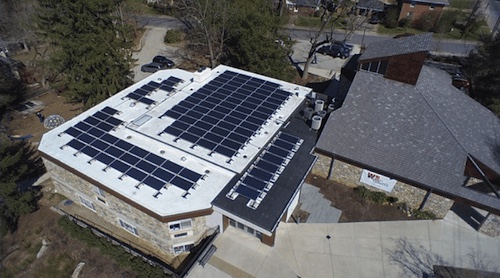
We are solar powered