Nov 8, 2018 | Weekly Message
Maybe it’s the approach of Thanksgiving, but lately, I find myself experiencing frequent unanticipated spells of gratitude.
Walking up the sloping sidewalk in front of our main building on a recent Sunday, I was struck by the beauty and condition of our UUCA rain garden. My appreciation continued as I stepped onto our open plaza and then entered our expanded and welcoming lobby, designed to promote the connection of those who enter. Well, that started the gratitude ball rolling.
I thought about how many projects have recently come to fruition because we are blessed with not only a talented and committed professional staff – we have a corps of inspired and dedicated volunteer ‘giants.’ It’s tempting to acknowledge some of them by name, but that’s too risky, as there are many more of them than I even know about. (And, as they say, you know who you are!)
Just pause for a moment and think about how our UUCA congregation has responded to recognized congregation need. We have a wonderful piano, enhancing the inspiration of our services (and even making our space more inviting to other groups, some of whom provide significant revenue streams). It was some of the volunteer ‘giants’ who stepped right up and made that happen. Our congregational response to the successful solar panel project is another example of our congregation being inspired by ‘giants’ to live our values.
How many of the ‘giants’ made the Welcome Project happen? And remember when 23 Edwin became available and our congregation quickly raised the funds to buy it? Think about how UUCA responded to the need to provide sanctuary and how that has become a meaningful reality, expressing our values of compassion and justice.
There are so many other volunteer ‘giants’ who help us express and live our congregational values: pastoral visitors and worship associates; those devoted to the fiscal success of our congregation through annual campaigns, special events and Legacy work; those who work in RE; organizers and leaders of small groups; committee chairs; social justice leaders; those who water the plants and greet us each week.
So many reasons to be grateful to all the ‘giants’ who enhance our present congregational life and help us live our values – connection, inspiration, compassion and justice – now and into the future.
Diane Martin, Board of Trustees
Nov 1, 2018 | Weekly Message
 For a congregation of our size – around 500 adult members – it can be a challenge for people to find that niche where they can connect with others. Sunday mornings are busy times with inspiring worship and religious education. But it is daunting to try to make any meaningful connections with others. And those are the connections that really feed us, that give us the experiences of depth that we hope to find in a religious community.
So, we on staff give quite a bit of thought to helping create opportunities for people to meet, interact and go deep. Around 140 of us just returned from one of the biggest get-togethers that we have each year to do that: our annual weekend congregational gathering at The Mountain in Highlands, NC.
We’ve been organizing gatherings there for several years (thanks to the leadership of Larry Wheeler), and I think this year was the best so far. Not only was our attendance the largest ever, but there was a wonderful energy among us. There were workshops and activities to reflect, create and have fun and lots of opportunities to explore the stunning natural beauty of the place. But best of all it was an occasion to get to know people of all ages in a relaxed, informal setting, Especially for the many who are newer to our congregation, it was a welcome chance to mix, get to know each other’s children and make new connections. Sound good? You bet. So, mark your calendar now for our next congregational gathering: October 11-13, 2019.
In the meantime, many other opportunities here await you, beginning with the UUCA Auction this coming Saturday as well as dinner circles, covenant groups, Wednesday Thing classes and activities, social justice volunteering, and more. If you’re excited about an activity that isn’t going on right now, let us on staff know, and we’ll be happy to work with you to see if we can get a group started.
This is at the heart of what we do. It is also the beginning of all hope, of all joy: coming together with others to know and be known, to give life to our passions and in gathering realize the possibility of a better world, a better life for us all. As the song says, “From you I receive, to you I give. Together we share, and from this we live.”
Rev. Mark Ward, Lead Minister
Oct 25, 2018 | Weekly Message
 I’m three months into my ministry at UUCA and I’m grateful for the warm welcome and support I have received. My transition from living near the ocean to living in the mountains has been exhilarating as I experience the fall colors, bear sightings (three so far!) and awe-inspiring hikes in the mountains around Asheville.
My work with you so far has been challenging and rewarding as I identify priorities in each of my areas of responsibility: pastoral care, faith development and worship. Last month I provided an update on pastoral care. This month I will focus on faith development which includes religious education for children and youth as well as adult programming. But first, an exploration of what faith development is about. I look to the ideas of theologian John Westerhoff summarizing his theory of “how faith happens”[1]. He explains that faith is initially “caught,” like a cold, as children imitate their parents and the adults in church. Children learn: This is what we do. As children grow older, religion is “taught.” Children learn about history, traditions, rituals and other aspects of their faith and the community they are a part of. It is a time of belonging to a group. Children learn: This is  what we believe and do. Later, in adolescence questioning happens, faith is “sought.” It is a time of inquisitiveness and curiosity. Adolescents ask: Is this what I believe? So, faith is first caught, then taught, then sought and, in early adulthood…. faith is “bought.” After much searching and questioning the individual states: This is what I believe. And, throughout our lives that faith is “wrought” as we continue to learn, question and deepen our understanding of what gives meaning to our
  lives.
Our religious education programs are based on this understanding of faith development. This year K-3rd grades are using stories to explore UU values and sources using wondering questions to engage more deeply with the stories and share their insights in a welcoming space. The activity centers in the rooms around the RE Commons are set up to provide activities that engage multiple learning styles and allow further engagement with the story and their peers. Older elementary youth are using UUA curricula to explore topics such as what it means to be a covenanted community and to develop a greater understanding of right and wrong by answering questions such as, “Why do bad things happen?” or “Is evil or goodness within us?”
Older youth are exploring world religions, learning about healthy sexuality, and articulating their personal credos. High school youth (10-12 grade) are exploring how to bridge from religious education classes to congregational life as they prepare for college or the workforce once they graduate from high school. Whew! There is so much happening at UUCA beyond the faith formation that occurs during worship on Sunday mornings. Faith is being caught, taught and wrought as our youth engage in the programming facilitated by 80 committed volunteers and our RE Coordinators Kim Collins and Jen Johnson. We are grateful for their sharing of their time and talent with our children and youth!
And adults are also engaging in faith formation as they participate in small group ministry through covenant groups, spiritual deepening groups such as the Buddhist Fellowship and CUUPS (Covenant of UU Pagans) and social justice outreach. Faith formation is also happening during The Wednesday Thing as volunteers and staff facilitate programs that support the individual search for meaning in the context of a supportive spiritual community. For example, during the last two multigenerational Pageant & Puppetry programs it was uplifting and fun to witness adults and children working together creating posters and a paper mâché unicorn for our holiday pageant. We also experienced the power of story when Bonnie Habel Stone launched the Wednesday Thing Odyssey. This program invites members of the congregation to know each other in greater depth. Too often we only learn about people’s stories at their memorial services. Our goal is to create opportunities to celebrate each other’s lives now. Starting in January there will be a monthly Odyssey speaker. I encourage you to join us!
Another important part of faith development at UUCA has been offering more whole- church services. Religious educator, Kim Sweeney, has written an essay about the importance of families worshipping together.[2] She advocates for intentional family ministry that welcomes the whole congregation to worship together on Sunday morning and also offers religious education programs. I like the both/and possibility of her proposal: whole-church worship some Sundays and age-appropriate religious education programs other Sundays. It is important for children to attend service with the congregation and participate in the rituals, the songs and the experiences of the gathered community. My goal in implementing the faith development aspect of my portfolio is to co-create with you, the congregation, opportunities for faith to be caught, taught, and wrought in community. I am available if you have ideas or feedback about our programs. My office hours are Monday, 9:30am-noon and Tuesday-Thursday, 9:30am-2:30pm. Appointments are preferred because I am also at meetings or doing pastoral visits during those times. See you at UUCA!
[1] Meadville Lombard poster: Making Faith Happen by Joy Berry, FAHS Collaborative; additional research https://pdfs.semanticscholar.org/f738/75aa0ffc001ebc887fda6e1e19faed080438.pdf
[2] “The Death of Sunday School and the Future of Faith Formation,” Kim Sweeney, p 7-15
Oct 18, 2018 | Weekly Message
 Wouldn’t it be great if we glimpsed the same sort of view of the world that George Bailey got in It’s a Wonderful Life? It’s really impossible to know what effects you leave in your wake (where is Clarence when you need him?), and it’s just as hard to know how UUCA affects Asheville. But we do—at least a little! Here’s how I know.
If you ever wondered whether building, maintaining, updating and expanding buildings are a good use of your donation, here’s something to think about. Sure, we use these buildings ourselves. We have offices, RE classrooms, meeting spaces and of course a worship space for the “work of the congregation.” But we also rent our spaces for quite low fees, not so much for the income (though of course, that helps us pay for maintaining these spaces) but as a service to the community.
But we go beyond that, too. We frequently reduce our prices or charge nothing at all for groups such as the Racial Equity Institute, CIMA, Nuestro Centro, Guardian ad Litem, Pisgah Legal Services, and more. Last month, we offered our space to Congregation Beth Israel for their High Holy Day services. (Their construction project wasn’t done on time and we know all about that.) Here’s an excerpt from a lovely note written by Rabbi Goldstein (accompanied by a donation to UUCA):
“It was so moving and confirming for our congregation to be welcomed into your home. All of us benefited immensely from the beautiful space, but most of all we experienced an incredible and unquantifiable spiritual and emotional elation from your having opened your doors to us.
We all know that we live in a special community in Asheville, and your congregation consistently helps make this community special in innumerable ways. In this instance, your neighborliness and heartfelt community contributions meant, for us, the opportunity to celebrate some of our most significant holy days of the year. For that, we will be forever indebted and forever grateful.
Be it in our communications in preparing for our holidays, in your willingness to allow us to move in and out of the space as we needed to bring in our items, for the sound engineers who helped amplify our services, and in the general welcoming we were shown, the true nature of your community shined brightly throughout all of our interactions.”
Not quite an It’s a Wonderful Life scene, but pretty good confirmation that we matter to Asheville. Our presence makes a difference. And we couldn’t BE that presence without the combined acts of stewardship from all of us; our gifts of time, talent and money. Thank you.
Linda Topp, Director of Administration
Oct 11, 2018 | Weekly Message
I found myself in the Sunday worship service two weeks ago unable to sing the introductory hymn because I was in tears, a surefire sign that I need to work on something deep within my soul. We moved on to the part where people face each other, often married couples or people domiciled together in other arrangements. I can imagine facing my late husband and saying those words. People who live together frequently trespass against each other in all kinds of ways, most of them small enough to be almost insignificant, some large enough to cause real hurt, but mostly the result of thoughtlessness, not malice.
The annual forgiveness service is a little awkward for those of us unpaired, but that’s not why I became emotional. I said those familiar words in the responsive reading with a certain close family member in mind but realized that I couldn’t mean them yet. I wanted to mean them (or maybe I just wanted to want to mean them), but the hurt and the anger is so deep that I cannot let go. And I am a person who is not easily offended. So…..why is it so hard to forgive?
Later in the week, I came across a photograph on Facebook, a beautiful picture of two women sitting solemnly side by side, one in white and one in black, with this caption: “I sat with my anger long enough, until she told me her real name was grief.” As the Southern Baptists would say, I felt a sense of conviction. I recognized myself instantly. I am grieving and have been grieving for almost eight years because someone I thought would always have my back let me down and did so at a very bad time in my life. I have finally realized that the major source of my distress is not anger over what she failed to do, but rather it’s grief over losing a relationship that I thought would last forever.
She has never explained. She has never apologized. She doesn’t want to talk about it. I am not the only family member from which she has distanced herself. Is it possible to forgive when one’s forgiveness has not been sought? When no apology is forthcoming? When no effort at restitution has been made?
If you forgive someone but don’t tell them about it, have you really forgiven them? Do I want to forgive, or have I nurtured this hurt for so long that I don’t want to let it go? I will be wrestling with these questions as I try to grow spiritually this year. There is a big stinky weed in my UU garden that needs to be pulled, and I would welcome help from anyone in the congregation who has faced this problem, especially within their own family.
Judy Harper, Board of Trustees
Oct 4, 2018 | Weekly Message

In light of the story of sexual abuse unearthed at the US Senate Judiciary hearings on Brett Kavanaugh, it’s no surprise that a new hashtag has appeared on Twitter for men who managed to go through their high school or college years without having sexually assaulted anybody: #Not Me.
It seems bizarre to me that we should reach the stage where it should be remarkable that young men made it through their adolescence being kind and respectful to sexual partners – whether women or men. And I frankly don’t think it is. I think that most men are and want to be decent human beings in their sexual relationships. But you might not know that from the comments on social media following Christine Blasey Ford’s testimony of having been thrown down and groped by Kavanaugh. We heard it whispered among some men, “Well, who didn’t?” The answer is: lots of us, most of us, men who recognized that only a predator and a jerk would treat women that way.
And as long as we’re talking, I need to add: Not me, either. I was a quiet kid growing up, no social butterfly. But I had girlfriends in high school and college and was sexually active, but all those relationships were consensual. I never forced myself on anyone.
I have to say, though, that in college I did hear about some wilder goings on, places women were warned against going, where some men embarrassed and debased them. This was pretty widely known, but no one did anything to stop it.
What’s frightening today is that with the entertainment industry so sexualized and with porn ubiquitous across the Internet, it can be hard for boys, especially, to make sense of what a healthy sexual relationship even looks like. That is part of what makes it incumbent on us as a caring, compassionate community to help them learn.
The Our Whole Lives classes that we at UUCA convene across age spans are centered in a value-based conversation about sexuality at each age level, up to and including adults. I took the classes years ago. So did our three daughters and now our granddaughters, and I am grateful for this gift to their lives.
Meanwhile, we men need to be upfront in pledging never to be sexual abusers ourselves, to intervene if we see it happening, to directly urge our sons never to engage in it and to confront anyone who would normalize that kind of behavior. Not Me, not any of us, not ever.
Rev. Mark Ward, Lead Minister
Sep 27, 2018 | Weekly Message
 One of the highlights of my seminary experience was an eight-month hospice chaplaincy internship as part of clinical pastoral education. Although I began my internship with the same fear everyone has about not knowing what to say or how to pray with the mostly-Christian patients that I served, weekly visits with patients while shadowing my mentor taught me that pastoral care was all about striving to be a non-anxious, compassionate listening presence. It wasn’t about me or my theology, it was about being present, listening to another’s story in the context of ultimate meanings and concerns in their lives. I eventually made visits on my own and found it to be truly sacred work. And, I recognized its importance in the life of a religious community. We informally care for each other as we engage in the life of the congregation – attending meetings, coffee hour, social justice projects.
The Pastoral Care Ministry is a more formal expression of our care for each other. It engages the generosity of individuals willing to share their skills to provide compassionate listening, spiritual support and hope for members and friends of the congregation during life’s transitions. Ordained ministers often cannot meet the pastoral needs of the congregation alone and rely on trained and supervised pastoral visitors to be an extension of the minister’s pastoral presence. Working with the Pastoral Visitors at UUCA is one of the most rewarding aspects of my work.
One of the goals of our Pastoral Visitors Team this year is to increase the visibility of this important ministry and provide programming that addresses some of the stressors that many  of us face throughout our lives. We invite you to participate in this year’s programs and welcome suggestions for future programs. Here is what we have planned so far:
November 28, 7PM Domestic Violence Panel & Discussion.
An opportunity to dispel assumptions about domestic violence and learn how it impacts communities. There will be a separate workshop for youth: “Consent is Everything.”
December 5, 7PM Thinking Differently About the Holidays: Moving from Terrible to Tranquil
December 9, 2PM Blue Christmas Service.
A service for those “feeling blue” during the holiday season intended to create a space for reflection, healing, and hope.
During our meetings, we have been exploring the ways in which a caring community behaves. We invite you to join in the conversation. How can all of us be generous with our time and listening skills to support each other? Please visit the bulletin board in Sandburg Hall and contribute your thoughts on how a caring community behaves. It is a collective effort to build and sustain beloved community. Your input will help us strengthen the shared ministry of pastoral care at UUCA. You can also share feedback with any member of the Pastoral Visitors Team: Karin Eckert, Iris Hardin, Jill Preyer, Ephraim Schecter, Myrtle Staples, and Carol Taylor.
Rev. Claudia Jiménez
Minister of Faith Development
Sep 20, 2018 | Weekly Message

- Photo by Sebastian Voortman on Pexels.com
Once upon a time not so very long ago, a UU congregation in, well, somewhere near here, did not quite have a culture of generosity when it came to taking care of itself. The idea that all members need to be, no, ARE stewards of the organization hadn’t quite spread to everyone. There had always been time-generous people, and skill/talent-generous people, and money-generous people, but many folks were happy that those people were around and didn’t recognize that their own (less, they thought) contributions were important. I’m here to say that I think those days are behind us, er, them.
Here at UUCA, I am feeling the shift in the practices of generosity and stewardship. People are beginning to understand that all generous gifts, no matter the actual size, are vital to the health of the congregation, make the congregation vital, and turn out to be healthy for the giver, too.
If stewardship means taking care of UUCA, then we surely need to call out the fabulous fundraising for the solar panels. Not only was the project itself much more about protecting the environment than saving money on electric bills, but the project was paid for by lots of people giving generously—to the best of their abilities.
And were you here on the Sunday we dedicated this year’s teachers/leaders in religious education? A LOT of people stood up in front at the second service…we have about 80 adults, mostly active parents but some non-parents, too, acting as teachers, helpers, and mentors in Sunday RE programming. That is time-generosity in action.
We have three active teams planning fundraisers for this year. The women on these teams (yes, of the more than 20 or more people planning these events, only one is male) are contributing their skills and talents to help support (take care of) UUCA. This year, the largest of the “special” fundraisers, our annual auction, is scheduled for November 3. (Please turn in donations this Sunday—the planners are near to having anxiety attacks, afraid we won’t have enough stuff to auction off.) Another, smaller team will have been working for nearly a year to conduct a gently-worn but “New to U” sale of jewelry, scarves and trinket boxes on March 29. And of course, the folks that will be leading our annual budget drive (you know, the one that supplies 88 percent of our operating funds) have been gearing up for another Celebration Sunday on March 3. All of these “back room” planners are demonstrating skill/talent-generosity.
Acts of stewardship are obviously good for UUCA, but are they really healthy for the giver? Turns out the answer is a scientifically-proven yes. The science of generosity shows that the more generous people are, the more happiness, health, and purpose in life they enjoy. There is also reason to believe that generous practices actually create enhanced personal well-being. There’s an entire book on the science of generosity, cleverly NOT named that. Look for The Paradox of Generosity: Giving We Receive, Grasping We Lose by Christian Smith and Hilary Davidson. (Use smile.amazon.com and donate to UUCA if you buy it.)
Linda Topp
Director of Administration
Sep 12, 2018 | Weekly Message
 I notice a tendency in myself to “just finish a few more things from my to-do list,” to keep grinding, and “once everything is done“ it will be easy to relax and have fun. While I believe delayed gratification is an honorable and productive strategy, it can be overused. We live in a society that is productive and inventive and also, in my opinion, overly focused on doing things. My children serve as inspiration and motivation to accomplish such hard work. Thankfully they have also been inspiration and motivation to sometimes “just be.”
 The borders of work and play and public and private are in flux these days. While not all of this is problematic, I think the increase of purposeful- and mindful-living themes is a reaction to these changes and an indication of the needs we have for awareness in the moment. This doesn’t only mean awareness of the happy thoughts, the calm, the peace. It may not be as fun or easy, but it is ultimately helpful to truly feel anger, stress, disappointment. It means not just smelling the pretty red roses – it means getting a little whiff of everything.
We often label decay and death as necessarily bad or scary. However, as the very first signs of Fall have started to appear, here is a reminder that a peace can be found in acknowledging the beauty of endings as well as beginnings. After all, the dead roses fertilize the next generation.
“Sorrow prepares you for joy. It violently sweeps everything out of your house, so that new joy can find space to enter. It shakes the yellow leaves from the bough of your heart so that fresh, green leaves can grow in their place. It pulls up the rotten roots so that new roots hidden beneath have room to grow. Whatever sorrow shakes from your heart, far better things will take their place.” ―
Rumi
James “Buck” Schall, Board of Trustees
Sep 6, 2018 | Weekly Message
Last July in worship I introduced a notion to guide our social justice work that I said intrigued me – “Sanctuary Everywhere.” What if we as a congregation committed ourselves to the work of creating safe space for all people, perhaps all beings? What would that mean?
In the last four months, we have had a brief glimpse of what it can mean to provide sanctuary for one person facing life-threatening expulsion. With the help of dozens of friends from neighboring faith communities we have seen to her safety and helped meet her most essential needs. It’s been challenging but intensely rewarding work. For, in providing safe space for La Mariposa we have also built bonds of friendship and love. Reaching across boundaries of language, of culture, of ethnicity we have begun to know the rich and complex caring that is possible between and among people.
It’s a good place to start. So, again, how would it be if we extended that commitment, if we dedicated ourselves to the work of keeping all people safe? It’s a big idea but in many ways not a reach for us. It’s integrated into the social justice work we are involved in already, from our commitment to immigrant sanctuary, to Black Lives Matter, to our work to end hunger and homelessness, to support people of all genders and gender expressions and even our work to protect and sustain the Earth, a safe harbor for all life.
But what I especially like about the notion of “Sanctuary Everywhere” is that it gives us a focus that is centered in our faith, a faith that calls us to affirm the inherent worth and dignity of all people and to work to bring about a beloved community where all are held with compassion and respect. It gives us a grounding for work in many venues.
I look forward to exploring this further in coming months, and I welcome your thoughts around it, too. But I thought that this month I’d tell you a little bit about where my own thoughts around this are going. I’m thinking that if I’m going to work for sanctuary I need to begin by creating sanctuary in my own mind and heart. That means examining those habits of thinking and feeling within me that hold me back, that keep me from truly extending a sense of sanctuary to others.
I realize that part of this just has to do with my own limited experience of the world and other people. And I’ve come to realize that this lack of experience is actually part of the privilege that I inherited, unknowingly, as a white person in this country. From my earliest days, I was raised in a culture where the white experience was normative – that is, normal, every-day, the regular thing. What I learned of non-white people might have been interesting, even exotic, but it was something out of the ordinary. I know I’m not alone. Perhaps this was your experience, too.
This isn’t anything awful or shameful, but I’ve come to realize that it severely limits me in my efforts to grow as a person and to inhabit a faith I affirm. So, an important part of the work of my own spiritual growth has been to give myself to experiences that will take me outside of that limited context and take in other perspectives.
There are many ways of doing this, and we offer some in this congregation and in the larger Asheville area. These include classes, such as Asheville’s own Building Bridges (the next session runs weekly Sept 10 through November 5, 7-9 pm at Rainbow Community School) or trainings by the Racial Equity Institute. You might also consider sitting in on meetings of Asheville Standing Up for Racial Justice, which are the second Thursday of each month at UUCA. Also, this fall I’ll be leading a discussion of a Beacon Press book by Robin DiAngelo called White Fragility, which explores why white people have such a hard time talking about race.
I’ve also made a point in my private reading of exploring nonwhite authors. Here are some who have produced some amazing works recently. I think of Toni Morrison’s latest novel, Home; Michael Eric Dyson’s powerful essays in Tears We Cannot Stop; Tracy K. Smith’s luminous book of poetry, Wade in the Water, and our own Rev. Mark Morrison-Reed’s astute analysis in Revisiting the Empowerment Controversy.
From the Hispanic perspective, I’d recommend Luis Alberto Urrea’s book of poems, Tijuana Book of the Dead, and his novel, House of Broken Angels. From the Native American perspective, I was impressed by the novel There, There by Tommy Orange and Braiding Sweetgrass by Robin Wall Kimmerer, a renowned biologist and enrolled member of the Citizen Potawatomi Nation, on weaving together indigenous wisdom and scientific knowledge.
There is such richness out there when we open our lives to diverse perspectives. Let us be about creating sanctuary where we can be in conversation with it all.
Rev. Mark Ward, Lead Minister
Aug 30, 2018 | Weekly Message
We take advantage of summertime when there are fewer people on campus to do lots of repairing and sprucing up around the campus. Since you’re all owners of this place, I’d like to report the following accomplishments this summer:
- Independent heating/cooling units in the nursery, Rev. Claudia’s office, and the admin office were replaced. ($5600)
- Three ash trees were infested with the emerald ash borer. Two were taken down, one was trimmed and treated. ($2400)
- Mold remediation in 21 Edwin basement. Will be purchasing a new commercial dehumidifier for that space. ($1500 for remediation, $1000 for dehumidifier)
- Spot-cleaning of carpets in Sandburg Hall and 21 Edwin (shared with Friends of Mine Preschool). ($150)
- Painting Rev. Claudia’s and Rev. Mark’s offices and adjoining hallway. ($600)
- Wall-mounted 3 donated TVs in 21 Edwin classrooms. ($120)
- Wall lights were added in RE Commons. ($450)
It’s also true that things keep breaking, all year long, even in the summer. We have a fabulous group of Building Managers who are our first line of defense on many of these things. Occasionally items escalate to professionals, but I can always count on the Building Managers to check things out. Our Building Managers are: Ian Fischer, Dena Gettleman, Clyde Hardin, Larry Holt, John McGrann, Tony Reed, Bob Roepnack, and Glenn White.
All of these things (one is not done) are back in working order (or have been replaced):
- An electrical wire going from a breaker to an RE classroom was compromised, probably by water. This line ran under the foundation slab of the main building so a new line had to be run through the drop-ceiling space. (no estimate yet–this one will be tackled next week)
- Lock repair for exterior entry door in the foyer. ($150)
- One of the motorized shades in the Sanctuary couldn’t be closed. ($60)
- Half of the performance lights in the Sanctuary stopped working. ($300)
- The main office computer server partially failed. ($400)
- Light bulbs burn out and a lot of little things break. (Love those Building Managers!)
- Our folding machine gave up. ($2000)
Remember at the Annual Meeting (and it doesn’t actually matter which one) when I referred to an extremely minimal fund for “capital” repair and maintenance projects? Those are projects that cost us more than $500 and improve or save the value of the place. That $60,000 we spent on the new Sandburg Hall roof is an example. So are the heating/cooling units, the mold remediation, the new dehumidifier, and the painting. We set aside a measly $10,000 each year for these kind of expenditures (note we’ve spent $8700 already not counting the roof), and as soon as that is spent out (and it happens every year) we start drawing from our Contingency Fund (which is how we paid for the roof). So far we’ve been lucky the source of funding for the Contingency Fund (25% of bequests) has been adequate to pay these expenses, but it’s not a good way to do business. Especially since the Contingency Fund is technically a reserve fund that should be used to cover 2 or 3 months of full operating expenses in an emergency situation. None of this is news, but since we haven’t solved the problem yet, figured it was time to name it again.
Mostly the takeaways are 1) we do a lot of caretaking of our campus, 2) we are underfunded for that, and 3)our Building Managers save us money every year by supplying volunteer expertise and labor.
Linda M. Topp, Ph.D., CCA
Director of Administration
Aug 23, 2018 | Weekly Message
As I drove to the office this morning in 60-degree weather, windows rolled down, sun streaming through the tree-lined streets of the roads that lead to UUCA, I felt tremendous gratitude for the opportunity to live in the mountains and for the warm welcome I have received in my new role as Minister of Faith Development. Thank you!
My areas of focus are pastoral care, all-ages faith development, and worship (mainly Wednesday Thing). I have been meeting with the various committees and individuals involved in these areas since I started my work with you August 1.
This week I’ve been working with the planning team for the Wednesday Thing, which launches September 12. All are welcome to share a meal, worship together and participate in faith development. You are encouraged to bring the family, bring a friend and bring an open mind for an evening of connecting, reflecting, learning and fun for all ages. I had the opportunity to attend a vespers service during one of my visits and was excited to experience a service that welcomed children, was brief, and yet provided spiritual nourishment midweek. When applying for the job to serve this congregation, this program intrigued me. I look forward to working with the planning team and other volunteers to make this one of the “must do” faith-development, community-building activities at UUCA.
In order to build community and welcome newcomers, it is important that programs be open to all. UUCA committee meetings and closed groups like Covenant Groups will not gather during Wednesday Thing. You are invited, instead, to join in midweek worship, fellowship, and learning. This year’s schedule includes familiar programs such as Ted Talks with Bill Clontz, Multigenerational Choir, Peacemakers and Drop-In Theme Groups as well as new programs: UU History 101, Caring Community Conversations, The Better World Handbook Study Group and Odyssey (a monthly gathering to honor the life journey of one of our elders. Details coming).
Our schedule this year will be: Dinner 5:30-6:20; Vespers 6:30- 6:50; Programming 7:00-8:00 PM. We’ve built in time between activities for clean-up and transition. We are still working on this year’s calendar and welcome your ideas! Please contact me or a member of the planning team (Kim Collins, Linda Topp, and Jeff Jones) if you 1) have an idea for a program, 2) would like to lead vespers or join the planning team, 3) are part of a group interested in hosting a program, or 4) have questions about the program.
See yoUU September 12 at Wednesday Thing!
Rev. Claudia Jiménez, Minister of Faith Development
Aug 16, 2018 | Weekly Message
Last year, when we re-imagined our paid staff and decided to create the position of Minister of Faith Development (hi Rev. Claudia!), I was assigned supervision of our membership programs. As Rev. Lisa and I discussed before her departure, we needed to decrease the amount of staff time that we devote in welcoming and nurturing our newcomers while also giving them more opportunities to connect and learn before they decide to become a member.
Venny Zachritz, our 15-hours-per-week Connections Coordinator, and I have been working on that this summer and have a plan. Now all we need are volunteers from our congregation to join in to help make it happen.
Here’s the plan: We want newcomers to get more information about UUCA sooner than was happening with just 3 Beginning Points classes per year. Instead of that, we will offer a monthly “class” for newcomers every 3rd Sunday after both services. We want newcomers to be way more connected to UUCA BEFORE they join. That’s why we suggest that they participate in a wide variety of programs before they attend one of the three Membership Classes we will offer each year (formerly called Connecting Points).
In between the Intro session and the Membership Class, we want our newcomers to experience UUCA. We want them to attend at least four worship services, try to get to a Wednesday Thing, participate in two theme group sessions, take a campus tour, attend one or more Newcomer Potlucks, give their time and talents to UUCA, and generally put themselves in situations to meet fellow UUCAers. (By the way, these are all things that committed members of UUCA do on a more or less regular basis!)
To help our newcomers find these offerings, we tell them to READ THE WEEKLY ENEWS! and we assign them a Connector. Our Connectors will meet with these newcomers, find out what they’re looking for by joining UUCA, and guide them along their way.
Here’s the volunteer help we need:
- Session leaders to meet with any interested folks at the Intro to UUCA for Newcomers classes on third Sundays following both services.
- Theme group leaders AND covenant group leaders.
- Tour guides to provide campus tours on 4th Sundays after services.
- Office computer help to enter data, send out emails and create nametags.
- Potluck organizers.
- Membership class organizers/food helpers.
Please let me or Venny know how you can help!
Linda Topp, Director of Administration
Aug 9, 2018 | Weekly Message
 Much is underway,
reach for a star and hold on,
evolve together.
It is hard to believe, but summer is almost over. Not the seasonal summer, of course, as that won’t end until September 22nd, but the psychical summer that ends when the school year is imminent.
I am feeling that more this year because, on August 20th, I will once more be in the classroom at UNC Asheville. After teaching there for 32 years—I retired from full-time teaching on June 30th, 2015—I didn’t expect to teach again. But soon the curtain will go up and I will be back on stage. But just one course this time (Senior Research in Economics).
Perhaps because of my career, certainly because of my schooling, I have always experienced the fall as a time of rebirth, a time of the new when all things seem possible. There is a lot to like about that!
As I look forward to our new congregational year—one doesn’t need to look far—there is a lot to like, too! This Sunday, Rev. Claudia Jiménez, our new Minister of Faith Development, will be in the pulpit for the first time speaking on “Transitions and Possibilities.” I am eager to be in her presence and hear her words.
I am eager, too, to see a solar panel array on the roof of Sandburg Hall. We are effectively halfway toward our goal of 100 panels, as established by congregational vote at our Annual Meeting on June 3rd. Let’s support the efforts of the Earth Community Circle to create a more livable world for our children, grandchildren, and ourselves. How to do that? Talk with someone at the ECC table after a Sunday service or visit the Donate button on the UUCA webpage and designate Campus Dev. Contribution.
The new, though, is not all that is happening in our congregation. In recent years we have made strong commitments to supporting the Black Lives Matter Movement (June 2016) and being a Sanctuary Congregation (October 2017), and that work continues. And The Wednesday Thing makes its return on September 12th. I will be there.
So much is underway. I am grateful for all that we will do and be this year, developing in faith, serving and transforming our community and the world.
Bruce Larson, Board of Trustees
Aug 2, 2018 | Weekly Message
Summer for us at UUCA is a time for planning and preparation. We try to catch up on reading and research and plan for the church year ahead, but we’re also organizing and recruiting. The success and effectiveness of what we as staff do depends strongly on finding people in the congregation who are willing to partner with us in advancing the ministries that help us achieve our mission. As with all great work, it takes a village to make it happen. And with us, it is an essential truth that all the ministry we do is shared.
All of this has me thinking about the challenges of leadership. There is hardly an organization I know of these days that is not struggling to find leaders, and we are among them. I understand why. People’s lives are busy, and the task of leadership often sounds like just one more thing. And even if we’re interested, some of us feel it’s a little immodest, even self-important, to offer ourselves as leaders. Who do we think we are?
Also, some of us inclined to volunteer may be initially wary, having found ourselves roped into leadership jobs in the past where we were lightning rods for criticism and rarely acknowledged for the good work we did. Or we were overburdened with responsibilities for which we were not prepared and for which we received little support.
That’s a way of saying that I get that you might be a little reluctant when “the ask” comes your way from one of us here. Still, I want to urge you to see if you can find a way to say, “Yes.” And here’s why.
The first reason is simple: accepting a role of leadership helps assure that those things that you are passionate about getting attention. In recruiting volunteers we try to make a point of matching people with their areas of interest. Of course, it’s also true that there are times you may be asked to help out with something that you’ve never done before, that’s outside your comfort zone. It can be a great opportunity to experience a beginner’s mind, and sometimes that’s the best formula for growth. We all have growing to do.
The second reason takes us to the covenant that gathers us as a congregation. The last sentence of that covenant sums it up nicely: “Our life together declares that the future of each depends on the good of all, and the future of all depends on the good of each.” Each of us has a role in the success of the whole. We bring our best selves, our best intentions into our work together, giving what we can, sharing in carrying the tasks that make this community go as we also share in the joys that result.
My third point comes from Parker Palmer’s book, Let Your Life Speak. “If it is true that we are made for community,” he wrote, “then leadership is everyone’s vocation.” No matter how unsuited any of us may feel for leadership, he added, “I lead by word and deed, simply because I am here doing what I do.” None of us is outside the circle; we each influence it profoundly by our very presence.
Then, why not claim that presence, why not own the gifts that you bring and put them to service for this community of memory and hope that carries our hopes and seeks to realize the values that give our lives meaning, a community that touches our hearts, our souls, that abets our awakening?
So, please say, “Yes,” when the call comes, and we, in turn, promise to respect your needs, your limits, and to support you and celebrate you for work that is joyously given and gratefully received.
Rev. Mark Ward, Lead Minister
Jun 14, 2018 | Weekly Message
 As seven years of our ministry together draws to a close, we can look back with fondness and pride. As we say goodbye, we can acknow-ledge the times we have disappointed one another and forgive ourselves and each other. We can be grateful for the big moments and the little ones, and know that our journey together has been meaningful and fruitful. I, for one, have been changed for good. I owe you my deepest gratitude for the moments you have shared with me, some public, and some deeply personal.
And so much has happened in that time – in your lives, in my life, and in the life of the congregation. as my ministry among you comes to an end, I leave you with seven thoughts:
- Remember that this is a community that cares for one another. To love one another, they say, is the greatest commandment. Love wins. But remember that love doesn’t win by itself. It wins because we fight for it, because we choose it again and again and again.
- Come on Sundays even if you’re not interested in the sermon topic. What you are doing here together is not consumable, it’s not a product. As you sit in the Sanctuary surrounded by these people working toward creating beloved community together, know that it matters that you are here – to the person sitting next to you, and to everyone. As Horton the Elephant said, “A person’s a person, no matter how small.” Plus, you never know what magic is waiting for you in unexpected places.
- When someone asks you to volunteer for something, say yes. But only if you really want to. And by that I mean two things – One, this community is yours, it only exists because of the commitment of each of you. And two, it’s no good to have volunteers who aren’t really into the commitments they’ve made. So if you are asked to volunteer for something and it isn’t your thing – give a gracious no, and then go find something that IS your thing. Which brings me to number 4:
- This community matters. It matters to all of us here today. It matters to the community around us. It matters to the queer kids who met here years ago before there were other places that would give them a meeting space. It matters to the couples who had no place else that would celebrate their marriage. It matters to the earth when we limit our collective carbon footprint. It matters to immigrant partners when we declare this a sanctuary congregation. This community matters because you live your values every day both inside and outside this building.
- The children are NOT the future. They are the present. They will become the future, but they are here now, and they are participating in the life of this congregation now. They are learning how to do church. How to live in community. How to be Unitarian Universalist. How to live their values. Help them, support them, get to know them. Really see And let them help you. You won’t regret it.
- Go deeper. No really. That’s the greatest opportunity we have in religious community. You’ve gathered here for fellowship and fun, to connect and reflect and the relationships you build here are special. This community is built to hold all of you – both “all of you” and all of YOU. Go deeper, ask questions, explore your authentic selves. Because the greatest gift you can give the world is authenticity.
- And seven’s a duplicate: It’s so important I’m going to say it again. Love one another. And keep fighting for love to win. Even when things look bleak and we have to fight harder than we ever thought we would, keep choosing love. Keep choosing love again and again and again. Choose fierce, active love. Live your values, fight for justice. If you do these things, love will always win because hate will never get the last word.
It has been my goal these seven years to help you trust yourselves, to support you in finding your own voice, to believe in what is possible when we come together and try. And I do believe in what is possible. I believe in this community and I believe in what it has to offer
I will miss you a great deal, and hold you in my heart as I travel this next stage of my journey. As I leave, I hope you will remember just one thing:
It’s possible. Anything’s possible.
Rev. Lisa Bovee-Kemper
June 10, 2018
Jun 7, 2018 | Weekly Message
We at UUCA rightly take pride in our commitment to social justice. Our principles, our values call us to be advocates for change to make the world more fair, compassionate, and equitable, to disrupt patterns of historic wrong that oppress so many people and endanger the Earth. Yet, nearly always, it seems, the hardest kind of change that we are faced with is not in the world but in ourselves.
When you think about it, that’s not surprising, since some of the toughest problems that face us are the result of deeply-ingrained practices and thoughts, ways of thinking or doing things that are woven into the fabric of how things seem to work, that we don’t really even think about. Yet, that is precisely why we need to examine them.
This is especially true when we’re dealing with the heritage of white supremacy. Those of us with white skins pretty much get that there are patterns of oppression that put people of color at a disadvantage simply because of their color and also give us privileges simply because of our whiteness. It’s not something that we or they have a choice about; it’s marbled into our culture.
So, part of our work, as people who love justice, is to do what we can to change that culture, to disrupt assumptions, and to use our privilege, our advantages, to correct disparities that result from them. Much of our most important social justice work in the last several years has been focused precisely on that. And it’s helped us make important and lasting connections in communities of color and with other organizations allied with us in this work.
But as we get deeper into this work, we see how much further we have to go. Once we are in conversation with people of color, strategizing next steps, we find that even how we organize tasks can insinuate white supremacy culture into the work. For example, we may be stingy in how we allot decision-making power, seeking to hold onto it ourselves, rather than sharing it. Or we may bring a hyper sense of urgency or perfectionism to the work that stymies our effort. All of these, we’re coming to realize, are artifacts of the prevailing white culture that make it hard for people of color to fully participate with us.
To help sensitize myself to this I am participating, along with about a half-dozen UUCA members, in a webinar called “Changing Systems, Changing Ourselves” that helps address these issues. I’ll include links at the bottom of this column to some of the resources I’ve gleaned from this training that I hope you will consider taking some time to look over during the summer. This is all part of the inner work that we need to be doing if we are going to be effective advocates and allies in the work of justice.
Here are some resources from “Changing Sytems, Changing Ourselves:
“I Love My Undocumented People” – a 3-minute YouTube video
Deconstructing White Privilege with Dr. Robin DiAngelo – a 22-minute YouTube video
White Supremacy Culture – a list of characteristics of white supremacy culture which show up in our organizations
Rev. Mark Ward, Lead Minister
May 31, 2018 | Weekly Message
OK, I know, auto-debits and religious education are not two topics that go together, but since my job covers both areas AND I have something to ask you in each category AND I only have one blog to do it in, here we are. Auto-debits first.
ATTENTION!! We have 60 donors who use bank account or credit card auto-debits whose accounts will not be debited starting in July unless you take ACTION!!! You have already been individually contacted multiple times. Now it’s time to go public. IF your commitment payments happen automatically right now and you have not already acted, they will stop in July unless you either use REALM to change your account information or contact your bank and ask them to make the change through their system. (Contact Tish Murphy for the UUCA bank routing number that you need.) Here’s how to use REALM to make the necessary changes.
This action is necessary because REALM uses a different set-up than MY INFO and I decided to stop paying for both systems. This has caused confusion that I regret, but it won’t help now to reverse that decision because we have about an even distribution of people using the new REALM set-up and those that have not yet changed over. So please, if you have not yet done so, avoid a phone call from our follow-up team by changing your auto-debit details today.
Next up, religious education. The soon-to-be-Rev. Claudia (she gets ordained THIS Sunday!) was in Asheville for a few days last week looking for housing and took some time to meet some of us. She met with me, Rev. Lisa, Kim, Jen and the RE Council and attended a Wednesday Thing. We all came away feeling like this whole new staffing arrangement might actually work out well, while still admitting that change is definitely uncomfortable.
Be that as it may, we told her lots of good things about UUCA, one of which is that we are growing our proportion of non-parent RE program contributors. Now, I sure wouldn’t want to be wrong about that, so I’m asking all of you child-friendly folks to think long and hard about how you can volunteer in our RE program. We have easy Sunday tasks (classroom assistant for the summer or in Spirit Play), non-Sunday tasks (usually organizing stuff or copying), the stereotypical Sunday task (part of a teaching team for grades 4-8 or leading one summer program) and our most challenging tasks (1) previously trained teachers for Our Whole Lives classes—we pay for your training, 2) Coming of Age teachers, or 3) YRUU advisors.
Pick your interest level, your capabilities, your time commitment and volunteer to work in our program. For more information or to volunteer, contact Kim Collins (LREC@uuasheville.org). We need you. The kids need you. And what you will learn is that you need our kids for your own faith journey.
May 24, 2018 | Weekly Message
When my departure from Asheville was announced in November, it seemed so very far away that I didn’t put much thought to it. On Christmas Eve walking into the late service, Mark and I looked at each other, realizing at the same time that it would be our last Christmas service together. But we both shook it off and quickly said, “nope, we’re not going to go THERE yet, it’s too soon!” and moved on.
And now, seemingly all of a sudden, it’s the end of May and the “lasts” are coming fast and furious. The goodbyes are beginning. I sat in the Coming of Age credo service realizing that the sharp and articulate young men speaking that day had been 7 or 8 when I arrived here in Asheville — and now they’re so grown up! A lot happens in seven years, even for those of us whose rate of growth has slowed. And so we begin to say goodbye.
As you have already heard, I’ll be going down the mountain a bit — to Greenville, SC where I will serve as the minister of the Greenville UU Fellowship. I am looking forward to the new position at the very same time that I will miss all of you very much. Greenville seems so close, almost as if we could still meet for coffee or hang out; however, it is important to know that there are certain boundaries I will be observing when I leave.
These boundaries are part of the covenant I share with my colleagues in ministry, and they are intended to support the health of our respective ministries. My observation of clear boundaries upon leaving facilitates your process of building a relationship with your new minister of faith development, who, incidentally, I’m totally psyched about. I look forward to observing from afar the terrific ministry you will share.
Once I leave, I will no longer be available for any of your pastoral or other needs. For at least a year after I leave UUCA, I will not return to preach or visit. My ministry among you will end completely. That doesn’t mean I’ll ignore you if we run into each other at a UU event, or if I happen to come back to Asheville once in a while for a little taste of Ginger’s Revenge or Ultimate Ice Cream. We can chat, but we won’t talk about UUCA.
You will also see less of me on social media — for example, my FaceBook settings limit the visibility of posts to honor these boundaries I describe above — much of what I post is only visible to close friends, colleagues, and current congregants. Some is limited even further.
Know that these boundaries are not easy — but they are necessary. I appreciate you taking the time to understand their purpose. We have shared so much these past 7 years, and I’ve been present to so many important moments in your lives — and you in mine. I will miss you deeply.
May 17, 2018 | Weekly Message
“Our open and welcoming congregation connects hearts, challenges minds and nurtures spirits while serving and transforming our community and the world.”
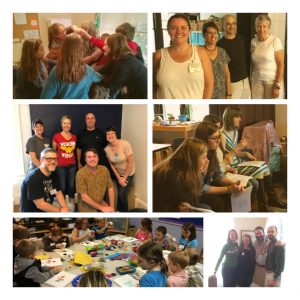
When considering those words of our congregation’s mission, it is evident we take them to heart in Religious Education. And we are able to offer this type of full, enriching program only because of the large group of volunteers who help make it successful.
The skill and dedication our volunteer leaders provide the children and youth is truly amazing. We see thoughtfulness from the teachers when planning and enacting the lesson or activity; our teaching teams are tuned in to the needs of their students and use their expertise and heart to navigate hiccups. The independence, creativity, and capability our volunteers have shown to implement our RE program this year has been tremendous. We have a talented and committed bunch of folks serving in RE!
People like Bob Roepnack, Mariah Wright, Mike Horak, Ann McLellan, Wendy Fletcher, Gordon Clark, Kay Aler-Maida, Will Jernigan, Melissa Murphy, Langdon Martin, Nancy Bragg, Jon Miles, Jodi Clere, Judy Harper, and Mike Neelon, to name more than a few. You likely recognize these names not only because they might be your friends or who you sit next to during worship service or covenant group, but because many of them have other integral roles in our congregation as well: Board members, Buildings and Grounds team, Earth and Social Justice Ministry, covenant group leaders, musicians, and more. AND they volunteer in RE.
The time and energy of about 80 volunteers make Religious Education happen here each year. Because of them, our RE program is strong, meaningful, and laying a foundation for growing new UUs in a world that desperately needs them! We provide age-appropriate, thought-provoking curricula and materials; we seek to honor the individual while being in community together; and we connect children with adults, parents with adults (!), and all of us together.
“When children know there is a whole community of adults working within our principles to wonder together and make change in the world, they can feel empowered to know they are not alone on this journey.”
— Melissa Murphy, 4th Grade, Love Connects Us
This is our community and we are full of gratitude for our volunteers! We hope to see all of them at our RE volunteer appreciation event at the end of May!
p.s. Want to join us in Religious Education? We have a solid volunteer roster started and are recruiting now to round out the teaching teams for 2018-19. (It’s not as difficult as it sounds, and we hear all the time that it is meaningful to the adults too!) Or try it out by volunteering for 1-2 Sundays this summer — leaders and assistants wanted. Find out more here and contact Kim or Jen with questions or to sign up.
May 10, 2018 | Weekly Message
One of our opportunities as UUCA Board of Trustee members is to take turns writing this little “blog” – the thinking being that the blog gives you an opportunity to know us a little better. Just as I was pondering my topic this week my phone rang. It was my husband John on his cell phone, enthusiastically inviting me to join him on the property across the street. “You’ve got to see this nesting hawk and chicks!”
As I approached the area near the hawk’s 45-foot tree, two neighbors had already set up their camera tripods and were busy shooting away. Their telephoto lenses captured the three (or was it four?) bobbing heads of the chicks as they energetically vied for each morsel from their parent’s beak. We were all surprisingly mesmerized, though this was simply a predictable and ubiquitous act of natural parenting.
For each of us, at that moment, there was only this tree, this particular hawk family, this particular feeding of the chicks – this little ‘miracle’ happening on a beautiful spring day. How rare and wonderful to step out of our own worries and concerns – for our planet, for our world, for our country – and share this small but significant moment together: to appreciate and marvel at this simple act of nature. Such a reminder to stay open to these happenings as we move through our days.
Let’s all leave a little space in our souls each day for something surprising – let’s be ready to “stand in awe” of the simple moments of beauty in the everyday world around us.
Diane Martin, Board of Trustees
May 3, 2018 | Weekly Message
So, where do I begin?
I’ve had increasing numbers of people at UUCA ask recently about how they might find a way into social justice work. Justice work has always been a priority for us as a congregation, but at a time when the nation feels so polarized and we’re watching the current administration repudiate long-standing principles and commitments across the board, many are feeling an increasing sense of urgency to act.
As a congregation we offer many opportunities for you to participate, ranging from our congregation’s Sanctuary program in support of immigrant justice to Black Lives Matter, environmental justice, gun control, voting rights and more. You can find congregational leaders in all of these areas in our Weekly eNews and on bulletin boards, and if none of those work, ask any staff member for help.
But I also know that it’s easy to be daunted by all of this. If you’re just finding your way into this, let me urge you to take the time to reflect on what kind of work calls to you and what you feel you can do. It is so rewarding to be working in community for the values that stir your heart. But it can be challenging to take the first step.
With that in mind, let me share with you this poem that Associate Minister Rev. Lisa Bovee-Kemper shared with our staff meeting this week:
Start Close In by David Whyte
Start close in,
Don’t take the second step
Or the third,
Start with the first
Thing
Close in,
The step you don’t want to take.
Start with
the ground
you know,
the pale ground
beneath your feet,
your own
way of starting
the conversation.
Start with your own
question,
give up on other
people’s questions,
don’t let them
smother something,
simple.
To find
another’s voice
follow
your own voice,
wait until
that voice
becomes a
private ear
listening
to another.
Start right now
take a small step
you can call your own
don’t follow
someone else’s
heroics, be humble
and focused
start close in,
don’t mistake
that other
for your own.
Start close in,
don’t take the second step
or the third,
start with the first
thing
close in,
The step you don’t want to take.
Rev. Mark Ward, Lead Minister
Apr 26, 2018 | Weekly Message
Did you know that to date in 2018 we have raised $6,800 for organizations that support people of color here in Asheville or within Unitarian Universalism?
The Community Plate Team has dedicated 2018 Community Plate collections to organizations that are led by or directly serve people of color in our community and beyond.
In January, we collected $1,554 for the Mel Hetland Scholarship, which is funded entirely by our congregation and offers grants to students of color from Asheville going to college.
In February, we collected $1,693 for Building Bridges to support their work of education around dismantling of systemic racism in Asheville.
In March we collected $1,296 for the Mountain Retreat & Learning Center “Camperships” to go to kids of color attending Mountain Camps this summer.
In April we collected $1,407 to help the YWCA expand their Early Learning program, PLUS over $800 in a one time special collection to support undocumented immigrants detained in the recent ICE raids here in WNC.
For this initiative, the team looked for nominations of organizations that directly empower people of color or work to dismantle systemic racism rather than organizations that seek to mitigate secondary “symptoms” of systemic racism like poverty and hunger. While those are important things to fund, the Community Plate committee saw an opportunity to give more direct support and empowerment to children, youth, and adults of color.
In the months to come, we’ll be collecting funds for more such organizations, including CoThinkk, a giving circle that brings together community leaders who care about the economic and social well-being of communities of color in Asheville & Western NC, and My Sistah Taught Me That, an organization designed for the development, encouragement, inspiration, and education of young girls with a special focus on girls growing up in single parent homes without their father.
If you’d like to add your personal impact to this congregational commitment by patronizing business owners of color, the Color of Asheville has a directory of African American owned businesses, professionals, service providers and clubs in Asheville, NC.
As the year goes on, the Community Plate Committee’s initiative will continue to honor the commitments to racial justice made by our denomination and congregation:
- In 2015, UU General Assembly passed an Action of Immediate Witness, “Support the Black Lives Matter Movement,”
- In 2016, our congregation committed to Black Lives Matter. (I couldn’t find the exact words of this congregational vote—I believe it was in 2016)
In June of 2016, this congregation passed a resolution affirming our commitment to working for racial justice in our congregation, community, denomination, and world.
The committee believes that leveraging our own resources to support leadership and empowerment of people of color is an effective way to live into the promise of the racial justice resolution. The percentage of Black owned businesses in Asheville is particularly low, and we know that part of the work of dismantling systemic racism is increasing opportunities and access to leadership roles for people of color.
FMI contact a member of the Community Plate Team (Linda Kooiker, Emilie White, Eleanor Lane, Brenda Robinson, and Donna Robinson).
Apr 19, 2018 | Weekly Message
Creating a worship service (YRUU this Sunday) or credo (May 13 services) doesn’t emerge out of nowhere! Our now-teens have been building up to these services in all of their years of religious education.
Our Religious Education (RE) Program depends on more than 70 volunteers each year to implement this foundational work for our congregation. It takes many volunteer teachers every year to provide that consistent and compassionate presence; mentors to foster the growth of our Coming of Age youth; a dedicated RE Council; and people enacting the behind-the-scenes work (like cleaning closets and rooms, prepping materials, etc.). We are grateful for this year’s and past volunteers for what they have given to our RE kids. We also hear that the volunteers are appreciative of what RE has given them.
Here is what some of our teachers and parents have said about RE:
“I am happy that my children get to form relationships with a variety of adults in this intergenerational community — not only with the parents of their peers but with the elders in our community as well.” — RE Parent
“t is as much a learning experience for the teachers as the kids–and it’s fun! And the kids are awesome. ” — 6th-8th Grade Neighboring Faiths Teacher
“As an older person, I enjoyed getting to know this age group. I was impressed by how bright, thoughtful and articulate they can be. Visiting the different faith communities and learning about them was a great learning experience for me.” — 6th-8th Grade Neighboring Faiths Teacher
“Without RE volunteers and without RE classes, our children would be lacking in meaningful faith development. We owe them this investment as the future leaders of this world!” — Parent and RE Teacher
“Working on an RE team with other congregation members allows you to form new relationships in this large community.…” — RE teacher
“This year has been special. Asked to teach RE, we said yes and I’m so glad we did. We’ve been blessed with an intelligent, thoughtful, curious group of youth to learn from. We’ve also worked with three amazing co-teachers who have become new friends we look forward to seeing at coffee hour.” — RE teacher
(I have volunteered for years…)”During most of that time, I thought I was volunteering as an expression of my spiritual journey. Well, yes, it was that, but I began to realize that more importantly, I was discovering my spiritual community, and to my surprise it included 15-year-olds…. Are you ready to receive the gifts that our young people have to give you? But be prepared to have it be a life-changing experience, both for you and for them.” — Coming of Age teacher
“I have seen children connect faith ideas to their everyday lives; ask the big questions in a safe space; be silly and have fun together; form new friendships and connections in a large community; learn from other perspectives;, and enjoy lots of food together! There is value in taking time to slow down; to learn, reflect, and question together.” — 4th grade RE Teacher
Now it’s your turn. We want YOU to be involved in RE! What will YOU say after volunteering? How will it transform you? We are asking each of you to join us for Religious Education in 2018-19. You may ask, “But how? What will I do? How much of a commitment is it?” Let us fill you in, because we know there are some myths and questions about volunteering in RE.
Visit our RE Council table on Sundays in Sandburg Hall to find out more, or email Kim or Jen.
Kim Collins and Jen Johnson, Lifespan Religious Education Coordinators
Apr 12, 2018 | Weekly Message
I have been thinking of our April theme of Emergence. Emergence surely implies hope. Without hope, how would emergence be possible? At our April meeting, board member Diane Martin opened with some words from the Christian “theologian of hope,” Jurgen Moltmann, who says that hope is a fine thing, an antidote against despair, but that hope without some action is ultimately a pretty sad thing, that hope grounded in faith “causes not rest but unrest, not patience but impatience” with the status quo, that hope is “the goad of the promised future” which “stabs inexorably into the flesh of every unfulfilled present.” As Unitarian Universalists, we are aware of so many things around us that cry out for change, and we certainly have high hopes. As we emerge from our winter burrows into the glory and warmth of spring, may we all bloom exuberantly with high hopes born of our faith, and may we have the energy and the will to continue our efforts to bring those hopes to fruition, in ourselves, in our communities, in our nation and in our world.
Judy Harper, Board of Trustees
Apr 5, 2018 | Weekly Message
We enter April this year working on the theme of Emergence in worship and our small groups. It’s a powerful religious concept that embraces growth, renewal, hope, and surprise. And we see it this time of year realized in the celebration of Easter as well as the awakening of life all around us.
We celebrate emergence because we know that whatever it is we’re working on, or whatever is working on us, we’re not done. There is more to come. But the unsettling thing is we’re not exactly sure what is coming, or what shape it will take. So, the discipline that comes with observing emergence is keeping ourselves open, attentive and focused.
We at UUCA are aware that we are in the midst of change that invites us to attend to what we want of this community and how we might prepare to bring it about. We are headed toward an important transition this summer when we will bid farewell to our Associate Minister Lisa Bovee-Kemper and welcome our new Minister of Faith Development Claudia Jimenez.
Already we have begun talking about ways to mark Lisa’s leave-taking and Claudia’s arrival in a way that honors both the wonderful ministry we have had with Lisa and what we look forward to with Claudia. You’ll hear more about that in days to come.
With that change in ministers, we also anticipate a change in the ministry of this congregation. With Claudia’s arrival, we are embracing the notion that faith development, the growing, learning, and awakening that happens in spiritual growth, is something that all ages, all times of life, take part in. None of us is finished. None of us is done.
We’re not yet sure of all that will encompass, but we have some ideas, and you’ll be hearing more about that as well. Along with that, we will continue our focus on strong Sunday worship and deeply engaged social justice work. Throughout this, let me invite you to adopt the disciplines of emergence – to be open, attentive and focused – and to stay connected. We are moving forward into this new time together. It is good to be in this work with you.
I close with one of the poems offered in our latest small ministry packet.
Song of the Shattering Vessels
BY PETER COLE
Either the world is coming together,
or else the world is falling apart —
here — now — along these letters,
against the walls of every heart.
Today, tomorrow, within its weather,
the end or beginning’s about to start —
the world impossibly coming together
or very possibly falling apart.
Now the lovers’ mouths are open —
maybe the miracle’s about to start:
the world within us coming together,
because all around us it’s falling apart.
Even as they speak, he wonders,
even as the fear departs:
Is that the world coming together?
Can they keep it from falling apart?
The image, gradually, is growing sharper;
now the sound is like a dart:
It seemed their world was coming together,
but in fact, it was falling apart.
That’s the nightmare, that’s the terror,
that’s the Isaac of this art —
which sees that the world might come together
if only we’re willing to take it apart.
The dream, the lure, is the prayer’s answer,
which can’t be plotted on any chart —
as we know the world that’s coming together
without our knowing is falling apart.
Rev. Mark Ward, Lead Minister
Mar 29, 2018 | Weekly Message
Recently I preached about what Isaac might have said, if his voice had been part of the story of Abraham’s sacrifice. As we approach Easter Sunday, which, of course, focuses so much on Jesus’ voice and story, here is my imagining of how Simon of Cyrene (the bystander who helped Jesus carry the cross on his way to be crucified) might have described his experience on Good Friday.
You may have heard of a man named Jesus who lived almost two thousand years ago. He taught people to love each other and to, and he also said that he was the Son of God. I had heard of him, too, but at that time we only knew that he traveled around the countryside teaching, and that he had a large following. The leaders in Jerusalem thought that his message was very dangerous.
Early in the morning of the day that I arrived in Jerusalem for the holy feast of Passover, there were crowds and shouting, and many Roman guards in the square. I was in a huge and crushing throng of people, pushing and shoving, shouting and waving their fists. There were three criminals being led up the hill to be executed by crucifixion, which was the way they did things in those days—and this man Jesus was one of them. The Roman guards were impatient with him, because he kept stumbling—dropping the huge wooden cross he was carrying. Suddenly, they yelled into the crowd—and pointed right at me—perhaps because I was not from Jerusalem—I looked different than the other folks who were there—they called to me, and made me help Jesus.
I felt awful. I had stumbled upon the crowd—and the taunting and yelling made me uncomfortable in the first place—and now I was being forced to participate in it. There was something about this man named Jesus, though, an energy that radiated from him—a peace that made me feel lighter somehow, even as I trudged up the hill next to him. I still can’t quite find words to explain it. As soon as we reached the top of the hill, I left as quickly as I could—I did not want to participate any further in this violent act—especially during the most holy week of Passover.
I know that Jesus died later that day, and so did the two thieves, but I tried very hard to put the day’s events out of my mind. Sometimes it is just too difficult to think about how much violence and hurt there is in the world. A few days later, as I was leaving the city, I began to hear rumors about Jesus. They said he had been buried in a tomb—a cave outside the city—and a huge stone had been rolled in front of the opening to the tomb. They said that three days after he died, his body was no longer in the tomb—he had disappeared.
It took me a long time to understand what the events of that day meant to me, and even now, it is hard to find words to describe them. I know that Jesus was a great teacher. I know that I can never be sure of what happened in the cave when Jesus disappeared. I know that his followers stayed together and carried on his teachings. Some said it was a miracle—that he came back to life because he truly was God’s son, others said his friends had taken him and buried him somewhere else. There were so many stories, and these things like God and miracles and faith and justice can be confusing to think about. But I kept remembering how I had felt as I walked next to him, and I realized that it didn’t matter exactly what was true about the story—what mattered was that I might have helped a fellow human being as he walked a difficult path.
Mar 22, 2018 | Weekly Message
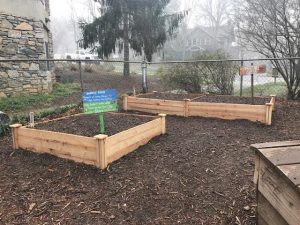
We want to try something new and awesome in our summer RE classes this year. But we need help.
As I write this, the snow is coming down outside as it has been all day, so it’s not unnatural to be daydreaming about summer breezes, drifting down a river, campfires, and fresh herbs and veggies from the garden. One of my other favorite things about the season is Summer Religious Education. First off, RE staff gets to sleep in a little later so that’s nice. We also have a lot more unstructured play time on the playground. There is definitely a more relaxed feel. We might spend time talking about what everyone is up to all summer. Among vacations, camp at The Mountain, sports camps, music camps, and day camps, our kids sure have a lot going on.
You may have noticed some changes to our outdoor spaces lately, including most recently, our new raised-bed garden planters! Jodi Clere has done a wonderful job coordinating and implementing much of this work and has taken the burden of worrying about where to go next with the playground off the shoulders of RE staff. Our kids love spending time outdoors and they especially love our playground. I’m betting they’ll be pretty delighted with the new garden, as it’s a much better and more friendly set up than our past two years of container gardening in an old sandbox.
We’ve been doing some thinking about what our plans are for Summer RE lately and we all agree that we’d like our kids to get the chance to spend as much time outside in our new “outdoor classroom” spaces as possible. What we really need now are some dedicated folks to help us develop a plan for nature-focused religious education this summer. People with knowledge of gardening, local flora and fauna, and other environmental subjects would be great! We have some ideas and have put together some resources to cull from, but we need some nature-minded volunteers to help make it happen! If you can help make this summer dream come true, please get in touch with Jen or me and let us know you’re in!
Kim Collins, Lifespan Religious Education Coordinator
Mar 15, 2018 | Weekly Message
As you probably know, the UU Asheville membership and Board of Trustees reviewed the congregation‘s overall purpose and reason for being over the last year. The result of this effort was a set of updates to the Mission, Core Values, and Ends Statements.
One of the things that we as a Board wanted to reinforce and which came up organically and repeatedly was that the congregation was a living community that needs your input and energy. It is not something that can be only passively enjoyed if we want to thrive (or even ultimately survive long term).
From what I can see, this refocusing on the active aspect of engagement with each other in the congregation is making positive change. With the annual budget drive being only the latest example, there seems to be more engagement in all aspects of our congregation. We have added the Wednesday Thing, the preparations for offering sanctuary are progressing, and people are taking part in a variety of roles who have never done so before.
I acknowledge that one of the challenges of our current society is being “too busy“ all the time. There are countless tasks and superficially interesting things constantly competing for our attention. However, when we can accomplish the feat of finding purpose rather than just being busy we can experience that paradoxical magic that happens where we come out of giving more energized than when we went in.
I thank you and the congregation thanks you for everything that you have done, are doing, and will do. As it has been said:
“Be the change you wish to see in the world.” Mahatma Gandhi
James Schall, Board of Trustees
Mar 8, 2018 | Weekly Message
Do not think we are finished.
Oh no, we will never be finished, never just done
until the light of justice is lit behind every eye.
I was thinking of those words from my colleague the Rev. Audrey Fulbright this past week as I read coverage in the Asheville Citizen-Times of the assault of Johnnie Jermaine Rush last August by a City of Asheville police officer. Even though the city reported Rush’s injuries as resulting of an arrest, videotape from the officer’s body camera make clear that it was nothing less than an assault of a black man by a white officer.
That’s not an especially new story. In fact, it’s a very old story arising from the legacy of white supremacy in this country, this city that is visited upon people with black or brown bodies. Day by day more details emerge about that encounter – what Mr. Rush is said to have done, what various officers are said to have done, how the chief, district attorney, and various city officials responded. The details matter, in the sense that they help people investigating this incident figure out how to respond. But in important ways, the details don’t really matter. They are just variations on a theme: how the pervasive poison of racism continues to tear at the fabric of civil society.
And each time we see it we are forced to confront again the racism that resides in our own hearts, in the interstices of our daily lives, in the institutions we take part in, our workplaces, our neighborhoods, and, yes, our churches, too. As people of faith who affirm the inherent worth and dignity of every person, we disavow any way of thinking or feeling that diminishes any person or people. And yet, as people living in a deeply racist country it’s hard to avoid having it color our perspective. That means that if we are to be true to our values we need to be vigilant about examining our own thinking and about organizing our lives in such a way that contradicts what racism teaches.
A couple of years ago we as a congregation affirmed where we stand on this by adopting a resolution declaring “Black Lives Matter” and committing ourselves to “educating ourselves about and deepening our understanding of white privilege and oppressive systems” and to partner with local organizations “to harness the power of love to combat racism and oppression at all levels within our communities.”
As a reminder, here’s a link to that resolution.At the time we also put together resource packages including inspiring readings and tips for getting involved. Here are links to a couple of those.
We have made some headway in these goals. Members of our congregation have become active in groups advancing this work – including NAACP, ASURJ, Building Bridges and trainings by the Racial Equity Institute. But attending a meeting or training is only the start. The harder part comes with putting ourselves in places where we can take part in the concrete work of dismantling racism.
Some of us joined in the Hillcrest Motheread Program, where they meet weekly with women in Hillcrest Apartments to talk over stressors in their lives and offer support. Others are taking part in tutoring in public schools. If that sounds interesting, you might look into a new program called the Marvelous Math Club.
At a recent Wednesday Thing, we heard about a program with the Asheville Housing Authority inviting people to own rental property to make apartments available for Section 8 housing. Here’s a link about that.
And that’s just a start. Others are at work elsewhere, and there’s more to do. Where will you find your work? Because, friends, we’re not finished!
Rev. Mark Ward, Lead Minister