Mar 1, 2018 | Weekly Message

Sunday, the Rev. Mary Katherine Morn said we’ve already had a successful Annual Budget Drive (boy, we hope she’s right). In truth, Dan and I are not experts on what makes a successful Annual Budget Drive (ABD). Still, we have figured out that one key ingredient is the willingness of people to say “yes.”
A successful Annual Budget Drive happens when the minister and administrator ask you to co-chair the ABD, even though you’ve never done one before, and then say “yes” when you ask to try something new (or several somethings).
It happens when talented people who have managed fundraising efforts for years say “yes” and “we’ll help” when you tell them you’re going to try something “a little different.”
It happens when an Annual Budget Drive Team (Iris Hardin, Anne Harper, Judy Harper, Jerry McLellan, Kristi Miller, Linda Topp, and Larry Wheeler) says “yes, we’ll come to meetings, do the behind-the-scenes work, and put in the long hours to ensure the drive is successful.”
It happens when you go to Les and say, “we have this idea,” which of course means more work for him and he says “yes” and also finds you a drummer.
It happens when you tell “the band” you want the Sunday service to feel like a celebration and they say “yes” and take it all the way and then some.
It happens when an RE staff who could complain that you’re adding to their work, taking away valuable class time, or are making things harder to manage instead say, “yes, we’d love to have the children and youth be a part of Celebration Sunday, how can we help?” (And they help you decorate the Sanctuary on their own time.)
It happens when you ask Tish for reports that the new database isn’t able to run and she says “yes” to spending hours and hours updating the database so we can get the information we need to keep the drive running smoothly.
It happens when members say “yes” to an automated call asking them to attend a stewardship Sunday and they show up to support the community and give joyfully.
It’s a little early to determine if we will hit our financial goal, we still have a number of commitment forms that have yet to be turned in, but we have reason to be optimistic. So far, you’ve said “yes” to giving generously and many of you have said “yes” to being a Plus One by increasing your giving.
Regardless of how the numbers turn out, Dan and I believe that Rev. Mary Katherine Morn is right, UUCA has had a successful drive because so many of you have said “yes” to committing your time, talent and your treasure to UUCA.
Gina and Dan Phairas, Annual Budget Drive Co-Chairs
PS. There’s a rumor that being the Annual Budget Drive chair is a thankless job, but we can honestly tell you nothing could be further from the truth. You’ve graciously shared your gratitude for our work on the ABD this year and that has touched us deeply.
Feb 22, 2018 | Weekly Message

Have you had a chance to attend Vespers at the Wednesday Thing? If not, have you wondered about the word “vespers” and why we would have such a service at a UU congregation? The overarching goal of the Wednesday Thing is to bring together all ages for fun, fellowship, spiritual growth, and community. Toward that end, we want to create a worship experience that feels different from Sunday mornings and creates space for many more voices to be heard. Every vespers includes music, as well as a chalice lighting, candles of joy & sorrow, and the closing song, but otherwise the services vary.
In any case, a number of you have asked what vespers means, or why we would do a service that “sounds so Catholic.” It’s pretty simple, actually! The ever-helpful Internet (via vocabulary.com) tells us:
A vesper is an evening song. It also refers to evening prayers, and then it’s usually plural as vespers. Whether it’s a church service or a jazz band at sunset, if it’s in the evening, it’s a vesper. Vesper hasn’t changed much over the years, in Latin it means “evening star,” and in Old English it’s æfen-sang, which sounds a little like “evening song.”
So, basically, we decided to call it Vespers because it’s a worship experience that happens in the evening. It’s a great opportunity to take a pause in the middle of the week, to start to wind down and reflect at the end of the day, and to be in beloved community.
One of the main purposes of this new service here at UUCA is to engage more voices in worship. Les and I are currently looking for people of all ages who are interested in leading, providing music for, or participating in a service. If you have an idea, but aren’t sure where to begin, I’m here to help you figure it out. Let’s get together and do this vespers thing!
Feb 15, 2018 | Weekly Message
 During an annual budget drive, most people want to know how much is needed (the goal!) and how their money makes it possible to improve their lives and the lives of others. However, there are some people who just like to know how we spend their money. This blog is for you.
I’m going to use the current budget since next year’s isn’t prepared yet (waiting for our “final” commitment number). Here are some facts for you:
This year’s budget totals $727,500.
Commitments made last year totaled $638,000. (Our goal for this year is $680,000, a 6.6% increase.)
Of that budget total, $505,200 are invested in our employees (69%) and an additional $17,000 (3%) are invested in their training and education. (It helps staff members answer that question, “What are other congregations doing about this?”)
Here are samplings of other general expenses:
- We love our campus. It includes 2 acres of land and 3 buildings with the newest one being over 40 years old. We invest about $70,600 in caring for it all. (10%)
- We need to keep our congregation and congregants safe. We pay about $15,000 per year for insurance and background checks. (2%)
- We use all kinds of expendable supplies in the office and in many of our programs. We also pay for food for various events and meetings. All this comes to about $19,000. (3%)
- Everyone always refers to “keeping the lights on” as so much of what our budget covers. That, however, is a red herring. We pay about $24,000 for all utilities and internet. (3%)
The fact is that once you devote 72% of your income to your staff, no matter how else you slice and dice the rest, they all end up being pretty small percentages compared to that. As far as I can tell, we do not squander money, we do not overspend, we are careful with your money.
The 2018-19 budget will look a bit different from this year’s since we squeezed a lot of line items in order to maintain one more year of paying 3.75 full-time senior staff members (I worked ¾ time last year). Since our Director of Lifespan Religious Education left late last church year (and we replaced her with me(!)), we really only supported 3 full-time staff members this year. Consequently, our spending looks pretty good so far this year, even though we increased hours for our RE part-time staff, have me back working full-time, increased a few salaries to address pay-responsibility mismatches and had extra costs due to the illness of our bookkeeper and the initiation of the Wednesday Thing.
Next year’s budget (the one you are making a commitment toward on (or before) February 25) will look a little different because we will actually budget, on purpose, for 3 senior staff members. This should result in a raise for the Lead Minister (only the second one in his 14-year tenure), and a restoration of many of the line items we reduced for this year’s budget. Once we manage to get these goals checked off, the sky will be the limit in what we can do next. My hope is that in the near future we will be able to continue keeping all of our salaries in step with UUA guidelines AND edge our current 4%-of-expenses donation to the Unitarian Universalist Association toward their wish for 6.5%. We’re on a roll now and I’m happy to encourage continuing success!
Since I’m pretty sure that ONLY numbers people are still reading, I just want to reiterate our annual budget drive’s co-chairs’ message: Your pledge makes a difference! We know that each person’s contribution helped get us to last year’s total of $638,000. By giving just a little bit more this year, we can sure get to $680,000! We are grateful for all that takes place here at UUCA and for all who commit their time, talent and treasure to our beloved community.
Dr. Linda M. Topp, Director of Administration
PS Remember to bring your Commitment Form to Celebration Sunday, February 25!
Feb 8, 2018 | Weekly Message
Recently, I’ve been thinking a lot about family. Right before the New Year, my nuclear family welcomed our third child, Lyra, to the world. We were thankful to receive tremendous help from our extended family, but Josh and I had no idea we’d feel so much love and support from another family, UUCA. In mid-December, one of my covenant group members offered to start a meal train. I imagined it would consist mainly of our closest friends, which itself would have been an incredible help. Josh and I never dreamed our fellow congregants would provide an entire month’s worth of meals! And yes, many people who signed up were our good friends, but some we’d only met a few times, and a couple incredibly generous souls Josh and I had never even met previously. (I’m so glad that changed when they dropped off their meals!)
I cannot over-emphasize what a blessing it was—not just the food itself, but the stress it spared me of trying to throw something together while my kindergartener and preschooler sparred for attention and I tried to nurse the baby. Indeed, each day as the meals came, I became more overwhelmed by gratitude and the generousness of fellow congregants. Our hearts were nourished as much as our stomachs.
Whenever someone asks me why I first came to UUCA and why I stay, I invariably answer “community.” This past month, however, as we felt so deeply supported and cared for while adjusting to life as a family of five, I realized that UUCA has become more than a community for us. It’s another family, of which we’re honored to be a part.
One of our congregation’s new ends statements reads, “we create a community where people of all ages and backgrounds experience belonging, and feel loved and needed.” My family certainly felt this over the past month, not just because of the meal train, but also from much smaller acts of kindness: people reaching out via email or Facebook to check on us; Lyra’s birth announced in church; cards of congratulation. It’s gotten us thinking more than ever about how we can pay it forward.
In this trying political climate, many in our church family are in need of daily heart/soul nourishment. Many in our collective human family as well. We sometimes forget that the simplest, smallest acknowledgment can make a huge difference to another person, making them feel like a truly loved and needed member of a larger family.
It’s easy to get lost in our individual crazy-busy lives. Inspired by our incredible UUCA family, I’ve been challenging myself to increase my offerings of daily small kindnesses: more smiles at strangers, letting someone ahead of me in traffic, taking an extra minute to talk to a fellow frazzled parent and really listen. And if you’re up for it, I challenge you to do the same. It might not seem like much to you, but it just might be the thing that keeps someone else going.
Nora Carpenter, Board of Trustees
Feb 1, 2018 | Weekly Message
This past weekend was a deep dive into UUCA activities for me, from being on the Search Committee for our new Minister of Faith Development, to the leadership event for this year’s annual budget drive. And sandwiched in between was a day of workshops focusing on faith development as a multigenerational endeavor facilitated by Connie Goodbread, Co-Lead of the UUA Southern Region. We had a terrific time working with the question, “How do our children and adults really get to know each other?”
The morning workshop was for RE Council. The faces were familiar, dedicated volunteers who have been serving together due to our vested interest in religious education programming at UUCA. The afternoon workshop consisted of approximately 25 congregants, about half of whom are actively parenting children and half are either non-parents or parents of grown children. Being a part of this diverse group was thrilling. We were experiencing/creating multigenerational faith development together at that moment just by being present with each other.
Connie focused the group by having us list our desires for the workshop. We wanted to share our ideas, feel heard, know what is working at the multigenerational activities we currently offer at UUCA, what other congregations are doing, what being truly multigenerational would look and feel like, and how do our children and adults really get to know each other?
Connie reminded us that this workshop is covenantal just as creating multigenerational community is covenantal. She explained that covenant means we choose to come together with the commitment of loving one another through the process. As we discussed needs, got curious about possibilities and expressed concerns, our humanness showed up. Some people need more boundaries/clarity around how children will participate within our community while others desire direct support and involvement from our “elders.” We all agreed that parenting and including children in traditionally adult spaces has changed over the decades. The moments of tension, desires to be heard, were held gracefully within the framework of covenant. It was so clear that everyone in the room cared deeply about understanding one another and creating a collective vision for connecting all generations in our unified faith development.
As the workshop ended there was clarity about a few goals. All voices supported moving forward with making UUCA a multigenerational faith community where adults and children grow in relationship and faith together. There was agreement that protecting the safety of our children is paramount and that the guidelines to provide that safety needs to be a collaborative conversation so that parents and all congregants can support them. There was agreement that this is uncharted territory not only for UUCA but for the UU community as a whole, and that we have taken action, we are experiencing success, we are on the path to worshiping, playing, learning and growing together multigenerationally.
The questions that remain are “how do we do this” and “how does it look and feel” being a multi-generational congregation? My guess is we will only know this as we walk in this process together, in covenant. With multiple generations comes multiple voices, multiple needs, multiple visions, multiple concerns. Some days I get exactly what I want. Some days a compromise may be more on my shoulders to offer. Some days I may partially have my needs met. Some days compromise will be for others to offer. Some days I will allow other’s needs to be fully met while I stand by, supporting them. The beauty of covenant is that we all agree to be in it together with love for each other and the process. What a gift to give ourselves, from the youngest to the oldest congregant.
Kelly Wedell, member of UUCA’s Religious Education Council
Jan 25, 2018 | Weekly Message
A key part of each orientation for our OWL program is asking folks to think about the sexuality education they received as a child or youth. Think about it for a minute, what were you taught? Was it through school? Did your parents talk to you about it? Did you learn from your peers? What books did you read? What feelings are associated with your own sexuality education? As a facilitator for these orientations, I can tell you that shame comes up a lot. I am here to tell you, there is no shame in our sexuality education.
From the OWL website: Honest, accurate information about sexuality changes lives. It dismantles stereotypes and assumptions, builds self-acceptance and self-esteem, fosters healthy relationships, improves decision-making, and has the potential to save lives.
The Our Whole Lives program is a comprehensive sexuality education program with levels of curricula ranging from kindergarten through adults. One of the most common questions I get when talking about the OWL program is, “What are you teaching little kids about sex?” My answer is that we’re not really teaching little kids about sex. We’re teaching them about their bodies, and how they are in control of their own bodies. We’re teaching them about families and about how families can look different than their own. We’re teaching them about healthy friendships and how to have good, respectful relationships with others. We do get into the baby stuff at that age (like “where do they come from?”), but it’s in an age-appropriate way that they can understand.
The most intense level of OWL is the 7th-9th grade class. This class is 26 sessions long and is one of the most important learning opportunities we offer. It is a formative experience for our youth and will stay with them as they navigate their way into adolescence and beyond. Sometimes the kids are not super-thrilled about it. But they come every week and they learn. They learn how to make informed and responsible decisions about their sexual health and behavior. The class provides accurate, developmentally-appropriate information about a range of topics, including relationships, gender identity, sexual orientation, sexual health, and cultural influences on sexuality. This is truly a comprehensive learning experience.
We are dedicated to offering as many OWL classes as we can here at UUCA. We are currently offering 7th/8th OWL and are about to offer 4th/5th OWL beginning in February. While this is one of our most popular programs (I frequently get phone calls from folks outside of our church wanting to get their kids into our program), it is also one of the most resource-consuming classes. Our teachers go to a special training and they commit to teaching OWL at least 3 times in the 5 years after they get trained. While the training is pretty intense and takes a whole weekend, it is so very rewarding. We are always looking for folks who want to get trained and I am always keeping an eye on upcoming trainings.
Kim Collins, Lifespan Religious Education Coordinator
Jan 18, 2018 | Weekly Message
 We all think that living our values is an important part of being a UU. We all agree that it’s easy to say stuff, but what we DO about it is what counts. And as we have been learning through the “Stories of Us” series that has been featured one Sunday a month this year, our members say they highly value UUCA. They have personally been supported, they have witnessed how their fellow congregants have been helped or how they have grown, they have experienced pride in knowing that a UU congregation is visible in Asheville.
The question is, if you say you value something, how do you show it? What do you DO? Great active responses include volunteering to do work the congregation needs to have done (membership, event planning, maintenance, singing, teaching, and most especially leading). But what may be the most helpful act of all is being as generous with your monetary contribution as you can be. THAT is a concrete and impactful way to live your values.
Every congregation, non-profit organization and for-profit company runs on money. Without adequate financial resources, organizations wither. They lose vitality. They become focused on their own survival rather than enjoying and sharing the abundance that comes with generosity.
Not coincidentally, our annual budget drive is coming up. It’s the time that we ask you to estimate your giving for the next fiscal year so that we can produce a balanced operating budget for the Board’s review in April, and your voted approval in June. It is a perfect opportunity to live your values.
On the spending side we have done a lot this year to improve our standing as a good employer. By losing a senior staff member (Joy Berry left after the budget was approved last June), this year we have been able to increase hours and pay for our RE staff, including the Director of Administration/Acting Director of Lifespan Religious Education. (Whew! What a title.) Now that Rev. Lisa has made the decision that moving up and out to continue her career climb as a UU minister is right for her, we will hire a Minister of Faith Development to lead pastoral care and faith development for all ages. (Rev. Mark will lead the Earth and Social Justice Ministry while Linda Topp will work with Venny Zachritz on Membership.) That will still result in just three senior staff members instead of four, providing room in the budget to pay those senior staff members more equitably.
Everyone is clear that a generous contribution of money from one member will be a completely different amount from another member who may be more or less financially able. No one is asking you to impoverish yourself to fund UUCA. What we ARE asking is that you deeply ask yourself if you are being as generous to UUCA as you can be. You’ll be getting more information about how to make this consideration in a few weeks. In the meantime, please know that UUCA’s health and vitality depends on the collective energies and resources of all of us. With everyone’s re-evaluation of their giving levels, both of time and money, UUCA can totally jump to a higher level of commitment and value for its members and the greater community.
By the way, if you would like to explore what money means to you, how it influences your feelings, attitudes and habits, plan to attend this week’s Wednesday Thing. Laura Amabile will be leading a session called “Financial Sanity: Creating a money plan that works for you.” The session is designed for ages 15 to 100, and will be fun and engaging, not heavy! It contains information for individuals as well as parents interested in helping their children understand money and values, with an emphasis on developing healthy and realistic saving, sharing, and spending practices.
Linda Topp, Director of Administration
Jan 11, 2018 | Weekly Message
To me, snow is magical. One of my favorite things is a snow day, especially now that I work from home and don’t have to scramble for snow-day child care. While growing up in Asheville, school closed frequently, even being closed for almost the whole month in January of 1978. A pack of a dozen neighborhood kids, including my older sister and me, spent hours outside, sledding on a breathtakingly steep hill and building bonfires to stay warm. Now, as an adult, I still have my breath taken away when I ride up a ski lift, look over the beautiful mountains, and zip down the slope with the wind rushing through my helmet.
On a recent snow/work day, I was marveling at the falling snow outside my office window when a coworker called me to ask me question.
“Isn’t the snow beautiful?” I asked him.
“Ugh, I hate snow” he responded. How could anybody hate snow? “I grew up in Philadelphia, and school never closed. When I see snow, I see oily, gray crust,” he went on to explain.
This got me to thinking about how experience and perception affect how people can see the same thing in such polarized ways. One person sees a racist and alleged pedophile; another sees a good Christian man with family values.
Fortunately, my view of snow has not been sullied, but recent events have caused me to rethink whom I respect and admire. A beloved journalist from this state who knew my uncle has been revealed to be a sexual predator. A woman I looked up to at my job with the county is under federal investigation and has made front-page news on a few occasions. From now on, I will only see them as frauds, not as the pristine heroes they once were, and this breaks my heart.
Stay warm!
Michele Gregory, UUCA Board of Trustees
Jan 4, 2018 | Weekly Message
I think I can officially say that the Wednesday Thing is not a new program anymore! And what a success it has been so far. We’ve done yoga together, and learned about Buddhism, empathy, and nonviolent communication. We’ve eaten delicious food and shared worship together. We’ve discussed the monthly themes, and we’ve made gratitude jars. As the new year begins, the volunteers and staff who make it happen are working on a stupendous line up of classes and activities for the weeks to come.
If you haven’t yet been to the Wednesday Thing, I do hope you’ll venture out and join in! On tap in January are a session called “Save, Share, Spend” on finances & values with Laurel Amabile (Jan 17), a presentation for youth and adults from Helpmate (Jan 31), and more. As we move into the Spring, Mark will be teaching a class on Parker Palmer’s work, and lots more!
The Wednesday Thing brings together all ages for fun, fellowship, spiritual growth, and community. It is a program that was created specifically to meet a number of needs — more faith development opportunities for people of all ages, a short mid-week worship opportunity, and community building.
See you there!
Dec 21, 2017 | Weekly Message
Abundance was our church theme last month. We talk about our congregational themes with our Religious Education (RE) kids, too. Take a listen to what they said about what our church has an abundance of: chalices, fun, love, stories, kind people… kind people, indeed! I have been inspired this year to witness an abundance of wonderful gifts shared within our 2017-18 “under construction” Religious Education program.
We began the year strong with fully recruited teaching teams for our classes. Then, as Coming of Age mentors were needed or other jobs arose (like needing a rock star handywoman and organizational guru), people flexed and adjusted their commitments as we hoped they would to share their talents to meet the needs of our program and participants. As the year has progressed, our volunteer leaders have worked together and supported one another and their students beautifully. Our fabulous RE Council has been providing leadership as well, and is adapting to the evolving vision and work of the church.
A new kind of “call and response” emerged: when one member of the team had a need and called for help, other members always responded with compassion. And they have stepped forward with heart and thoughtfulness for parents or kids needing additional care, too. It has happened time and time again. We are living out our new mission: Our open and welcoming congregation connects hearts, challenges minds and nurtures spirits, while serving and transforming our community and the world and our core values of connection, inspiration, compassion, and justice. The support from one to another is a gift within our community.
And we see these gifts in our children and youth also. At 9:15, we have programming for all ages (kindergarten through adult – you are welcome to join us!), and that allows a special opportunity for multiage interaction and learning. During one of our stories recently, we had some participants sharing “who they are” in the story of Supriya’s Bowl. From young to old, there were thoughtful responses and patient listening to what others had to say. (We have some really cool 6th graders who were attentive to hearing a 5 year-old’s rationale for how the rice bowl got filled, and who shared their own thoughts with us, too.) When making our blessing bags, the big kids help the little kids with packaging goods and making notes or drawings for our neighbors in need. The Coming of Age youth volunteered at the church work day outside recently, raking leaves, moving stumps and rocks, etc. to beautify and winterize our campus; our Sunday worship chime ringers and chalice lighters are children and youth; when the multigenerational choir sings, our children and youth are giving to the church. You’ll soon see the pageant with (hopefully) a good amount of kid participation. All of those are special gifts to our community.
We are hearing from families that the kids are bringing their parents to church because they want to be here! And why not?
- Star Wars or Harry Potter yoga for all ages at 9:15
- YRUU revitalization for 10th-12th graders
- Neighboring Faiths curriculum, expanding horizons of 7th-8th graders
- And so much more… every class has awesome stuff happening!
- Plus, youth CONference attendance continues to grow
All of that takes volunteers – people who are sharing their time and talent – with UUCA. Presence is one of the greatest gifts a person can give or receive. We in RE have received many gifts this year, and we are grateful to all of you in the RE roles and in the many other ways our church is served by all of you. You are a gift.
And on that note, another important gift we can give and receive is affirmation. We have created a new bulletin board in Sandburg Hall to share that gift in our community. Like a little free library, we invite you to take or to leave a gift of affirmation. This is open to anyone: member, friend, regular or first-time visitors, youth, adult, or children. See more at the big GIFT bulletin board near the main office.
Jen Johnson, RE Staff


Dec 14, 2017 | Weekly Message
Last month, my nephew, Greg, called from Santa Barbara. “Hey, Uncle Dale,” he exclaimed, “I won the lottery!”
“No way,” I said.
“Way!” he said, “I won big time. No kidding.”
“That’s great. How much did you win?”
“A lot,” he responded… Long pause…then the punch line. “I was born White in America.”
No, Greg isn’t a White Nationalist. Far from it. Greg realized that he had hit the jackpot by being born White in America.
Greg is a skilled carpenter. Often, he needs to hire an assistant. He drives to the corner in Santa Barbara where day-hires, largely Latino, hang out looking to catch a job. He recognizes that a roll of the dice put him on the hiring end of things, rather than on the street corner hoping to be hired. Greg recognizes the White American privilege that came to him by dint of his birth.
Last year, UUCA named “compassion” and “justice” as core values, and we recently voted to put those words into action by opting in a Special Congregational meeting to become a Physical Sanctuary congregation. We recognized that there are good people in our midst who are in need of temporary protection, and we are lucky enough to have sufficient space in 23 Edwin to host a guest. We collectively announced by that vote: “We can’t turn our backs on those in need, let’s do what our good fortune allows us to do!” I am extremely proud of that congregational decision.
The wheels are rapidly moving in the direction of turning the Sanctuary vision into a reality. Rev. Lisa has recruited a Sanctuary Steering Committee, and they have begun meeting to put together a list of all that must be done to prepare for a sanctuary guest. Lisa and Linda Topp have selected the room and adjoining bath at 23 Edwin that will serve as quarters. A donated washer and dryer have been installed in the basement. Rev. Mark has begun meeting with CIMA (Companeros Immigrantes de las Montanas en Accion), a local action group on behalf of immigrants, to inform them of our Sanctuary program and to learn more about their organization. We have received our first financial contribution from another congregation.
Soon it will be your, and my, turn to help. Let’s do it. Let’s, like nephew Greg, share our collective lottery winnings by aiding someone not so lucky.
Dale Wachowiak, Board of Trustees
Dec 7, 2017 | Weekly Message
 Up until now, it’s been an odd autumn for this part of the world, with temperatures hovering around what we’re more accustomed to for September. But in the last week, the early winter grey visited, and daytime highs tumbled to a more seasonal chill. And so it feels like finally, I can settle into the quieter, darker days of this season. As Rebecca Parker puts it, “let us go gently into the night, its dream-drenched, glittering stillness, a haven for our souls.”
Just as the earth takes its rest at this time of year, we need to give ourselves some space from the hectic, screen-centered lives we’ve built for ourselves. So, isn’t it just like the tone-deaf culture of consumerism that floods our lives to urge us instead in this holiday season to make our lives more frantic with rush to buy presents?
Giving should and can be joyful. It is a wonderful gesture that helps us express our gratitude to people we love or with whom we stand in some relationship. But it becomes less so when it’s driven by a sense of fear or obligation. So, let me urge you to look for ways to turn down the pressure: look for gifts of services, rather than things; agree on limits to your purchases, and stick to them; be creative, have fun, and then be done with it.
Leave space for quietness, long walks, or casual, low-pressure gatherings with family and friends. There is a special beauty in these mountains in the winter time. Take time to get to know it. Maybe it’s time to renew an acquaintance with a friend. Look for that which can reconnect you with your life, with what matters, and attend to it.
One of my favorite hymns for this time of year is “Dark of Winter,” #55 in Singing the Living Tradition, by Shelley Jackson Denham. It closes with these words:
“Darkness, soothe my weary eyes that I may see more clearly.
When my heart with sorrow cries, comfort and caress me.
And then my soul may hear a voice, a still, small voice of love eternal.
Darkness, when my fears arise, let your peace flow through me.”
May you find peace in this holiday season.
Rev.Mark Ward, Lead Minister
Nov 30, 2017 | Weekly Message

They say that change is the only constant. (Turns out in this case, “they” is actually Heraclitus!) It’s been a few weeks since the announcement of the restructuring of the second minister position and my departure from UUCA. Change is never easy, but it doesn’t have to be a bad thing. For some, the news was a shock, for others, it was not. I want to be sure that all of you know that I am OK. I, too, have seen the budget numbers over the past few years, and knew that this year’s process of congregational visioning and assessment of staffing models would result in some major changes. Now we know what those changes will look like. I believe that the changes in staffing will meet the needs of the congregation, and I look forward to watching y’all succeed from afar.
This final year with you is my seventh year serving as your second minister, which is a good long run. No minister stays at a congregation forever, and I am more than ready to embark on the next phase of my career. You, too, will find gold in the new perspective of a new second minister. I do not yet know where my family will end up, but I will be seeking a new position for summer/fall 2018. Your good thoughts and prayers are welcomed as I enter that liminal space of job searching!
Know also that I will miss you. The ministry we have done together has been powerful and life-giving to me, and I hope to you as well. I am deeply appreciative of the messages of support and gratitude I have received from so many of you over the past few weeks. As we move through the next 8 months together, I look forward to celebrating the work we’ve done together.
With gratitude,

Nov 16, 2017 | Weekly Message
This month, the Board of Trustees has finally wrapped up our LOV (Living Our Values) project. Throughout this year, we worked with many of you in the congregation on this project in order to come up with new Mission and Ends Statements for our community. And I am so proud of what we have come up with, especially our new mission:
Our open and welcoming congregation connects hearts, challenges minds, and nurtures spirits, while serving and transforming our community and the world.
All right! But… what next? What do we do with this? Hopefully, this mission will encourage us to all really live into our values of connection, inspiration, compassion, and justice. As you may notice, this mission is not about what the church does, or the minister, or the staff. This is what the congregation does. Meaning you, and me, and everyone here.
So how do we go about connecting hearts and challenging minds and nurturing spirits? How will we be able to serve and transform? Well, it starts with seeing yourself as a valuable part of this place. Being a leader in church can be such a spiritually rewarding experience. Imagine being able to see yourself in a new way, making a real difference in your life and the lives of others. Stepping up and serving your congregation should not be a chore. It should not be because you have to, or because no one else will. It can be a path on your own spiritual journey, allowing you to dig deeper, form stronger connections, and truly grow as an individual. For many, serving their church IS their experience of the holy.
I think a great example of this is our Sanctuary Working Group. While they got support and resources from the leaders and staff of UUCA, this group was lay led. These members succeeded in seeing their vision through, from conception all the way to getting the majority of the congregation on board with their plan and now it is a reality! They are making a real difference in their own lives and in our community, providing compassion, justice, and hope. And the work continues, now being the work of our whole faith community. How inspiring for the rest of us who have so many ideas on what we want our congregation to be and to do!
So what is it that you envision for our church? What do you want this place to be, and for whom? How can YOU make your UUCA dreams come true? If you have never served at UUCA, what are you waiting for?! There are so many opportunities to find your place. Not everyone can form a working group and do something as large as Sanctuary. And that’s OK! Whatever your gift or talent or field of expertise, no matter how “small,” we need you at UUCA! There are always calls to serve in the Weekly eNews, the order of service–or just ask. Trust me, someone can always find something for you to do! I really hope our new mission statement inspires you to plug in and connect, finding the true joy of serving a place you love.
Mariah Wright, Board of Trustees
Nov 9, 2017 | Weekly Message
Last June you heard from then-Board President Kay Aler-Maida that for the past several years UUCA has been struggling with a couple of important financial problems: We have been running a budget deficit funded from cash reserves, and we have been unable to compensate key exempt staff at levels that they deserve. She told you that part of what we hoped the LOV (Living Our Values) Project would give us is some good guidance on how to adjust our budget to target personnel resources where they are most needed while at the same time operating within our means.
Now that the LOV Project is completed with newly-defined congregational values, mission, and ends we are ready to take the next step and make plans for changes that will make our personnel structure more sustainable while fitting the work of the congregation.
To accomplish that, last Tuesday I recommended and the Board of Trustees approved the following changes: As of July 1, 2018, the position of called Associate Minister will be replaced by a hired Minister of Faith Development, and the position of Director of Lifespan Religious Education (DLRE) will be eliminated. Essentially, this new position will combine the key duties of both Associate Minister and DLRE, with other duties allocated to current staff.
Specifically, I proposed that the Minister of Faith Development supervise and provide vision for the congregational religious education program for children, youth and adults, direct our pastoral care program and supervise small group ministry and other adult programs. The person holding this position also would lead worship once a month.
Membership programs and supervision of Connections Coordinator Venny Zacritz would move to Director of Administration Linda Topp. Leadership of social action and public ministry would be shifted to me as Lead Minister. To reduce the burden this would place on my position, we are exploring adjusting our governance structure so that Linda Topp and I would serve as co-executives. You’ll be hearing more about how that plays out in the future.
I believe that these changes are in keeping with the focus of our new Mission and Ends. Connecting hearts, challenging minds, and nurturing spirits are all accomplished by faith development that transforms us for service in the larger world. One benefit of this change is that it breaks the old “upstairs/downstairs” division that separates the work of faith development in adults, children, and youth. Locating the work of faith development across the generations in one position should naturally promote multigenerational activities.
I expect that one of your first questions will be how this change affects our current Associate Minister Lisa Bovee-Kemper. Lisa and I have talked this over, and she has told me that this position is not the ministry to which she feels called. So, she will look for another position.
I’m sure that many of you will be sad at the prospect of Lisa leaving us next summer. I’m sad, too. She is both a respected colleague and a friend. In the nearly seven years that she’s been with us she has grown to be an awesome minister and will be a gift to any congregation that calls her.
Our work now turns to search to fill this position. It is a little unusual to combine these two roles in one person, but it’s not unheard of. UU congregations in Atlanta, GA, and Oak Ridge, TN, have similar configurations. I hope that we’ll find some good candidates. I’m also considering whether to extend the search to include people with experience with religious education and pastoral care who are not ordained. This would change the position to Director of Faith Development.
Eliminating a senior staff position – Director of Lifespan Religious Education – will relieve the congregation of financial pressures it’s been straining under for years, though the loss of staff hours will require us to be strategic in how we use our people. In religious education, this new person will receive help from our two support staff – Coordinators Kim Collins and Jen Johnson – but across the board, they will need continuing support from all of you to keep our ministries vital and engaged.
Rev. Mark Ward, Lead Minister
Nov 2, 2017 | Weekly Message
 Rumor has it that all we talk about in this congregation is money. As the staff person who works with fundraising around here, I find that complaint both frustrating and fascinating. Perhaps a few facts will help. (Not that facts are fashionable these days, but I can’t stop believing they should work to persuade people.)
Let’s start with the assumption that folks are pretty satisfied with our three buildings, our wifi services, our décor and furnishings (well, they could be better, but…), our staffing decisions, our 2 acres and that the staff has reasonably decent office equipment, electronic equipment, and software to do their jobs. It follows then that money is needed to pay for these things. We use our annual budget drive to cover as many of our costs as we can possibly raise. This past year that covered about 79% of our budgeted expenses. (We ask how much you will give in February—your commitment—so we can create a balanced budget to vote on in June. You would be disappointed to learn how hard it is to get everyone to make a commitment in a timely fashion.)
We get some interest income and a draw from our reserve funds (2%), some “unexpected” (but not unbudgeted) donations from visitors and people who feel they can give more to us than they originally committed (9.5%), some income from new members as they join the church each year (1%) and rental income (2.5%). That adds up to 94%. Hence, more fundraising is needed.
Enter our 2 largest fundraisers, the used book sale, and the auction. We just ended up with more books than we can read again (well, I did anyway) and we benefited from yeoman’s work from a small cadre of volunteers throughout the year to gather, sort, and price books. After 2-1/2 days of sales, we add another 0.5% of income to our bottom line. (We also sell only about half the books that are received throughout the year. The rest are donated to Habitat for Humanity.)
Next Saturday night, November 11, we will have a blast at our auction—hope you have your tickets! This is a giant party, an opportunity to fill out your social calendar, learn stuff, and play throughout the year and, of course, support the congregation. When it is all said and done, the auction will have contributed another 3% of income. And other, lesser income sources (e.g., the holiday craft fair and coffee sales) bring in another 2.5%.
That pretty much covers the operating expenses that we include in our annual budget, but we actually have several other funds that we use to help our own members that are not included in the operating budget (because we don’t raise enough from other sources to cover them). That’s why you will be asked at various times of year to give money to the Ministers’ Discretionary Fund, the Scholarship Fund, and of course the Coming of Age program.
By the way, the Scholarship Fund was just used to help 11 families or individuals attend UUCA’s Gathering at The Mountain as well as 7 youth (so far) to attend youth conferences at The Mountain. I know these are greatly appreciated by the recipients.
So, I guess we do ask for money a lot. My only problem with the whole set-up is that it is the golden rule of fundraising that you will not get it if you don’t ask. But when we ask, we get pushback from some members. Some people have even dropped their membership and left the church because of this. It is a frustrating part of my job. So, here’s my fondest desire. If I had a UUCA financial magic lantern, I would wish for a congregation full of people in the full range of socioeconomic statuses (we are actually missing the highest end). Then I would wish that each and every person would believe in the way this place changes their lives. And finally, I would wish that their belief would compel them to give 3-10 percent of their adjusted income to UUCA.
Linda Topp, PhD., CCA
Director of Administration
Oct 26, 2017 | Weekly Message
We are days away from the congregational meeting at which this congregation will vote on whether to become a physical sanctuary. The discernment process has focused largely on logistical issues, which makes sense, because the commitment to provide sanctuary is a big one. At the same time, we have talked about how the Sanctuary Working Group and the leadership of the congregation believes that working on behalf of immigrants in our community by declaring sanctuary fulfills our Unitarian Universalist values. All of that is true, but there is another piece of this decision that I want to be sure is lifted up.
The reason this is coming to a full congregation vote is because it is a big decision, and because, like declaring UUCA a Welcoming Congregation or a Green Sanctuary, will impact our work as a congregation well into the future. Physical sanctuary is only one piece of the resolution. A positive vote for sanctuary on October 29 is a statement of our commitment to the broader issue of immigrant justice in our community.
There are four “be it resolveds” included in the resolution:
- Dedicates itself to educate and activate our congregants, to amplify and respond to the voices of immigrant leaders, and to speak out against discrimination.
This means that we will continue to build relationships with immigrant partners here in Asheville and work to be allies and accomplices as they organize for their own liberation. We will speak out when we can, and amplify the voices of the marginalized in our community.
- Commits to open our congregational spaces to accommodate those facing deportation, while they pursue a legal appeal.
This is the physical sanctuary bit.
- Resists any harmful and unjust policy proposals that further undermine due process and lead to racial profiling and discrimination.
Physical sanctuary is only one piece of this resolution. Legislative advocacy for policies and laws that support the immigrant community, as well as resistance of unjust laws are another important aspect of this resolution.
- Commits to work alongside our friends, families, neighbors, and partner organizations to create sacred space of sanctuary.
This statement is fundamentally about continuing the work we already do as a congregation. We have long been seen as a safe place for LGBTQ persons, for people of all religions, and more. We have committed to working toward racial justice. Creating a culture of sanctuary in the community within and outside of this congregation is a continuation of this work.

Each member of the congregation gets one vote on this important issue. Some of you may be ready to commit to direct engagement with a potential sanctuary recipient, volunteering your time and energy to working with our sanctuary partners in this way. Some of you may not agree with the assertion that becoming a physical sanctuary and working for immigrant justice is something that UUCA should do at all. Some of you may be in support of sanctuary as a concept, but can’t commit to daily support work for physical sanctuary. Some of you may feel that your energy is best used to advocate and organize for legislative and legal change. And, of course, there are many other assessments and positions on this issue among you. Each of these positions has strongly held values behind it, and some will result in a “yes” vote, while others will result in a “no” vote.
When it comes time to vote, all of the statements and questions and answers will have been made, and the most important thing to know is that all of you are called to vote your conscience. That is what democratic leadership and congregational polity mean. See you on Sunday at 4pm.
Oct 19, 2017 | Weekly Message
With my Acting-Director-of-Lifespan-Religious-Education hat on, I can tell you that not only did our planning and lead-up to this church year go well, but the programs are now hitting on just about all cylinders. Our recruitment went fabulously (we could use a few helper-adults in Spirit Play classes), ALL of our teaching teams are deluxe(!), you heard from Gordon Clark a few weeks ago in this blog space that YRUU (the teens) is energized and well-attended, and Juliana Austin and Melissa Murphy have rounded up a Middle Grades Youth Group that is providing a way for both our middle-schoolers and their parents/guardians to get to better know each other.
Your Religious Education Council* is terrific, too. They are thoughtful, helpful, and stepping up to take the leadership roles that a volunteer organization so depends on. In a retreat this summer, the RE Council proposed this mission statement for itself. (It’s still in draft but close enough.)
The UUCA Religious Education (RE) Council’s mission is to act on behalf of the congregation in partnership with the Director of Lifespan Religious Education towards well-resourced and integrated faith development. Our dedicated RE Council members connect religious education with congregation members by communicating, inspiring, and supporting all of us as we develop our beliefs and live our UUCA values of connection, inspiration, compassion, and justice.
Practically, they meet once a month to briefly review how things are going in lifespan RE and then to look ahead at programming opportunities for children, youth, and adults. This month the Council tackled issues like offering a multigenerational activity at the Wednesday Thing, thinking ahead to the Christmas Eve Family Service, and thinking about how we can help parents get to know one another better outside of Sunday mornings. Next month we will be taking a look at adult religious education. They also are often part of a teaching team, serve as family greeters on Sunday mornings, and are “on call” downstairs should things go awry.
Our two part-time RE staffers, Jen Johnson and Kim Collins, have stepped up brilliantly in this transition year. They are, in fact, doing just about everything that needs to be done to support our active, caring Sunday school programs. They buy and organize supplies, communicate regularly with the teaching teams; spend quite a bit of time helping with the organization of our Coming of Age and Our Whole Lives classes; hire, supervise and schedule our childcare workers; plan and sometimes help lead RE activities, and keep me informed of all that’s happening (well, the big stuff anyway).
And speaking of Coming of Age, that class and their parents and teachers have been doing a whole lot of planning so that we now know that the end-of-year trip for that class of 6 boys will be headed to the UUA General Assembly again (this time in Kansas City), the entire class will attend the Youth Con at The Mountain Retreat Center in late winter, and that you will see them a lot as they fund-raise with “Food Sundays” (it may not always be soup!), food at the Wednesday Thing, and their “big event” in February.
I told you RE rocks!
*Here are UUCA’s RE Council Members: Louise Anderson, chair; Jennifer Gorman, Ann McLellan, Katherine Murphy, Gina Phairas, Missy Reed, Jim Steffe, Kelly Moser-Wedell. I THANK THEM and YOU SHOULD, TOO!
I don’t want to leave out recent past members who contributed last year and at the RE Council retreat: Nancy Bragg, Joy McConnell.
Dr. Linda Topp
Director of Administration
Oct 12, 2017 | Weekly Message
The future beckons.
A backward look will, perhaps,
Clarify the way.
Sunday, October 29 will be an important day in the life of our congregation. On that day, at 4pm in our Sanctuary, we will have a Special Congregational Meeting with two important items: a report on the draft Mission and Ends emerging from The LOV Project and a vote on the Resolution to Become a Sanctuary Congregation growing out of the work of the Sanctuary Working Group. You will want to be there.
In preparation for that event, you can expect to receive materials, by email or traditional mail, which will include the Agenda, the Resolution, a Sanctuary FAQ, an absentee/proxy ballot, and additional information. The materials will be sent to ensure that you have ample time to reflect on them.
As I have thought about that day to come, I have thought about three days that have gone before. On November 13, 1983, my wife Jean and I became members of this congregation. On October 22, 1995, I gave a sermon entitled “On Being and Becoming Welcoming.” And on November 15, 1995, our congregation overwhelmingly decided to become a Welcoming Congregation.
The October 22nd sermon—the only one I have ever given—was deeply meaningful to me. The stakes were high and it definitely took me out of my comfort zone. But I wrote the sermon, delivered it, and it was well received. One definition of courage that I’ve heard is “Being afraid but doing it anyway.” On that day, at least, I was courageous.
Perhaps our congregation, too, was courageous on that November day in 1995 when we voted to become a Welcoming Congregation. I do not know. Twenty-two years later it seems like there would have been little reason to be afraid. I’d like to think that we were just doing the right thing.
What will UUCA congregants in 2039 think about the decisions we make on October 29, 2017? Only time will tell. But I’d like to think that they will think that we were just doing the right thing.
I’m looking forward to our being together on Sunday, October 29 at 4pm!
Bruce Larson, Board of Trustees
Oct 5, 2017 | Weekly Message
I’m sorry to be missing our congregational retreat at The Mountain this year toward the end of October. Sadly, it conflicts with another obligation I have that weekend that I want to tell you a little about.
It began with a retreat I took at the beginning of my sabbatical called “An Academy for Leaders” run by the Center for Courage and Renewal. This organization uses principles developed by Parker Palmer to help people, as it says, “find the clarity and courage to bring our true selves to our life’s work.”
In this workshop, the focus was on people who serve as leaders in many different settings. There were about 30 people involved. We met for a long weekend, then broke into groups of five for monthly telephone conferences. The program concludes this month with another weekend retreat in Minneapolis.
In planning out my sabbatical, it seemed to me that it would be valuable to use some of my time away to focus on what my role of leader in this congregation demands of me. And what I like about the approach used by the Center for Courage and Renewal is that their retreats don’t hand you handy mantras or tricks to accomplish your goals. Instead, they invite participants to find their center for acting within themselves.
As they put it, “At the heart of authentic leadership is the courage to be fully human, to take risks, to care deeply, and to take action even in the midst of change and uncertainty.”
So, the time we spent together was involved in reflection and sharing, mediated by a process of asking each other open and honest questions. The process can be challenging because it invites us to ask questions of ourselves that we’re not used to asking. But by the same token, it is also freeing because what we center in on is the truth within us that motivates us in our work.
We were asked to reflect on such things as what energizes us and what depletes us in our work and steps to keep each of us using our strengths in our work.
In my case, for example, I told my group that what energizes me is collaborating with others to create something new that awakens hope and new energy in others, essentially all that’s involved in building community.
What depletes me, on the other hand, is when I feel that I am in trying to organize something or motivate people I am “pushing a string,” finding people are unwilling to take part or engage at a significant level. A learning that emerged for me was to make sure that my efforts stay focused on that which is mine to do, not taking on too much or giving energy to that which doesn’t engage others.
There is more to say and more to come, but I hope that gives you a flavor of the kind work that I’m pursuing in the hope of continuing to grow into a leader who is effective and acts with integrity.
Sep 28, 2017 | Weekly Message

In June of 2016, this congregation passed a resolution affirming our commitment to working for racial justice in our congregation, community, denomination, and world.
Toward that end, I am happy to announce a new initiative that’s comin’ down the pike: The Community Plate Team has dedicated 2018 Community Plate collections to organizations that are led by or directly serve people of color in our community and beyond. You are invited to submit nominations now to be considered for the 2018 calendar year.
The committee believes that leveraging our own resources to support leadership and empowerment of people of color is an effective way to live into the promise of the racial justice resolution. The percentage of Black owned businesses in Asheville is particularly low, and we know that part of the work of dismantling systemic racism is increasing opportunities and access to leadership roles for people of color. For this initiative, the team is specifically looking for nominations of organizations that directly empower people of color rather than organizations that seek to mitigate secondary “symptoms” of systemic racism.
How can I participate, you ask? Right now, we need your nominations for 2018. Community plate guidelines give precedence to local non-profit organizations, but the team also considers national and international organizations. In rare cases, they also consider for profit organizations that fit all the other selection criteria. We appreciate your generous giving on Community Plate Sundays, and invite you also to notice volunteer opportunities with recipient organizations.
To nominate an organization click here. FMI contact a member of the Community Plate Team (Linda Kooiker, Ben Fleming, Emilie White, Eleanor Lane, Brenda Robinson, and Donna Robinson) or Rev. Lisa Bovee-Kemper. Further, if you’d like to take concrete action before 2018, the Color of Asheville has a directory of African American owned businesses, professionals, service providers and clubs in Asheville, NC.
Sep 21, 2017 | Weekly Message
As UUs, we begin with the assumption that religion for each of us begins with our own individual experience. One way to describe this feeling is as a sense of wonder, that we are deeply connected to each other and all things.
The Young Religious UU (YRUU) program helps our 10th-12th grade High Schoolers deepen their connection with each other and the congregation.
Many of them have just come off an intense year in the Coming of Age program, which culminated with them writing and presenting their Credo to the congregation. YRUU deepens this journey of faith for them.
YRUU is not just another Sunday School class with teachers and a curriculum. Instead, YRUU is about the students themselves engaging with their passions, collaborating with peers, maintaining a playful attitude, all while making a positive difference in the world around them.
Instead of teachers, YRUU has four advisors. Their role is to be the catalysts, sparking ideas, helping our young people navigate the learning process and providing new strategies to avoid frustration. We want to blur the boundaries so teachers become learners and learners become teachers.
This year about a dozen students from all high school grades are creating a new YRUU adventure. The group is about evenly divided between girls and boys, representing most of the public and private high schools in the area. They meet most Sundays during the second service.
In their first two meetings, they created their covenant and identified specific areas they plan to devote time to over this RE year:
- First Sundays: Connection. What’s up in your life now?
- Second Sundays: Inspiration. Using our awesome Maker Space to challenge and inspire each other.
- Third Sundays: Social Justice. Making a difference in their own lives and in the wider world.
- Fourth Sundays: Kitchen Meetup. A place to cook, collaborate, commune, and consume.
During the year, they will also be attending Youth Conferences at The Mountain, creating and leading a service in the Sanctuary, and producing a Bridging Ceremony for graduating seniors in the Spring.
The whole year represents our new approach in Youth Ministry, giving ways for YRUUs to make decisions, form faith identity, lead, teach, and learn.
Gordon Clark, YRUU Advisor
Sep 14, 2017 | Weekly Message
This summer, I was honored and privileged to have spent a week at the Southern Unitarian Universalist Leadership Experience. SUULE was empowering and it gave me a true understanding of what our real work is, which is to listen to one another, to learn from one another and to grow from one another. That is what the LOV project is all about.
At SUULE, I spent a lot of time learning about the power of why. Why are we here? Why do we come together? Why do we do the things that we do? The why, here at UUCA, gives meaning to all that we do, not just at UUCA but in all aspects of our lives. The why, is our seven principles and our values of Connection, Inspiration, Compassion and Justice. I and the rest of the Board of Trustees are asking you to embark upon a journey with us to discover and affirm together how we live out our why because your voice, your meaning, your heart, your actions and your behaviors make us who we are. When we focus on the why, the why becomes our reality.
Great things are happening at UUCA, we are working on so many amazing projects! In this process, it is important to value differences. We will be asking you questions that will likely affect you somehow. In doing so, we create confidence and comfort to journey into the future together with parts of our past. The parts of the past that we bring with us should be the very best of us.
Our conversation about why we are here and why we live it, is never over–it is ongoing. The Board of Trustees is committed to learning about and understanding your why. So please join in these conversations because we want to hear your voice.
What is it and why are we doing it?
Living Our Values, Imagining Our Future….aka The LOV Project, is a series of joyful and connecting workshops in which we will gather to explore our hopes and dreams for ourselves and our congregation. Our trained facilitators will guide you through a 2-hour process called appreciative inquiry. Together we will explore how we live our values of Connection, Inspiration, Compassion, and Justice, which will help us discern how to build our future based on our strengths. The primary outcome of the LOV project is to re-vision our congregational Mission and Ends to address our current aspirations. This workshop is all about renewing our covenant together.
When and where is it…and are you going to feed me anything?
| Friday, Sept 22th |
6-8 |
23 Edwin |
BYO: Wine and Dessert |
| Saturday Sept 23rd |
10-12 |
RE Commons |
Light Breakfast and Coffee |
| Sunday Sept 24th |
1-3 |
Sandburg Hall |
Snacks |
| Tuesday Sept 26th |
9:30-11:30 |
Sandburg Hall |
Light Breakfast and Coffee |
| Saturday Sept 30 |
9:30-11:30 |
Sandburg Hall |
Light Breakfast and Coffee |
| Sunday Oct 1 |
12:45-2:45 |
Sandburg Hall |
Snacks |
| Monday October 2nd |
6-8 |
RE Commons |
Potluck Dinner |
| Wednesday Oct 4 |
6:30-8:30 |
Sandburg Hall |
Light dessert |
| Thursday October 5th |
9:30-11:30 |
Sandburg Hall |
Light Breakfast and Coffee |
| Saturday Oct 7th |
6-8 |
RE Commons |
BYO: Wine and Cheese |
| Sunday Oct 8 |
1-3 |
Sandburg Hall |
Snacks |
Who is it for?
This project is for each and every congregant, it is hosted by the UUCA Board of Trustees. Please join us, we need your voice.
How do I sign up?
Sign up for a workshop here
Kate Hartnett, President, Board of Trustees
Sep 12, 2017 | Weekly Message
Tomorrow night is the first Wednesday Thing but it’s just the first. We’re doing it EVERY WEDNESDAY. Get here at 5:30 to eat ($5 per person, $20 maximum per family), stay for the vespers service at 6:00, and then dabble in whatever activities are offered, beginning at 6:30. There will always be something for everyone, often multigenerational, occasionally, um, unigenerational(?). (You know, kids and adults apart.) Leave when you need to. Child care for little ones (6 and under) starts at 6:00.
Anyway, I need help from you leaders. MANY of our congregants are not on REALM yet. REALM replaces MY INFO so unless you’re on REALM you will have no way to find your friends’ contact information or your own giving information. We have all the data from MY INFO, but it’s important that everyone signs on to REALM because frankly we just don’t have time to answer everyone’s calls and emails for contact or giving information.
PLEASE, please tell your friends (I’m not saying YOU are not on REALM–it’s just your friends) to sign in to the system. Everyone who has not signed in yet received an email from me today, and will get one with a link tomorrow (from onrealm.org) that they can use to sign in. ANYONE needing help can come to the REALM-Help Room during the Wednesday Things.
Sep 7, 2017 | Weekly Message
It was last March that we at UUCA hosted a gathering of hundreds of people who took part in a peaceful march in Asheville in support of undocumented immigrants and in protest of accelerating arrests and deportations that were tearing apart people’s lives. Ever since then many of our members have been in conversation about what part we as a congregation might play in this increasing justice concern.
Last spring a group of our members expressed interest in UUCA joining congregations of different faith traditions across the country in providing physical sanctuary to undocumented immigrants facing deportation. Our Board of Trustees asked those members to research all that making such a commitment might entail and what consequences we might face by taking such an action. The members came together as a Sanctuary Working Group and spent the summer researching those questions, holding Town Hall Meetings and making contacts with immigration advocates and people in the Latinx community as well as members of other churches interested in sanctuary.
Last Tuesday the board reviewed what the Sanctuary Working Group had to report as well as further information that staff had discovered and agreed to convene a congregational meeting at 4 p.m. on Sunday, October 29 where the congregation would be asked to decide if we would provide sanctuary on our campus.
It is an immense step for us to consider, and I’m grateful to the Sanctuary Working Group and my colleague Associate Minister Lisa Bovee-Kemper for doing so much to vet the many complex dimensions of this decision. You will be hearing and reading more about what this decision would mean, its impact on us as a congregation, and what it calls for from us. For now let me share these initial details with you:
- We expect that any guests we keep in sanctuary would be housed at 23 Edwin. We expect they would occupy an upstairs bedroom and have access to the kitchen and shower downstairs. We have learned from others who have done this that we would not have to segregate space for them. We could share the space, so we would not have to make major changes to the building or interrupt regular church operations, including maintaining offices upstairs and holding meetings downstairs.
- We would not intentionally violate any laws. We would announce publicly the presence of our guests and, since we would consider this use of the building a form of practicing our faith, we would not violate our zoning as a church. Our insurance agent has assured us this action would have no impact on our insurance.
- While our community would be called on to assist a person or family in sanctuary, other congregations committed to sanctuary work are volunteering help to reduce the impact on our congregation. By the time of the vote, you will learn more about the nature of the help that has been offered.
Of course, most of these are just logistical considerations. The deeper question for each of us to consider is, “Is this what we are called to do?” Commitment to sanctuary means more than just offering space. It means orienting our social justice work toward building a culture of sanctuary in this part of the world, affirming that these endangered immigrants and other marginalized people are our neighbors who have claim on our attention, on our commitment to justice, on our love, that part of our work as a congregation is to contribute to the building of places of hope and peace.
And wouldn’t you know it, this question comes at a time of great synergy when our Board of Trustees is inviting us to reflect on how we live our values. In the next month or so you’ll have a chance to join facilitated conversations to help us discern what the values that we identified last fall as core to our work as a congregation call us to in the world. Look for the LOV (Living Our Values) announcements and make sure to find a time to join the conversation in one group or another.
Once they gather your thinking on that, the Board will use your thoughts to refocus our Mission Statement and the Ends that drive our work as a congregation. On October 29, before we vote on the sanctuary proposal you will hear what conclusions the board has come to.
This is challenging work at a challenging time, but it is good work, our work, exactly what we should be doing. As the mystic Howard Thurman put it:
How good it is to center down!
To sit quietly and see one’s self pass by!
The streets of our minds seethe with endless traffic;
Our spirits resound with clashings, with noisy silences,
While something deep within hungers and thirsts
for the still moment and the resting lull.
With full intensity we seek, ere the quiet passes,
A fresh sense of order in our living.
Rev. Mark Ward, Lead Minister

Oct 6, 2016 | Weekly Message
One of the things that we celebrate as a congregation and as a religious movement is that we affirm no creed or doctrine that we believe encompasses religious truth. The living tradition in which we stand honors many sources of religious understanding, but we privilege no particular text or teacher as the sole fount of wisdom. Each of us in our own reflections, in conversation with others and through work we are called to in the larger world, develops our own centered sense of where our faith, our sense of that in which we can trust, lies.
That can make it hard, though, when we are asked to name what is core to us. What guides us in deciding what our work as a congregation is? Why would we do one thing instead of another, and to what purpose? The short answer to this line of questioning is that we are centered in values that we affirm as a congregation that speak to our collective understanding of what is true and good, that give our lives meaning and fill us with hope.
I think that if we were to have a conversation, we’d find that we pretty much agree on those values, though we might also hear some different ideas that open up new possibilities. But here’s the interesting thing: to my knowledge we at UUCA have never actually had that conversation – until now!
I’ll get back to the – until now! – in a minute, but first you might ask: how could it be that we’ve never had that conversation? Well, it’s not as if we haven’t done meaningful and wonderful work as a congregation for ourselves and the world, but for some reason we’ve avoided focusing on the values underneath it.
This isn’t to say that we have no words to guide us. Many of us look to our seven Unitarian Universalist principles for that purpose. It’s worth remembering, though, that the principles were not intended as a statement of values. They are framed as terms of a covenant that member congregations of the Unitarian Universalist Association have with each other. In it, congregations agree to “affirm and promote” such things as “the inherent worth and dignity of every person,” and so on.
The principles are good, but we’re looking for something deeper: basic values that underlie the principles, that speak to our sense of what has greatest meaning in our lives. It’s hard to articulate because we’re really looking at feelings that emerge from our experiences. So, it takes some digging and head scratching, but in the end it can give us the kind of clarity we need to awaken to the work of living our values every day.
It may sound a little daunting, but it actually isn’t so much. In fact, it’s fun. I know because I took part in a meeting your Board of Trustees had with members of the congregation who will be facilitating this conversation with you in several venues in the next month or so. Keep an eye out for their announcements about your opportunity to take part.
Why has it taken us so long to get around to this? Part of it, I think, is that we’ve just kind of assumed we’re all on the same page. And part of it may be that we’re a little bit shy about bringing up this deep stuff with each other. A number of us were raised in or exposed to religious traditions where we felt shamed for bringing up our own ideas of what is good and true, what is sacred or holy, and worry that we might look foolish or that this kind of conversation might stir up dissension.
It is true, of course, that when we open a conversation like this, we can never be sure where it will go, but I believe that rather than stir division, this exercise will energize us and give us the clarity we need to live into the mission that calls us.
Written by Rev. Mark Ward, Lead Minister of the Unitarian Universalist Congregation of Asheville, NC
Sep 29, 2016 | Weekly Message
by Dr. Linda Topp, Director of Administration
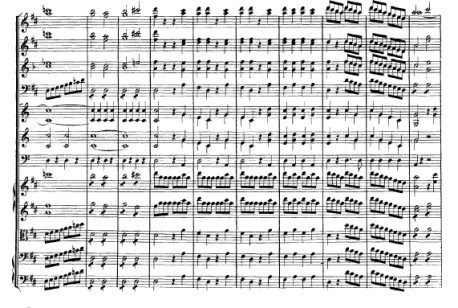
This title will be an obvious reference to anyone who’s seen the movie, Amadeus. However, since the movie came out in 1984 (good grief!), perhaps a little review is necessary. In the movie, Emperor Joseph II has commissioned Mozart to write an opera. After experiencing a performance, the Emperor offers scant praise and then follows with his unforgettable critique:
EMPEROR: … Of course now and then – just now and then – it gets a touch elaborate.
MOZART: What do you mean, Sire?
EMPEROR: Well, I mean occasionally it seems to have, how shall one say? [he stops in difficulty; turning to Orsini-Rosenberg] How shall one say, Director?
ORSINI-ROSENBERG: Too many notes, Your Majesty?
EMPEROR: Exactly. Very well put. Too many notes.
After an astonished reply by Mozart, the Emperor tries to help:
EMPEROR: My dear, young man, don’t take it too hard. Your work is ingenious. It’s quality work. And there are simply too many notes, that’s all. Cut a few and it will be perfect.
And finally, Mozart asks, “Which few did you have in mind, Majesty?”
This scene sounds very much like conversations in our weekly senior staff meetings these days. Mark, Lisa, Joy and I are just now fully experiencing the loss of many, many staff hours as the new church year ramps up and there are simply too many notes. We have collectively, our staff and volunteers, put in place many, many high-functioning programs, some of which have garnered the attention (and envy) of other UU congregations and the UUA. Our awesomeness shows up in our Beginning and Connecting Points classes, our YRUU program, our Connectors program, our Luminary Program, our all-ages programming at 9:15, our Time for All Ages in every Sunday worship service, our “Take it Home” materials for parents, while our overall excellence shines through our worship associates, pastoral visitors, and every single religious education program, including OWL classes, coming of age and adult programming.
We have lots and lots of volunteers who work on these things, but the burden of nurturing the creative aspects of the programming, recruiting and guiding volunteers and providing much support in the areas of organizing, communicating, and training (along with so much more) falls to staff.
And herein lies the problem. These programs all grew with a larger staff than we have this year. That means that now we have too many notes for the available staff hours. But golly gee whiz, we have awesome music going! How do we take out notes but leave the melody? How do we remove tasks from our jobs but leave the wonderfulness? That is our work for the coming months.
We are sure our melody is in the shape of our mission and in the actual purposes of our various roles on staff. What is the core work of this congregation? What staff SUPPORT is needed to do that core work? In this time of discernment, we are once again pointed to the wisdom of Susan Beaumont in her book, Inside the Large Congregation. She writes, “In the effective large congregation, the staff team knows that they do not exist to carry out ministry on behalf of laity. The staff knows they exist to equip the laity in the pursuit of the congregation’s mission.” (page 191) These words of Susan Beaumont are a reminder to both the staff team and our cadre of committed volunteers that the selection of which programs to pursue (it’s all about mission!), the excellence of those programs and the work needed to sustain those programs must come from the congregation.
Now it may be true that we currently have too many programs and administrative tasks to pursue with our current number of committed volunteers. It is definitely true that, at this moment, the current staff cannot continue to do “what we’ve always done.” So once again, we find ourselves in that gray area of governance where staff and congregants need to give and take, invent and dismantle, experiment together, succeed and fail together as we seek to answer Mozart’s last question.
Sep 22, 2016 | Weekly Message
 by Rev. Lisa Bovee-Kemper, Associate Minister
“How long, O Lord, how long?” are the words heard over and over, the Biblical refrain of lament. I hear cries of lament, of grief and rage, echoing across our country, hurled to the sky, lobbed at passers-by like the tear gas that has become almost as inevitable as the linked arms of protestors responding to the latest death of a Black man, woman or child.
I hear over and over again, this has to stop, at the same time I hear, but I don’t know how. And surely I understand the horrible tension and fear of trying to stop an unstoppable force. Systemic racism is a many-headed beast, a Hydra or a Cerberus, which will not easily be defeated. And yet, we must work together to defeat it, we must. We who are white must work to change the system we did not create, but from which we benefit. A system will work hard to remain in stasis, especially when forces are trying to change it from within. Knowing this we must push harder than the system’s need to remain stable. We’ve got to start listening. We’ve got to start amplifying the voices of people of color. And if you’ve already started these things, that’s wonderful, and let’s keep listening, amplifying, and pushing for change.
It is a fight for the soul of our nation, perhaps, but more than that, a fight for the lives of our comrades, our siblings of color.
Even as I write this, I am sure there is nothing to be said that has not already been said. And yet, I cannot remain silent. My initial lament of, “How long, O Lord, how long?” turns into a deeper understanding that in our Unitarian Universalist tradition, the question does not get asked of the Lord – an agent outside of us who is expected eventually to fix the problem. We must ask the question of ourselves.
How long, my friends, how long?
How long will we let the racist system triumph?
I once heard a colleague say that the arc of the moral universe does bend toward justice, but that it is our job to reach up and help.
How long, my friends, how long?
Sep 15, 2016 | Weekly Message
 How does a person build deep faith identity? By being welcomed into the circle, invited to share and know deeply the rhythms, rituals, and sacred spaces of their religious community. This kind of foundational faith development is taught not in a class but by, and throughout, the whole congregation.
Churches often refer to the first Sunday back together again from Summer as “Ingathering”. It’s a special word and a special occasion, a returning of the tribe from all over to the work and fun and worship and learning and music we do in faith community. We say we are a gathered people, and so it was last Sunday as we began putting into practice some of the goals and dreams that arose from our church-wide Visioning for the Future sessions in the Spring. Because a picture really is worth a thousand words, I’m delighted to share snapshots of the ways we came together in worship, classes, and activities at our Ingathering on 9/11.
Gathering in Time For All Ages (TFAA) at the beginning of every service is a change for us this year. It arose from a shared vision of more time together as a family and a congregation, hopes lifted up in the congregational visioning process this Spring. Worship literally means “what we give worth to”: by making room for all ages in our worship service, we demonstrate that we value the experience of shared worship as beneficial to everyone involved. As we begin to consistently share this sacred time and place, in our sanctuary, we tell our kids and families and RE teachers that they too are part of the whole congregation and that there is meaning and learning happening there that’s too important to miss.
TFAA is different qualitatively, too. The “wordy bits” of announcements and greeting of visitors and the worship associate’s sharing have been moved out of the first fifteen minutes, now taking place after the RE community leaves for classes and activities. This creates space, in those brief moments we share each Sunday with our children and youth and teachers, for elements that get straight to the heart of who we are: opening words and chalice lighting (now by a child or youth each Sunday!), a story for all ages or important ritual like teacher covenanting or child dedication, a hymn picked to be one we think accessible to everyone, and a ceremonial sharing of the congregational chalice to the RE and classroom chalices.
And those floor cushions! We wanted to make space for our whole community and for everyone to be comfortable. We also wanted to make a strong visual statement to newcomers about our commitment to making worship welcoming to families and children. The cushions have been well-received, giving young people a great view of what’s happening in worship. We also shared an insert in the order of service sharing our goals and suggestions for people of all ages, to help make this transition a good one. That will become a standard part of the literature available in the pews, as we go forward.

Sep 8, 2016 | Weekly Message
We’ll be launching UUCA’s new active Earth and Social Justice movement this month, September 24-25, with a forum entitled JUST CHANGE using Open Space Technology.
Open what?
If you’ve registered for JUST CHANGE and are familiar with Open Space Technology, you can skip the rest of this. If not, please read on.
Open Space Technology is not the latest coffee shop for geeks (in fact, it has nothing to do with electronic gadgets) but a way to enable all kinds of people, in any kind of organization, to hold meetings that get stuff done. Participants create and manage their own agenda in parallel working sessions around a central theme of strategic importance.
The result is effective connecting and strengthening of what’s already happening in the organization: planning and action, learning and doing, passion and responsibility, participation and performance.
Open Space Technology has been around for over 30 years and has been proven successful with groups as small as 5 and as large as 3,000 and with organizations of all types and structures.
How does it work?
The facilitator opens the space by inviting people to post agenda topics. These people become the conveners of those topics.
Participants pick from among the posted agenda items and join small group working groups led by the conveners.
- All the issues that are most important to those attending are raised and included in the agenda.
- All of the issues raised are addressed by the participants best capable of getting something done about them, although you don’t need to be an expert to join in. All you need is interest or passion.
- All the most important ideas, recommendations, discussions, and next steps are documented in a report.
Everyone’s focus is on what speaks to their heart and from that comes the future. Its power lies in the simplicity of drawing on the passions of the participants and opening the space.
This is what we will be doing at JUST CHANGE – opening the space to include you and me and all at UUCA in creating the future of our Earth and Social Justice movement. The future belongs to those who show up.
Kay Aler-Maida, President, UUCA Board of Trustees